YoutubeCelebrity.TV

Celebrity Media Alliance

Six UN Languages News.

منصة وسائل الإعلام المشاهير تبث الأخبار يوم الاثنين باللغة العربية

名人媒体平台星期二使用中文播报新闻

The celebrity media platform broadcasts news on Wednesday in English

La plateforme médiatique des célébrités diffuse les nouvelles le jeudi en français

Медийная платформа знаменитостей вещает новости в пятницу на русском языке

La plataforma de medios de celebridades transmite noticias el sábado en español

Strong UN Better World! 联合国强大 世界更美好!


Celebrity Media Multi-Channel News Broadcast
六语言版本 Six Languages
News Summary of the Election for the Tenth Secretary-General of the UN

English Media

UN must evolve to ‘stand strong’ for the next 80 years: General Assembly president

Annalena Baerbock, President of the 80th session of the UN General Assembly. (file)UN Photo/Manuel Elías  Annalena Baerbock, President of the 80th session of the UN General Assembly. (file)

As the United Nations marks 80 years of existence, it must adapt and evolve to be fit for future generations, the President of the General Assembly said on Wednesday during a briefing to journalists in New York. 

UN must evolve to ‘stand strong’ for the next 80 years: General Assembly president
Available in: Arabic · Chinese · English · French · Russian · Spanish

Speaking ahead of the start of high-level week, Annalena Baerbock underscored the importance of the UN Charter, the Organization’s founding document, and the need for reform and greater inclusivity.

“Our task is to ensure that the UN stands strong for the next 80 years,” she said.

Reform to stay relevant

Ms. Baerbock highlighted the theme of her presidency, “Better Together”, which “reflects the reality that no single nation, regardless of its size, might, or wealth, can confront the borderless challenges that we face alone.”

She recalled that the UN was established during what was perhaps one of the darkest moments in human history, which led to the Charter – “the North Star that guides our work and reminds us of what we want to accomplish together.”

But after 80 years of a changing world, it is time to “adapt and evolve for a United Nations that will carry us through the next eight decades to show eight billion people why this Organization still matters.”

This is also critical “to respond to the desperate calls for peace in Ukraine, Gaza, Sudan, and Haiti”, and for meaningful action to address climate change, inequality and rapid technological advancements.

The focus this year must be on advancing the UN80 reform agenda, she said, guiding the selection of the next Secretary-General, and ensuring implementation of the Pact for the Future adopted by Member States last September.

Seize the day

In this regard, the General Debate next week - the annual gathering of world leaders in the iconic General Assembly Hall –  is an occasion to demonstrate the UN’s role as a platform for dialogue. Some 150 Heads of State and Government, as well as thousands of delegates, are expected to attend.

Ms. Baerbock pledged “to use every opportunity to underscore the importance of this moment in history to reaffirm our commitment to the UN Charter and the principles that it represents.” 

She outlined key opportunities during high-level week such as the meeting to commemorate the UN’s 80th anniversary.  It provides “a chance to reflect upon the achievements and role of the UN and to re-embrace the principles of the Charter – our life insurance.”

Support for the two-State solution

She also pointed to the resumption of the high-level international conference on Palestine and the two-State solution with Israel.

This is a chance to address the reality that the Israeli-Palestinian conflict cannot be resolved by endless war, continued occupation and terror,” she said.

“The only way to ensure that both Israelis and Palestinians can live in lasting peace, security and dignity is the two-State solution.”

Women, youth and minorities

Meetings are also planned to mark 30 years since both the Fourth World Conference on Women and the World Programme of Action for Youth, while another will focus on non-communicable diseases and mental health.

The General Assembly will also hold a high-level conference to address the crisis facing Rohingya Muslims and other minorities in Myanmar “to support those most vulnerable, and to draw attention to conflicts and human rights abuses that are too often forgotten.” 

Finally, the annual gathering to commemorate the International Day for the Total Elimination of Nuclear Weapons “gains renewed importance in a year where conflict and tensions are at a critical high point.”

‘A make-or-break moment’

Ms. Baerbock noted that the international community is “not short on challenges or issues” but it is time to turn engagement into collective action.

We are at a crossroads – a make-or-break moment for the United Nations and multilateralism as a whole – but this is precisely when we have to work harder,” she said.

“Our forebearers had the humility and grace to put aside their differences and work together in 1945; we need that same principled conviction today.”

The Assembly President called for “the will, and the ambition, to turn promise into action, commitments into progress, and hope into reality.”  

Ink of Peace: 福 (Fu), Cultural Diplomacy, and the United Nations Sustainable Development Goals

Celebrity Media Editor's Note: On today’s information-saturated international stage, the perspectives that truly resonate often come from journalists who can capture subtle signals and place them in a global context. As an Egyptian-American international journalist, United Nations correspondent, global affairs analyst, and Editor-in-Chief of American Television News (ATN), Ahmed Fathi is precisely such an observer who combines both depth and breadth.

While most people still remain in the stereotype of art and politics being independent, Fathi keenly perceives the diplomatic potential within cultural symbols. Upon seeing the report of Chinese calligrapher Li Guiming bringing the character “福” (Blessing) to the United Nations, he did not stop at appreciating the surface of art but immediately realized the cross-cultural value and global governance significance it reflected. He proactively arranged to meet Li Guiming at the UN News Center for an in-depth interview, bringing both a journalist’s sharp eye and an analyst’s perspective to give this artistic event a far-reaching interpretation.

That is precisely why this article was born. Fathi not only linked a calligraphy work with the UN Sustainable Development Goals, but also revealed how traditional culture plays a role of “soft power” in today’s international agenda. This reporting path that interweaves art, culture, and global issues demonstrates his consistent international vision and cross-cultural sensitivity.

In the complex and diverse arena of the United Nations, Ahmed excels at discovering those easily overlooked yet crucial “unofficial languages” — culture, faith, and values. With the acumen of a seasoned journalist and the reflection of a scholar, he transforms the fragrance of ink into discourse, turns art into a bridge, and reminds us: in the context of global governance, cultural diplomacy is equally a force that drives peace and cooperation.

Calligrapher Li Guiming’s “福” has already become a blessing that transcends borders!

The following is the reprint of Ahmed Fathi’s article and video.

Author: Ahmed Fathi

United Nations Headquarters, New York — On this global stage filled with lengthy speeches and complex resolutions, an unusual message quietly appeared. It did not come through documents or policy statements but was conveyed through the strokes of ink.

Chinese calligrapher and artist Li Guiming walked into the United Nations with an ancient and profound Chinese character: “福” — symbolizing blessing, peace, and prosperity. This character transcends the barriers of language and politics, becoming the core of global dialogue in cultural diplomacy.

“The character 福 may be small, but it carries immense weight. It represents everyone’s yearning for a good life. To give 福 is to give peace, kindness, and understanding — this is the essence of cultural diplomacy.” — Li Guiming
Loading player....

On the occasion of the 80th anniversary of the United Nations, Li Guiming brought his calligraphy work “Peace and Blessing” to the world stage. It is not merely an artwork but a symbol of culture and spirit, emphasizing how Chinese culture resonates with the ideals of global cooperation.

This work aligns with Sustainable Development Goal 16: Promote peace, justice, and strong institutions, showing how traditional cultural symbols infuse soul into modern international commitments.

“Peace is the foundation of blessing, and blessing is the fruit of peace.” — Li Guiming

Every stroke of his is not just a display of skill but a narration of China’s story at the UN through culture and belief. By inspiring “soft power” through cultural heritage, fostering understanding and cooperation across borders, it embodies the spirit of international partnership advocated by Sustainable Development Goal 17.

“Each stroke can cross civilizations and evoke emotional resonance. When language fails, it can still connect hearts.” — Li Guiming

This cultural diplomacy initiative also looks toward the future. Li Guiming believes that calligraphy not only shapes artistic literacy but also serves as a form of education, sowing the seeds of patience, respect, and peace in children’s hearts.

With the help of modern technology, this traditional wisdom is transcending borders, entering classrooms, communities, and online platforms, extending across the globe. It demonstrates the integration of Sustainable Development Goals 4 and 9: quality education and innovative infrastructure.

“Calligraphy teaches children patience, respect, and peace. Technology allows this wisdom to travel farther, enabling people around the world to experience the blessing of their dreams.” — Li Guiming

At the United Nations, Li Guiming’s ink strokes are no longer just calligraphy but a bridge — connecting Beijing and New York, connecting tradition and the future, connecting culture and global goals.

From a single “福” to a global vision of peace, the message is clear and profound: Peace and Blessing, inseparably linked.

Permanent Mission of Pakistan to the UN: Challenges and the Way Forward — The Indus Waters Treaty and Pakistan’s Water Crisis

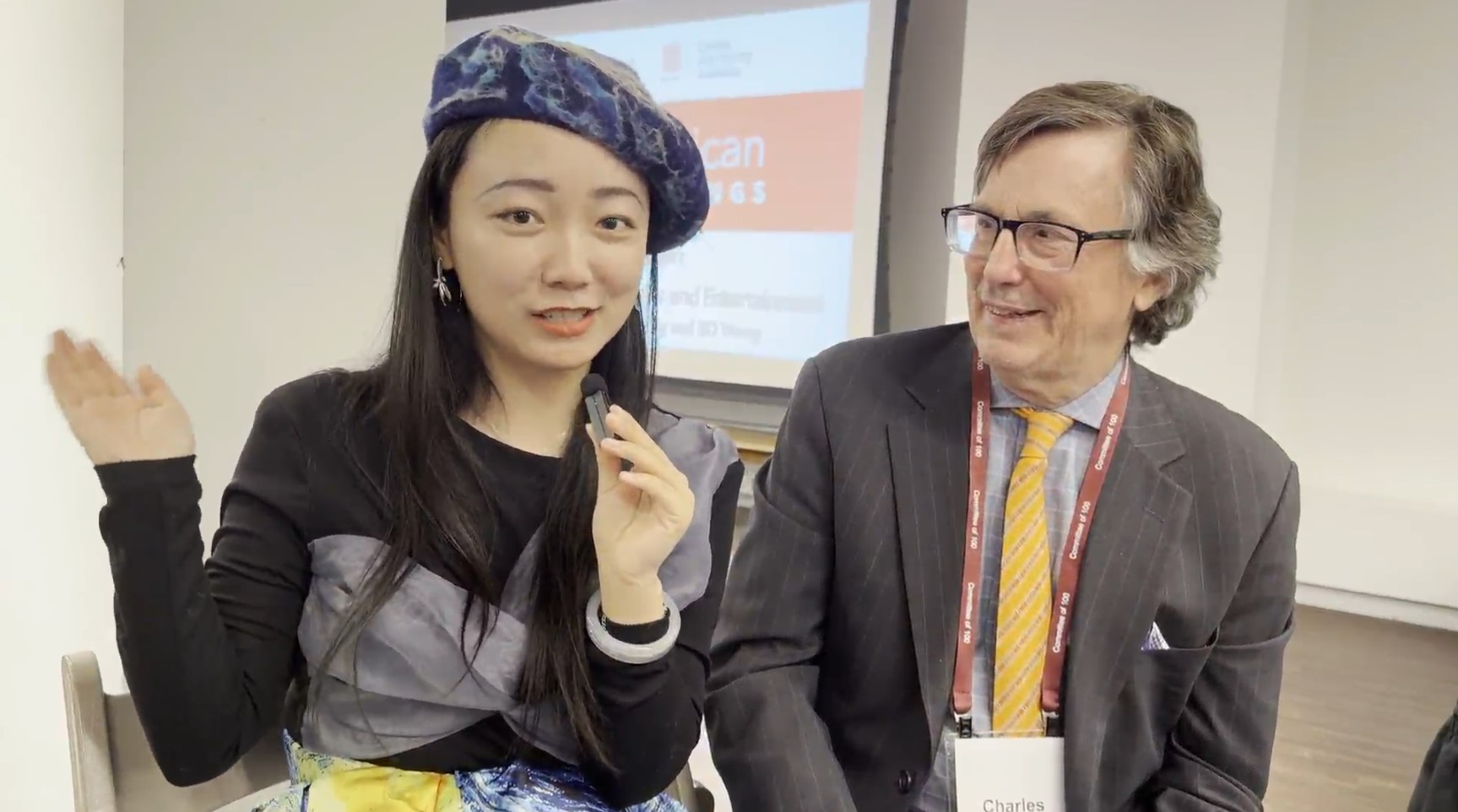
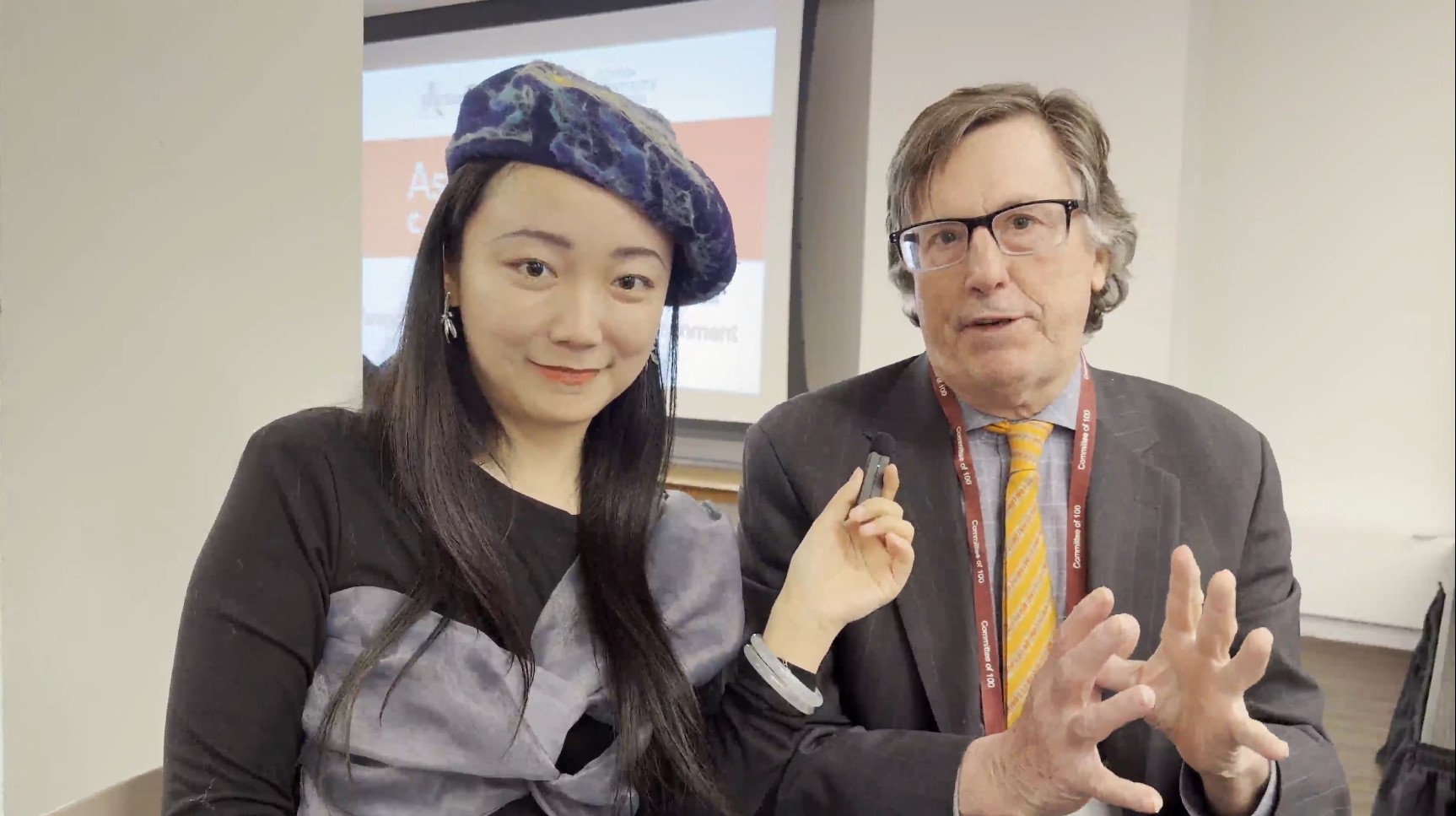
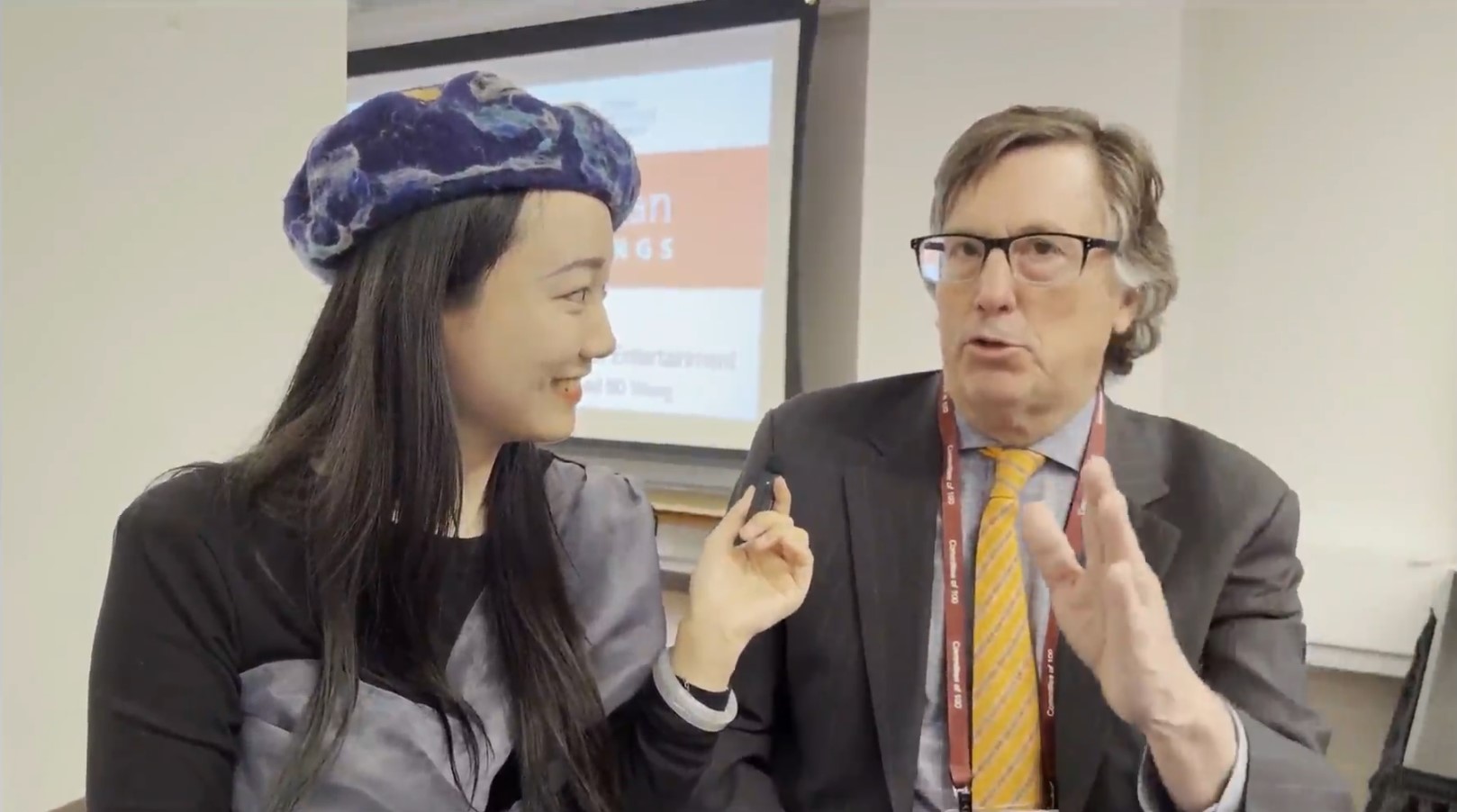
Celebrity Media UN Headquarters Report: Yesterday, at a special meeting held at the United Nations, the Permanent Mission of Pakistan focused on the Indus Waters Treaty and Pakistan's water crisis, exploring the challenges of transboundary water management and the way forward. Before the meeting began, Celebrity Media journalist and host Jingyu Li had a brief exchange with members of the delegation.

Representative Sim explained that the meeting aims to comprehensively examine the importance and current difficulties of the treaty from the perspectives of human rights, humanitarian concerns, and regional security. Before the meeting started, the journalist had a short exchange with members of the Permanent Mission of Pakistan, who introduced that this session would focus on the Indus Waters Treaty and Pakistan’s water crisis, highlighting its profound impact on human rights, humanitarian efforts, and peace and security in South Asia. Host Sim noted that the meeting had invited experienced panelists who would discuss cross-border water cooperation, people’s well-being, and regional stability.

Celebrity Media CEO Ashley Chen attended the meeting.

In his address, Pakistan’s Permanent Representative to the United Nations, Ambassador Amitabal Ahmad, emphasized that the Indus River basin is Pakistan’s lifeline, with nearly 80% of the country’s farmland relying on river water for irrigation to sustain food production and social survival. The Indus Waters Treaty, signed in 1960, has been regarded as a model of regional cooperation. For more than sixty years, it has maintained stability in cross-border water resources in South Asia, embodying the fundamental principle of international law that “agreements must be kept.”

In recent years, however, India’s unilateral actions have posed serious threats to the treaty. Ambassador Ahmad pointed out that the Permanent Court of Arbitration’s rulings in June and August 2025 clearly reaffirmed the treaty’s continued validity and the binding nature of its dispute resolution mechanisms, and that no party has the right to unilaterally suspend or withdraw. He criticized India for refusing to share hydrological data, which worsened recent flood losses and turned natural disasters into humanitarian tragedies.

The ambassador stressed that water security is tied to the survival and dignity of Pakistan’s 240 million people. Uncertain water resources lead to dried-up reservoirs, barren farmlands, and declining harvests, which further exacerbate poverty and particularly increase the vulnerability of women and children. “To use water as a political lever is to deprive people of their most basic right to survival. Water must never be weaponized,” he firmly declared.

Experts generally agreed that the stability of the Indus Waters Treaty has exemplary significance for transboundary water governance in South Asia and even worldwide. If the treaty were to be undermined, it could set a dangerous precedent and shake the foundation of cross-border water agreements in other parts of the world.

Ambassador Ahmad appealed that cooperation in managing water resources is not optional but a necessary requirement for peace, security, and shared prosperity. He reiterated Pakistan’s firm stance on maintaining fair cooperation and expressed hope that the international community would stand together in upholding this principle.

Nepal appoints first woman prime minister, as UN expresses solidarity amid crisis

Young people protest in Kathmandu on Monday, holding signs denouncing corruption. Security forces responded with a violent crackdown, leaving more than 50 people dead in the ensuing crisis.Rabik Upadhayay Young people protest in Kathmandu on Monday, holding signs denouncing corruption. Security forces responded with a violent crackdown, leaving more than 50 people dead in the ensuing crisis.

   By Vibhu Mishra

UN agencies in Nepal welcomed the appointment of Sushila Karki as interim prime minister on Friday, as the country reels from a deadly crackdown on youth-led protests that left more than 50 dead, widespread destruction and forced the resignation of her predecessor.

Ms. Karki, Nepal’s first woman Prime Minister, was appointed by President Ram Chandra Poudel who administered the oath of office in a ceremony attended by youth representatives, officials and foreign diplomats.  

According to media reports, she has been tasked with organizing fresh elections within six months.

She previously served as the only woman chief justice, leading the Supreme Court from 2016 to 2017.

Historic moment

At this pivotal moment, the United Nations stands alongside the people of Nepal in their aspirations for peace, justice, transparency, accountability and progress,” said Hanna Singer Hamdy, UN Resident Coordinator in Nepal, in a statement.

She also recognised the contributions of the President, the Chief of Army Staff and ‘GenZ’ youth leaders, noting that their efforts “helped make this transition possible.”

The UN remains committed to working with the Government to support stability, human rights and sustainable development, the statement added.

An inspiration for girls and women

Children’s Fund UNICEF congratulated Ms. Karki, saying her appointment “is an inspiration for girls and women,” and highlighted the importance of placing children’s rights at the centre of Nepal’s recovery.

Similarly, the UN Development Programme (UNDP), gender equality agency UN Women, and reproductive health agency, UNFPA, expressed support for her leadership, emphasising inclusive governance, gender equality, and the protection of women and youth.

Nepal army soldiers at the Supreme Court after the complex was set on fire by protesters.
Laxmi Prasad Ngakhusi Nepal army soldiers at the Supreme Court after the complex was set on fire by protesters.
Grave challenges

The appointment comes amid grave challenges. The unrest began Monday as a self-styled “Gen Z protest” against corruption, nepotism and social media restrictions. Security forces opened fire on crowds, resulting in multiple deaths and injuries.

Protesters stormed and torched key institutions, including the parliament, Supreme Court, federal and provincial government offices, and political party offices, while also targeting media outlets, schools, businesses and homes.

Jailbreaks occurred in several locations, and reports suggest some demonstrations may have been infiltrated by outside actors and groups, further complicating security.

In response, the army assumed control of nationwide security late Tuesday, deploying troops across the Kathmandu Valley and imposing movement restrictions to stabilise the situation.

Anna-Lena Baerbock Delivers Inaugural Address as President of the 80th United Nations General Assembly

Anna-Lena Baerbock Delivers Inaugural Address as President of the 80th United Nations General Assembly
Available in: Arabic · Chinese · English · French · Russian · Spanish