YoutubeCelebrity.TV

Celebrity Media Alliance

Six UN Languages News.

منصة وسائل الإعلام المشاهير تبث الأخبار يوم الاثنين باللغة العربية

名人媒体平台星期二使用中文播报新闻

The celebrity media platform broadcasts news on Wednesday in English

La plateforme médiatique des célébrités diffuse les nouvelles le jeudi en français

Медийная платформа знаменитостей вещает новости в пятницу на русском языке

La plataforma de medios de celebridades transmite noticias el sábado en español

Strong UN Better World! 联合国强大 世界更美好!

UN News Six Languages
News Summary of the Election for the Tenth Secretary-General of the UN

English Media

Prebid Summit 2025 in New York Focuses on AI and Internet Evolution, Opens at the McGraw Hill Building in Manhattan

Celebrity Media Commentator: On October 14, 2025, the annual ad tech event Prebid Summit 2025 grandly opened at Quorum by Convene in Manhattan, New York. Organized by the open advertising technology community Prebid.org, the summit gathered publishers, ad tech companies, platform developers, strategy experts, and industry leaders from around the world to discuss the transformation of the advertising ecosystem and the future of open technology amid the “AI Evolution and Internet Evolution.”

The Future of AI and Publishers: Collaboration or Conflict? The opening day’s first keynote panel—“AI Implications on Publishers”—became a major highlight. Guests from major media groups and technology platforms discussed how AI is reshaping ad delivery, content recommendation, and revenue models.
At a time when data privacy and algorithmic transparency are global focal points, AI is not only a tool for efficiency but also a key force in rebuilding trust mechanisms. Attendees generally agreed that publishers must find a new balance between automation and human editing to ensure the dual sustainability of content and advertising value.

Beyond Google: Building a Healthy Supply-Side Ecosystem Another breakout session titled “Google and Beyond: Building a Healthy Supply-Side Strategy for the Future” sparked deep reflection on the concept of a decentralized advertising ecosystem.
With third-party cookies gradually fading into history, how publishers can build more independent supply-side systems through first-party data, open-source ad technologies, and transparent bidding mechanisms became a shared consensus. Experts noted that promoting open standards and continuously evolving the Prebid framework will play a crucial role in ensuring fairness and competition within the ad market.

Celebrity Media

2025 New York Prebid Summit Focuses on AI Evolution and Internet Evolution

The Dual Challenge of Open Web and Privacy Transformation: Privacy protection and user identification were another major focus of this year’s summit. Several roundtables centered on the EU’s Digital Markets Act (DMA) and new U.S. privacy regulations, discussing ID alternatives, the transparency of Real-Time Data (RTD) modules, and how to maintain accuracy and ad revenue under privacy constraints.
Prebid community experts emphasized that 2025 will be a critical year for “open web evolution”—as technology standards, policy frameworks, and business logic are being reshaped in parallel. The industry must work together to create a sustainable identity ecosystem.

From Technology to Philosophy: The Next Phase of the Internet Beyond technology topics, the summit also focused on “the evolution of the Internet.” AI-driven ad optimization, cross-screen integration (CTV / OTT / DOOH), invalid traffic (IVT) control, and sustainable ad quality development became central themes.
Many speakers noted that the Internet is transitioning from a “user-centered” era to a new era “centered on trust.” The fusion of AI and open code is driving the advertising industry toward a more transparent, fair, and human-centric future.

Shared Vision for an Open Ecosystem: The Prebid Summit was not merely an industry gathering but also a yearly audit of the open Internet.
Attendees widely agreed that in an era of full AI penetration, privacy restructuring, and redefined global data flows, the power of open standards has become more vital than ever.
A Prebid.org representative concluded, “AI will not replace human judgment but will expand human creativity. The future of the open web depends on how we maintain balance between transparency and innovation.”

In conclusion, the 2025 Prebid Summit, centered on AI and Internet evolution, offered new perspectives for the global advertising and publishing industries. Technological innovation, data ethics, and open collaboration are jointly defining the next phase of the digital ecosystem. The Manhattan summit not only marked a pivotal moment in the AI revolution but also set the tone of openness and trust for the next decade of the ad-driven Internet.

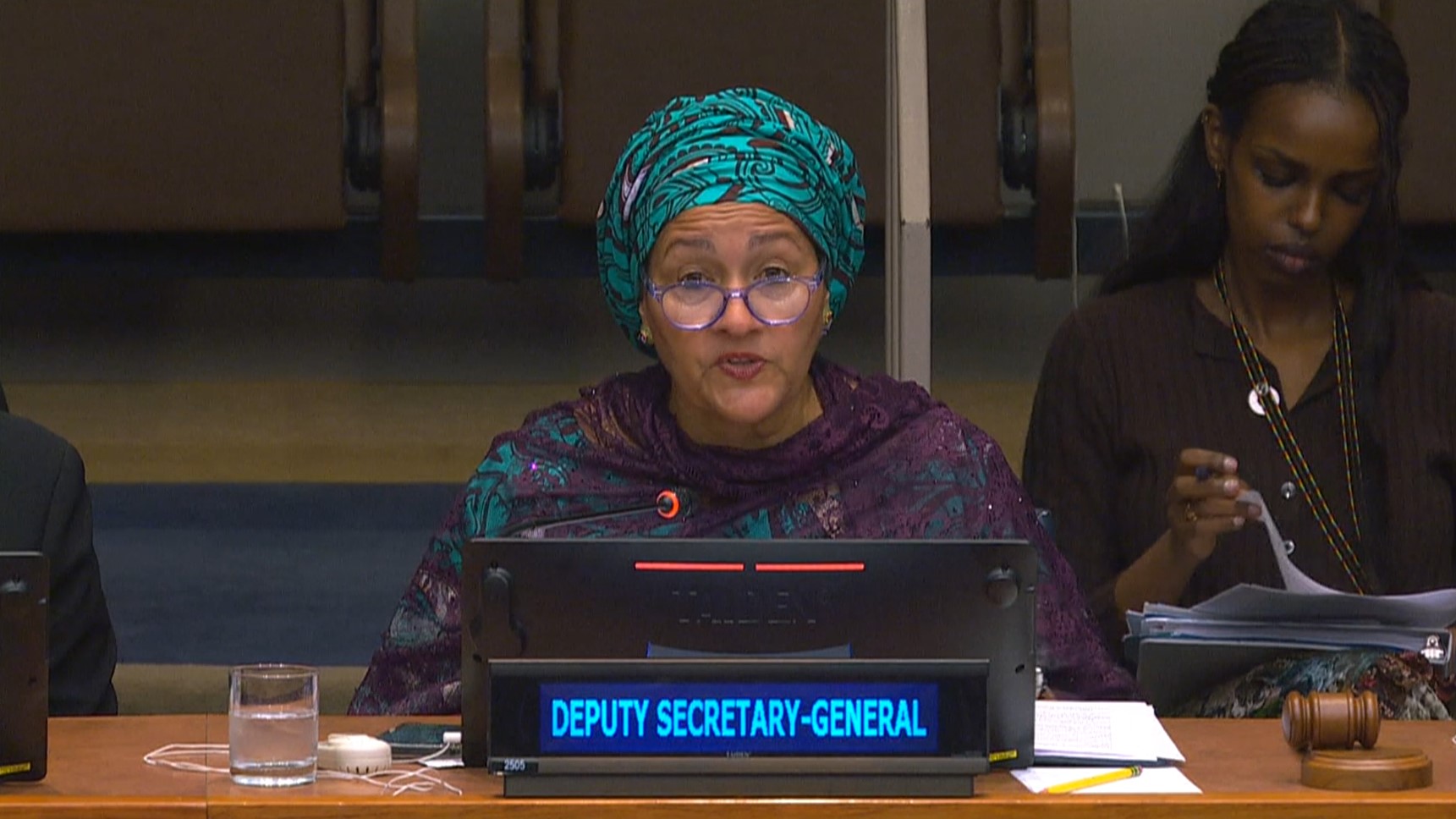
Deputy UN chief pays tribute to Beijing’s key role in advancing women’s rights

DSG Amina J. Mohammed speaking at a UN-Women event on the sidelines of CSW69 and the Beijing +30 commemorations in New York, USA.UN Womenm DSG Amina J. Mohammed speaking at a UN-Women event on the sidelines of CSW69 and the Beijing +30 commemorations in New York, USA.

UN Deputy-Secretary General Amina Mohammed has acknowledged the Chinese capital’s enduring association with the fight for women’s rights and gender equality, 30 years on from the adoption of the landmark Beijing Declaration, a foundational international treaty.

Ms. Mohammed was speaking at the Global Leaders’ Meeting on Women, co-hosted by China and UN Women, which aims to reignite the spirit of the 1995 Fourth World Conference on Women – at which the Beijing Declaration was agreed – and advance global gender equality and women's development.

“Women’s rights are human rights,” said the deputy UN chief, recalling the positive atmosphere of the 1995 conference and the impact of the Declaration which “lit the path to progress,” and thanking China for hosting the event, and the Member States who “kept this flame alive.”

Despite the advances made over the last 30 years, the pace of change has been slow: a report released by the UN Department of Economic and Social Affairs (DESA) in September warned that none of the gender equality targets are on track, with around 708 million women excluded from the labour market by unpaid care work. And 351 million women and girls at risk of being trapped in extreme poverty in 2030.

“We stand just five years from the deadline for our 2030 Sustainable Development Goals,” declared Ms. Mohammed. “The hour is late. We are running out of time to make good on the promise we made three decades ago.”

The Beijing roadmap to equality

The deputy UN chief recalled that the Declaration is a roadmap that has resonated through every major UN framework since it was adopted, including the 2030 Agenda for Sustainable Development and the Pact for the Future.

The agreement, she continued, showed that women's empowerment – including safety and rights to education, healthcare and full political participation – must be central to the design of national visions and plans: “In every negotiating room, in every budget we draft, and every policy we design, gender equality must be our organizing principle.”

There is a financial imperative to advancing gender equality, as Ms. Mohammed pointed out in her speech: UN studies show that, by ensuring that women and girls acquire quality education and digital skills, 30 million people could be lifted from extreme poverty, and some $1.5 trillion injected into the global economy in just five years.

The deputy UN chief concluded by focusing on the need to increase the number of women in leadership roles. “We have the evidence,” she said, “that where women lead, we see more durable peace, more profitable businesses, and more inclusive policies.”

First Lady Melania Announces at the White House: Building a Bridge of Peace for Children of War

Celebrity Media Commentator: In the autumn morning light of Washington, U.S. First Lady Melania Trump made a surprising statement that once again brought “White House diplomacy” into the global spotlight. Appearing not in her traditional political role but as a “mother” and “humanitarian advocate,” she announced a moving achievement — eight Ukrainian children separated by the Russia-Ukraine war were reunited with their families within the past 24 hours.

In a brief White House statement, First Lady Melania Trump announced that eight Ukrainian children separated from their families during the Russia-Ukraine war had been reunited within the past 24 hours. She revealed that this outcome stemmed from her personal letter to President Putin last year, which established a direct communication channel.

Melania stated that representatives from both sides held several secret meetings, during which Russia provided complete information on the children’s placement, health, and identity, all verified by the U.S. side. The cooperation focused purely on humanitarian grounds and was not politically driven. “Trafficked children know no borders, no flags,” she said — a line that became the most touching moment of the day.

This operation not only reunited eight families but also symbolized a breakthrough in “soft diplomacy” — when politicians are caught in confrontation, a mother’s sincerity can advance peace. Melania emphasized that her mission is “to make sure every child can return home safely” and that peace should begin with children.

This was not a political show, but a human effort. She proved through action that true strength sometimes comes from a mother’s heart.

First Lady Melania Trump: Good morning.

Trafficked children know no borders, no flags. We must create a future for our children — one that is full of potential, safe, and full of dreams, not a world threatened by war.
Since President Putin received my letter last August and replied in writing, expressing his willingness to communicate directly with me, we have established an open channel to discuss the living and welfare conditions of Ukrainian children in Russia.

Over the past few months, both sides have held multiple confidential meetings based on goodwill and cooperation. We have agreed to collaborate so that all those affected by the war — especially children and their families — receive help.

My representatives have been working with President Putin’s team to ensure the safety and reunification of children and their families between Russia and Ukraine. In fact, within the past 24 hours, eight children have been reunited with their families.

Because of the war in Ukraine, every child is living amid turmoil. Among these eight children, three were separated from their parents and forced to move to the Russian Federation, while the other five were displaced due to conflict and border changes. One of them, a young girl, has now returned to her family from Ukraine.

In recent months, I have gained deeper insight into this matter. The Russian side has shown willingness to reveal the truth, reflect on the situation, and provide personal data, photos, and social, medical, and psychological service information of the reunited children.

I have also received a detailed report confirming the identity and circumstances of these eight children. The U.S. government has verified the authenticity of these documents. Notably, this report was co-authored by Fiona Radha, Commissioner for Children’s Affairs of Ukraine, and the Commissioner for Human Rights and Children’s Rights of the Russian Presidential Office.

As First Lady, this represents an important step for me. It is built upon shared goals and long-term impact. My mission is twofold — to promote transparency and free flow of information, ensuring the health and rights of children affected by war; and to facilitate reunification of children with their families, until every child can return home.

Additionally, I am concerned about those young people who were displaced during the war and have now reached adulthood and are living in Russia. Considering that their safe return requires international coordination, Russia has agreed to assist in the repatriation of those aged 18 and above.

This work is ongoing. Programs to help more children return to school are also underway. I hope peace will come soon — starting with our children. Thank you.

Informe Especial de Celebrity Media: Diálogo entre Tres Presidentes Europeos y la Presentadora Internacional en la Cumbre de Concordia

Nota del editor de Celebrity Media: Mientras la atención del mundo se centra en la Asamblea General de las Naciones Unidas en Nueva York, otra reunión de ideas y acciones —la Cumbre Anual de Concordia— está generando silenciosamente nuevas olas en esta capital global.
En la cumbre de este año, los presidentes de las tres naciones bálticas—Lituania, Estonia y Letonia—participaron en un profundo diálogo con la moderadora sobre la seguridad regional y la cooperación internacional. La discusión abarcó temas clave como las actividades rusas, la defensa de la OTAN, la situación en Ucrania y las relaciones transatlánticas. Los tres líderes, con tonos racionales y moderados, presentaron las reflexiones y respuestas de Europa en medio de circunstancias geopolíticas complejas.

En la Cumbre Concordia celebrada en Nueva York, la moderadora y los presidentes de los tres estados bálticos—Lituania, Estonia y Letonia—discutieron los recientes desarrollos en la seguridad regional, centrándose en las relaciones entre Rusia y la OTAN, la situación en Ucrania y la cooperación de seguridad transatlántica. Toda la conversación fue serena y claramente articulada, reflejando las preocupaciones compartidas de los tres países respecto a la seguridad y la colaboración internacional. 1. Seguridad Fronteriza y el Mecanismo de la OTAN La moderadora comenzó preguntando sobre las recientes incursiones rusas en el espacio aéreo de Polonia y Estonia. La presidenta lituana Gitanas Nausėda señaló que tales incidentes también han ocurrido en Lituania y Letonia. Dijo que estos actos se han convertido en “provocaciones rutinarias”, pero que la comunidad internacional —especialmente la OTAN— debería responder de manera rápida y decisiva.

La presidenta Nausėda enfatizó que Lituania está fortaleciendo sus capacidades de defensa aérea y planea aumentar su gasto en defensa al 5–6% del PIB para 2030, a fin de reforzar la seguridad nacional y el flanco oriental de la OTAN. El presidente estonio Alar Karis respondió que desde su adhesión a la OTAN en 2004, Estonia ha experimentado múltiples violaciones de su espacio aéreo. Mencionó que los mecanismos de coordinación de la OTAN están funcionando eficazmente y argumentó que la actual “misión de policía aérea” debería evolucionar hacia una “misión de defensa aérea” más defensiva para mejorar la capacidad de respuesta.
También confirmó que Estonia ha invocado formalmente el procedimiento del Artículo 4 de la OTAN, solicitando a los estados miembros celebrar consultas de seguridad para garantizar tanto el apoyo político como militar a la estabilidad regional. El presidente letón Edgars Rinkēvičs describió la situación actual como “una prueba de la capacidad política y militar de la OTAN”. Señaló que las acciones rusas van más allá de las maniobras militares, abarcando propaganda y guerra psicológica diseñadas para sembrar desconfianza entre los aliados. Sin embargo, elogió la unidad mostrada por las naciones en el Consejo de Seguridad de la ONU y bajo el marco de la OTAN. 2. Ciberseguridad y Amenazas Híbridas La moderadora luego abordó la influencia de Rusia en los ámbitos cibernético, migratorio y energético. La presidenta lituana señaló que la región báltica enfrenta no solo amenazas militares sino también “ataques híbridos” desde la vecina Bielorrusia, incluida la orquestación de flujos de migrantes ilegales para crear disturbios sociales y confusión mediática.

Los tres presidentes coincidieron en que la defensa cibernética es un componente indispensable de los sistemas de seguridad modernos. Lituania y Estonia recordaron haber sufrido ataques cibernéticos a gran escala ya en 2007, lo que impulsó el desarrollo de sus marcos nacionales de defensa. La moderadora concluyó que tales “amenazas multidominio” se han convertido en un desafío a largo plazo para la seguridad europea. 3. Ucrania y Garantías de Seguridad Al hablar sobre Ucrania, el presidente estonio expresó que la garantía de seguridad definitiva de Ucrania debería provenir de la membresía en la OTAN, aunque reconoció que este objetivo sigue siendo difícil a corto plazo. Dijo que el gobierno estonio está preparado para proporcionar asistencia militar si es necesario.
La presidenta lituana argumentó que, incluso sin la membresía de la OTAN, Ucrania puede asegurarse fortaleciendo sus fuerzas de defensa. Sugirió que “construir un ejército ucraniano moderno” es el enfoque más práctico y destacó la importancia del apoyo internacional continuo y la cooperación en la formación.
El presidente letón agregó que las acciones de Rusia buscan debilitar el apoyo de Europa a Ucrania, pero insistió en que Ucrania representa la primera línea de Europa —“apoyar a Ucrania es salvaguardar la propia seguridad de Europa”. También subrayó que el proceso de adhesión de Ucrania a la UE es una parte integral de la estabilidad regional. 4. Cooperación en Seguridad y Energía con Estados Unidos Al abordar las relaciones transatlánticas, el presidente letón declaró que Estados Unidos siempre ha sido un socio clave en el sistema de defensa báltico, con un fortalecimiento continuo de la cooperación en entrenamiento y equipamiento militar.


La presidenta lituana señaló que desde 2018, las tropas estadounidenses han estado estacionadas en Lituania para apoyar la defensa regional. También mencionó que los suministros estadounidenses de gas natural licuado ayudaron a Lituania a cortar completamente su dependencia de la energía rusa en 2022, logrando la diversificación energética.
Los tres presidentes coincidieron en que la cooperación entre Europa y Estados Unidos en los campos militar, energético y económico tiene una importancia estratégica. Los miembros de la OTAN deben continuar cumpliendo con sus compromisos de inversión en defensa para mantener el equilibrio y la confianza dentro de la alianza. 5. Conclusión y Significado Al final de la discusión, la moderadora recordó con humor el “Almuerzo del Club del 2% de la OTAN” de 2019, con los tres presidentes bromeando que ahora se han convertido en el “Club del 5%”, simbolizando la determinación de los estados bálticos en la inversión en defensa.
El diálogo de 25 minutos abarcó temas desde la seguridad del espacio aéreo hasta la independencia energética, desde la defensa cibernética hasta la crisis en Ucrania, cubriendo casi todos los aspectos clave de la seguridad europea actual. Los presidentes enfatizaron constantemente la importancia de la cooperación internacional, reflejando su objetivo común de mantener la estabilidad regional en medio de un panorama geopolítico complejo.

UN chief calls for Israel and Hamas to ‘abide fully’ by terms of US peace plan

A displaced family sit outside their tent in Gaza.© UNICEF/Mohammed Nateel A displaced family sit outside their tent in Gaza.

The UN Secretary-General has welcomed the announcement from US President Donald Trump that Israel and Hamas have “signed off” on the first phase of his 20-point peace plan, following days of intensive indirect negotiations in Egypt.

President Trump announced on social media late on Wednesday that Hamas had agreed to release all the hostages being held inside Gaza “very soon”, while Israel has agreed to a phased withdrawal of its ground forces to “an agreed upon line.”

Hamas has reportedly confirmed the deal calling on the international community to ensure Israel abides by its terms.

Israeli Prime Minister Benjamin Netanyahu said it was a “great day for Israel” adding that the Government would meet on Thursday to approve the first phase – including an immediate ceasefire, according to news reports.

“I welcome the announcement of an agreement to secure a ceasefire and hostage release in Gaza, based on the proposal put forward by President Donald J. Trump,” said UN chief António Guterres in a statement.

Praise for the peacemakers

“I commend the diplomatic efforts of the United States, Qatar, Egypt and Türkiye in brokering this desperately needed breakthrough.”

The Secretary-General urged “all concerned to abide fully by the terms of the agreement,” including the release of hostages who have been held for over two years now in Gaza “in a dignified manner.”

Mr. Guterres insisted that there must be a permanent ceasefire. The United Nations is tasked under the US plan along with the Red Crescent, with overseeing the entry and distribution of humanitarian aid.

“The fighting must stop once and for all,” the UN chief continued. “Immediate and unimpeded entry of humanitarian supplies and essential commercial materials into Gaza must be ensured. The suffering must end.”

He said the organization would fully support the implementation of the phased agreement, as well as advancing recovery and reconstruction efforts in the devastated Gaza Strip.

Seize the day

I urge all stakeholders to seize this momentous opportunity to establish a credible political path forward towards ending the occupation, recognizing the right to self-determination of the Palestinian people, and achieving a two-State solution that enables Israelis and Palestinians to live in peace and security,” the Secretary-General said.

“The stakes have never been higher.”