
YoutubeCelebrity.TV

Celebrity Media Alliance

Six UN Languages News.

منصة وسائل الإعلام المشاهير تبث الأخبار يوم الاثنين باللغة العربية

名人媒体平台星期二使用中文播报新闻

The celebrity media platform broadcasts news on Wednesday in English

La plateforme médiatique des célébrités diffuse les nouvelles le jeudi en français

Медийная платформа знаменитостей вещает новости в пятницу на русском языке

La plataforma de medios de celebridades transmite noticias el sábado en español

Strong UN Better World! 联合国强大 世界更美好!


Celebrity Media Multi-Channel News Broadcast
六语言版本 Six Languages
News Summary of the Election for the Tenth Secretary-General of the UN

English Media

Geography shouldn’t define destiny: UN summit on landlocked nations opens in Turkmenistan

Kyrgyzstan is a mountainous country in Central Asia. It shares borders with China, Kazakhstan, Tajikistan, and Uzbekistan and has no direct access to the sea.© Unsplash/Jairph Kyrgyzstan is a mountainous country in Central Asia. It shares borders with China, Kazakhstan, Tajikistan, and Uzbekistan and has no direct access to the sea.

By Nargiz Shekinskaya in Awaza, Turkmenistan

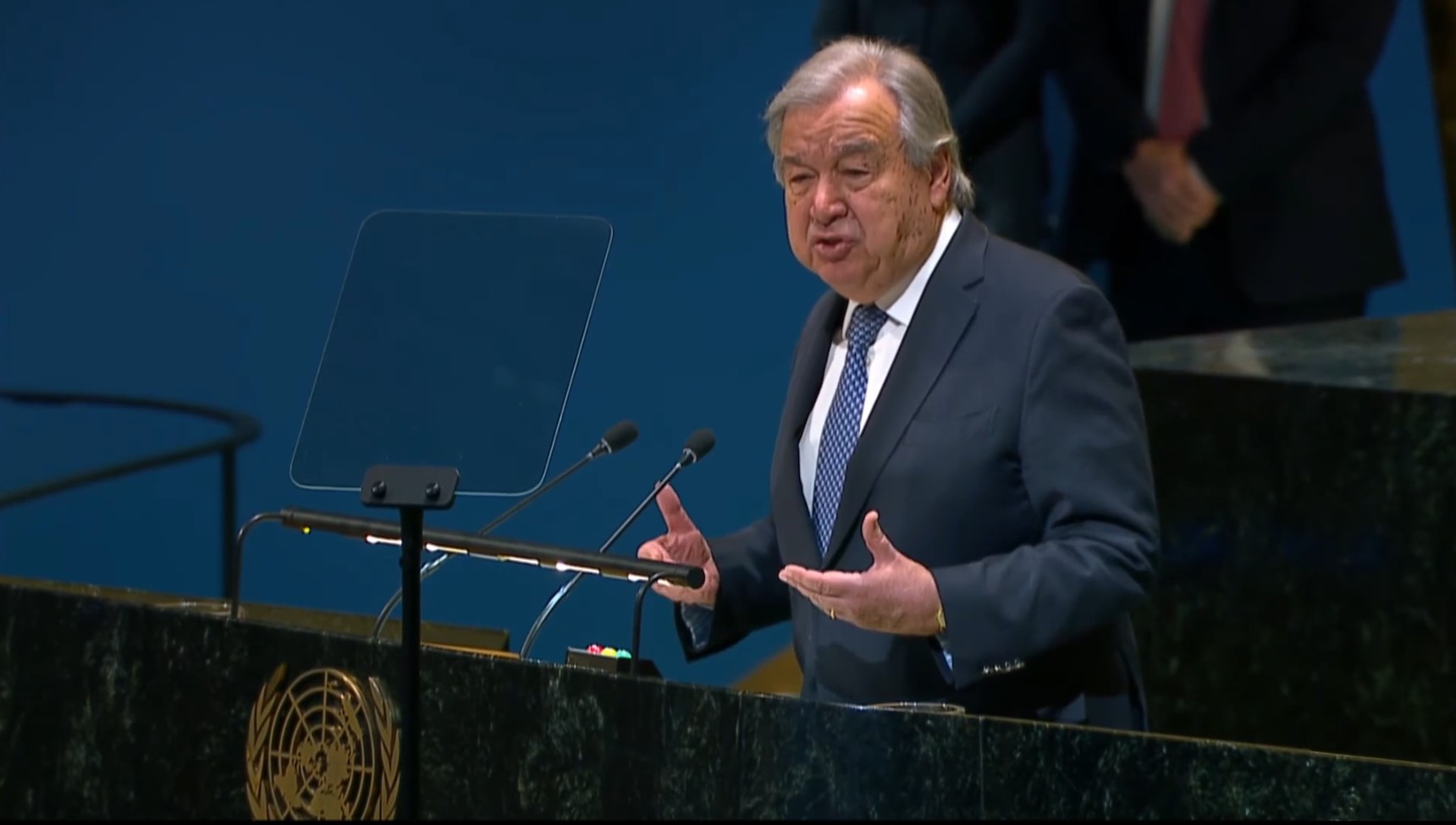
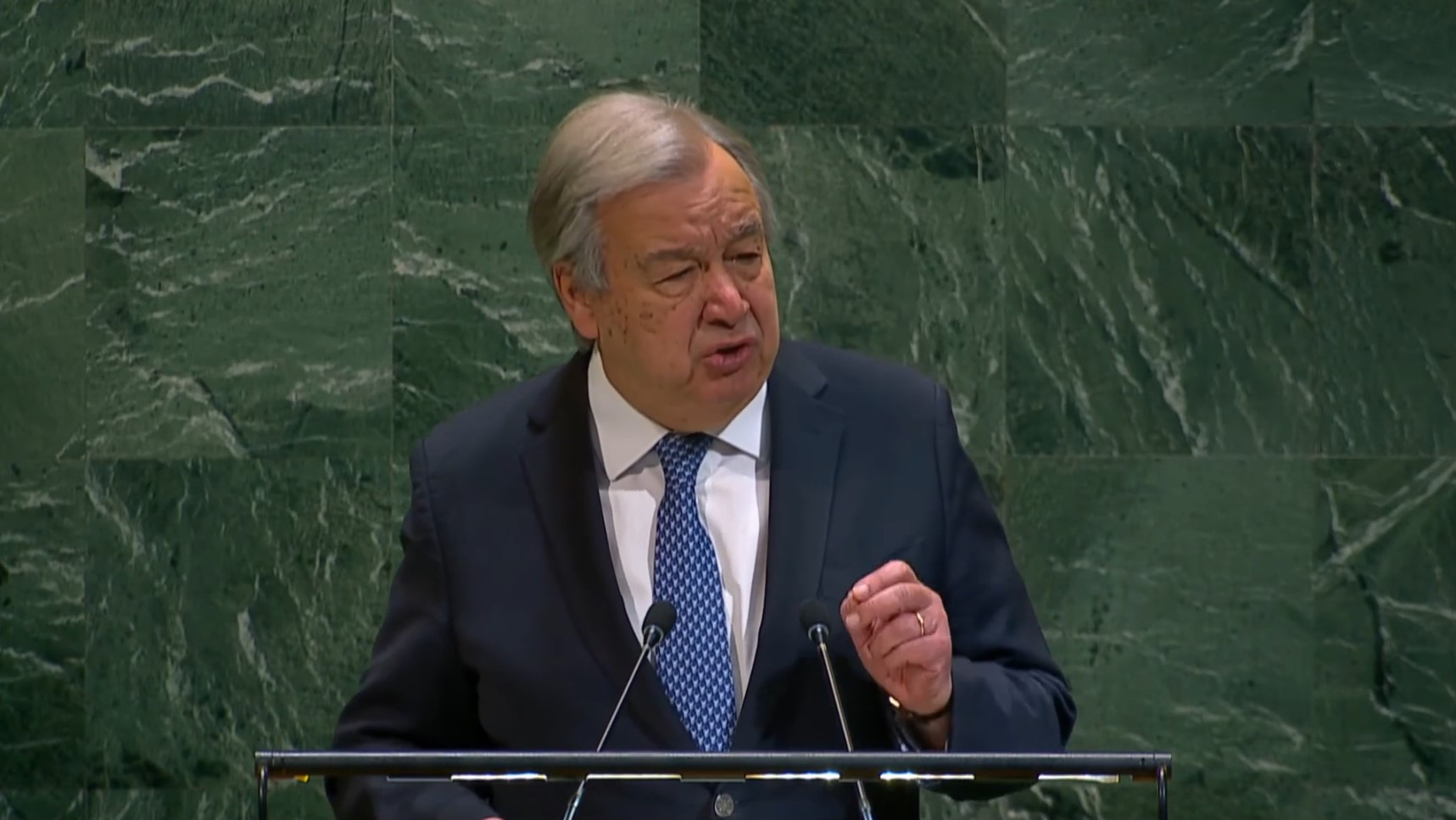
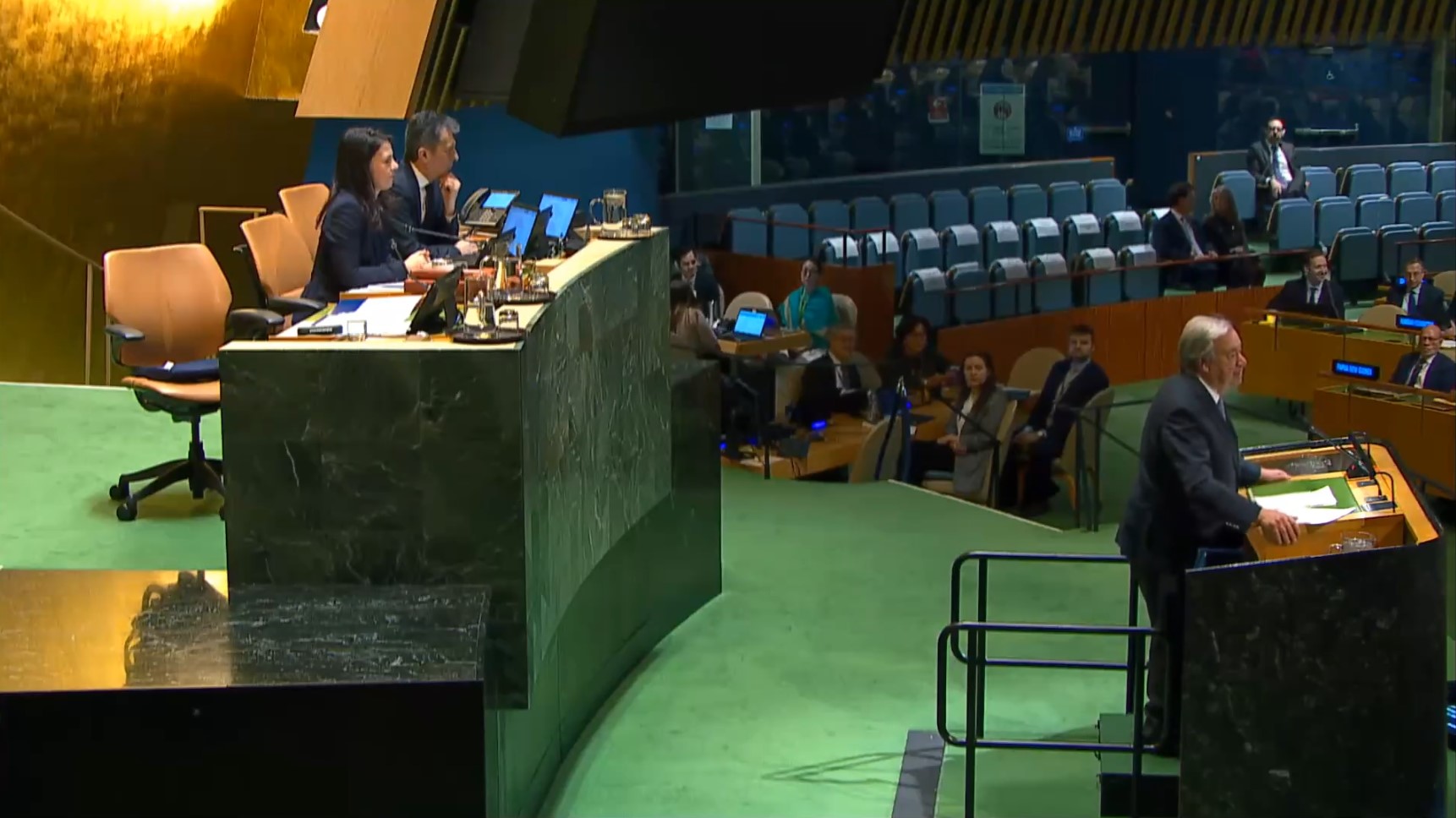
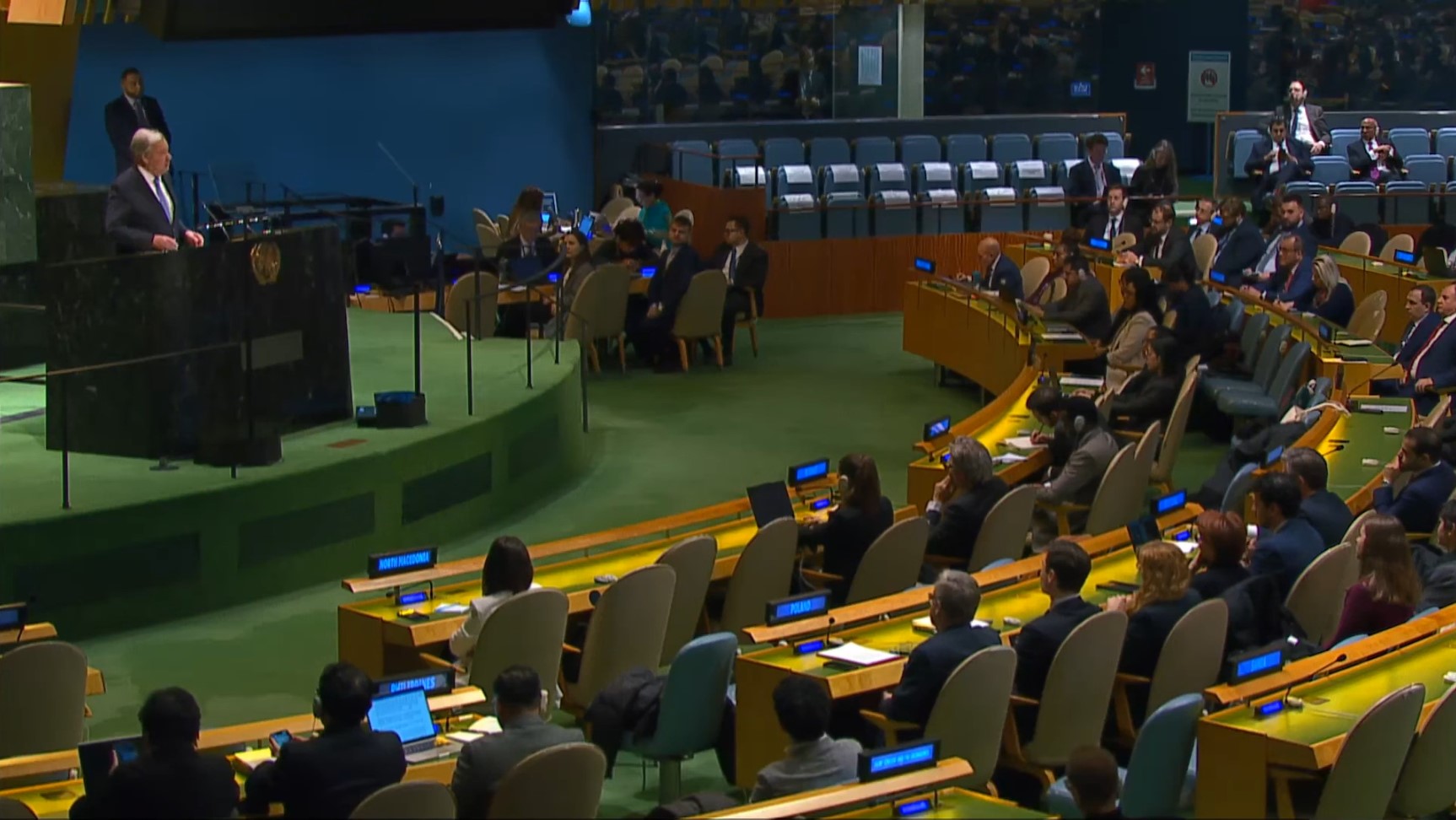
Breaking down barriers and restoring fairness in global development should be the goal of the Third UN Conference on Landlocked Developing Countries, Secretary-General António Guterres said at its opening in Awaza, Turkmenistan, on Tuesday. 

Urging global leaders to rethink development for landlocked nations, the UN chief declared: “We gather today to reaffirm a fundamental truth: geography should never define destiny.

According to the UN Development Programme, of the 32 landlocked developing countries (LLDCs) worldwide, 16 are in Africa, 10 in Asia, four in Europe, and two in Latin America. Together, they are home to over 500 million people.

Trade barriers, debt distress, and deep inequality

Mr. Guterres outlined the “daunting challenges” LLDCs continue to face – steep barriers to trade, high transport costs, and limited access to global markets. He warned that the debt burden of these countries has reached “dangerous and unsustainable levels.”

Although LLDCs account for seven per cent of the world’s population, they represent just over one percent of global economic output and trade. “This is a stark example of deep inequalities that perpetuate marginalization,” said the Secretary-General, attributing this to “an unfair global economic and financial architecture that does not reflect the realities of today’s interconnected world”, as well as to the legacy of colonialism.

Four priorities for progress

UN Secretary-General Guterres calls for action:

  • Economic Diversification and Digital Transformation:
    • Invest in value-added industries, local innovation, and inclusive growth
    • Bridge the digital divide to unlock AI, e-commerce, and smart logistics
  • Trade, Transit and Regional Connectivity:
    • Upgrade infrastructure and simplify cross-border procedures
    • Integrate LLDCs into global value chains and reform trade systems
  • Climate Action and Resilience:
    • Double adaptation finance and build climate-resilient infrastructure
    • Support LLDCs in green transitions with technology and partnerships
  • Financing and Partnerships:
    • Reform global financial systems to ensure fair, accessible funding
    • Scale concessional finance and unlock climate investment at speed

Decade of ambition: the Awaza Programme of Action

The task before the conference, known as LLDC3 and running in Awaza through Friday, is to find solutions to these challenges.

LLDC3 is about launching a new decade of ambition – through the Awaza Programme of Action and its deliverables – and fully unlocking the development potential of landlocked developing countries,” said Mr. Guterres.

Adopted by the UN General Assembly in December 2024, that action plan represents a renewed and strengthened global commitment to support LLDCs’ development aspirations.

A success for all

The success of landlocked developing countries is essential to the success of the 2030 Agenda,” Mr. Guterres stressed.

“We have the knowledge, and we have the tools … Together, we can transform geography from a barrier to a bridge – connecting not just markets, but the peoples and cultures that give meaning to development.”

Speaking to reporters later, Mr. Guterres emphasized that the conference reflects a new era of cooperation taking shape across Central Asia – one grounded in mutual trust, shared priorities, and growing regional solidarity.
 
"At a time when multilateral cooperation is being tested, this spirit of partnership is more essential than ever," he said.

Regional challenges, global solidarity

The session opened with a welcome from Turkmenistan’s President, Serdar Berdimuhamedov, who highlighted national initiatives to strengthen international cooperation in healthcare, climate action, and environmental protection.

He also drew attention to regional challenges such as the drying of the Aral Sea and falling water levels in the Caspian Sea, which is the world’s largest enclosed body of water and the setting for the Third UN LLDC Conference.

In his remarks, UN General Assembly President Philémon Yang noted the “rapidly approaching deadline for the 2030 Agenda” and called for decisive action and a renewed commitment to multilateralism and foundational values.

He emphasized that the three pillars of the UN Charter – peace, development, and human dignity – must remain at the heart of all efforts, and that actions must reflect the promise to leave no one behind.

Noting LLDCs’ vulnerability to climate change and structural challenges, Mr. Yang said these countries “must never lack access to opportunity, prosperity, or hope,” and called for international solidarity, infrastructure investment, and the practical realization of freedom of transit.

He also announced that the General Assembly had proclaimed 6 August as the International Day of Awareness on Landlocked Developing Countries, to be observed annually.

“The General Assembly will continue to serve as a global platform in support of these countries,” he said, emphasizing the importance of monitoring the Awaza Programme of Action and preparing for its high-level review in 2029.

Turning vulnerability into opportunity

Also addressing the opening session, Lok Bahadur Thapa, President of the UN Economic and Social Council, said LLDC3 is “a pivotal moment” for the 32 landlocked nations striving to overcome structural barriers to development.

Hailing from Nepal, which is both landlocked and least developed, he emphasized that the Awaza Programme of Action must serve as a “bold, ambitious, actionable, and future-oriented blueprint” to turn vulnerability into opportunity for over 570 million people.

Mr. Thapa underscored the urgency of addressing the “growing complexity, scale and urgency” of challenges facing LLDCs, including debt distress, climate impacts, and infrastructure gaps. Mr. Thapa urged the creation of an infrastructure investment facility for LLDCs, along with scaled-up climate finance, increased concessional resources, and accelerated technology transfer.

He also stressed the importance of regional cooperation and sustainable transport, praised Turkmenistan’s leadership, and reaffirmed ECOSOC’s commitment to advancing the Awaza Programme of Action – pledging to integrate LLDC priorities such as food security, youth empowerment, and climate resilience across all ECOSOC discussions and processes.

LLDC3 continues tomorrow, Wednesday 6 August, with roundtables and events on a range of topics, including connectivity and transport, South-South cooperation, youth engagement and more. Find all our coverage here.

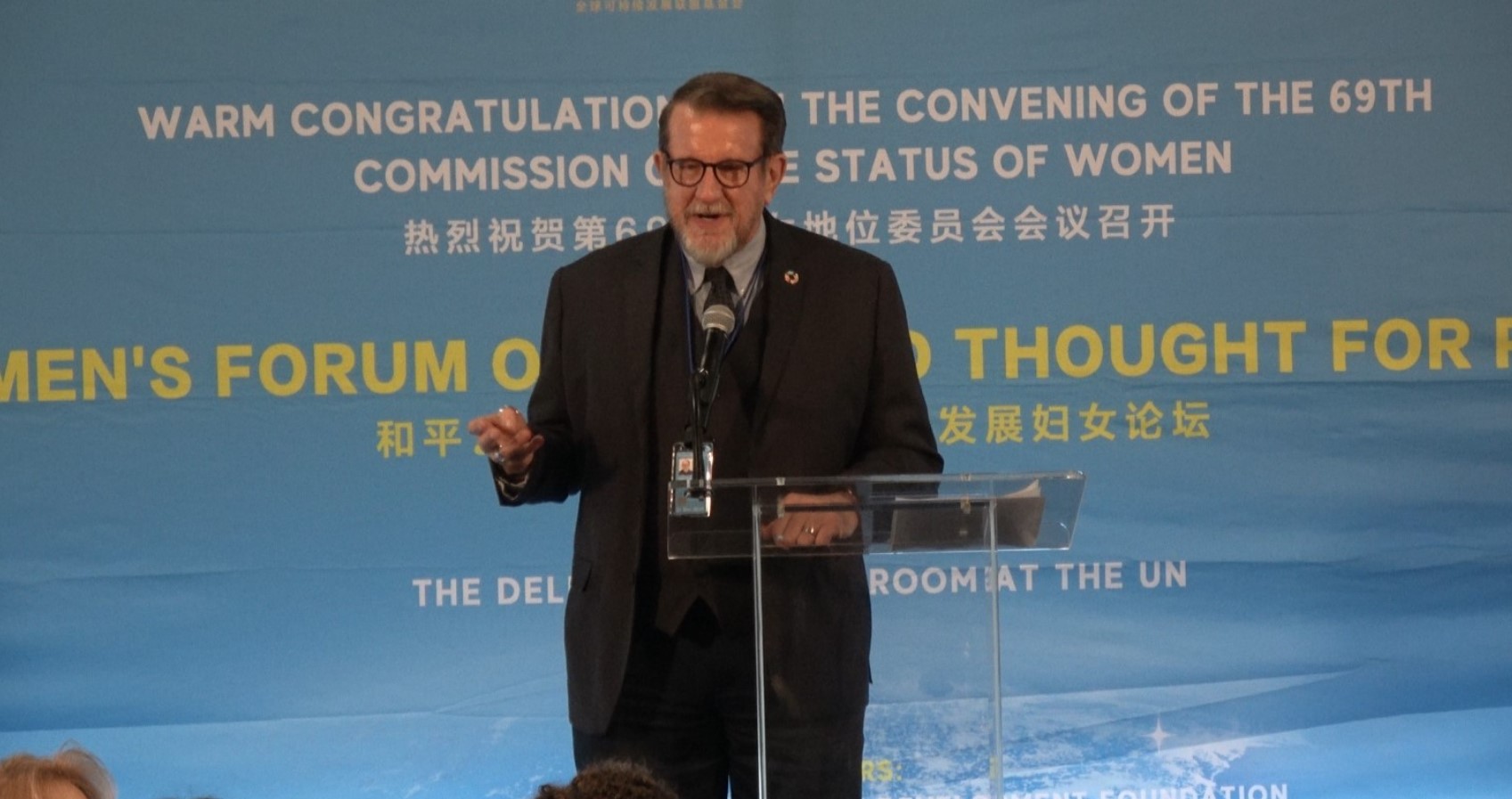
Bruce Knotts, Chair of the NGO Committee on Disarmament, Peace and Security, at Helsinki+50

Editor's Note: On the occasion of the 50th anniversary of the signing of the "Final Act of Helsinki", a milestone high-level meeting was grandly held at Finlandia Hall on July 31, 2025. The "Helsinki+50" conference is not only a tribute and remembrance of the historical legacy of the 1975 Helsinki Conference but also a powerful call for adherence to shared principles in today’s turbulent times.

The attendance and speech by Bruce Knotts, Chair of the NGO Committee on Disarmament, Peace and Security, highlighted the crucial role civil society plays in upholding the core values of the OSCE. The spirit of Helsinki does not only belong to history but should also illuminate the path of peace today and in the future.

  Bruce Knotts, Chair of the NGO Committee on Disarmament, Peace and Security, at Helsinki+50

Bruce Knotts served as a Peace Corps volunteer in Ethiopia, worked for Raytheon in Saudi Arabia (1976–1980), and worked in Somalia under a World Bank contract (1982–1984), before joining the U.S. Department of State in 1984 as a diplomat. He was posted to Greece, Zambia, India, Pakistan, Kenya, Sudan, Côte d'Ivoire, and The Gambia, serving as Deputy Chief of Mission in The Gambia. In Côte d'Ivoire, Bruce was Regional Refugee Coordinator for West Africa. From 2000 to 2003, Bruce worked closely with several UN Special Representatives and observed UN peacekeeping operations in Sierra Leone.

Bruce retired from the State Department in 2007 and became Director of the Unitarian Universalist United Nations Office (UU-UNO) in 2008. At the UN, he founded a faith-based sexual orientation/gender identity human rights advocacy organization and continued to promote the rights of women and Indigenous Peoples, while advancing sustainable development from a moral perspective rooted in faith and values. Bruce is frequently invited to speak on various topics around the world. Recently, he has spoken in the U.S., Canada, Mexico, China, South Korea, Ghana, the Philippines, Taiwan, and Vietnam.

Bruce is Co-Chair of the NGO Committee on Human Rights at the UN, Chair of the NGO Committee on Disarmament, Peace and Security, a member of the NGO Working Group on the Security Council, and a board member of the NGO Committee on Sustainable Development. He also previously served as Chair of the NGO/DPI Executive Committee, representing over 1,400 NGOs affiliated with the UN Department of Public Information. Bruce is also a board member of the Parliament of the World's Religions and the Buddhist Tzu Chi Foundation.

I want to talk about three topics: peace, climate change, and nuclear weapons.

There are many wars going on in the world right now. I want to focus on the civil war in Sudan, the war between Israel and Gaza, and the war between Russia and Ukraine. I do not want to discuss how these wars started, because that would only lead to arguments. In fact, a woman once started arguing that NATO had caused the war in Ukraine. I reminded her that I did not want to argue about the causes of wars, but rather discuss how to end them. I said that wars need weapons and funding. If we can cut off the supply of money and weapons, wars can be stopped.

The civil war in Sudan is a conflict between two Sudanese military groups. One is funded and supported by the United Arab Emirates, and the other by Egypt. If these two countries stopped supporting the military forces in Sudan, the war would end. I mentioned that I had lived and worked in Sudan. I had seen the beautiful Presidential Palace built by the British colonialists, a beautiful Catholic cathedral, many mosques, and elegant homes where I had been warmly welcomed. Now, all of that is gone. Sudan is left with nothing but sand.

The war in Gaza would end immediately if the United States stopped sending weapons and funding to Israel.

What enables Russia to fight a long, drawn-out war? The answer is oil, which they sell at high prices to India and China.

The world is being scorched due to climate change. We must stop using fossil fuels. If Russia stopped supplying oil, it would not only help ease the heat caused by climate change but also bring an end to the war in Ukraine. All nations must stop using fossil fuels.

So, if we end wars and solve climate change, there is still one more problem we must face. Even if we solve all other problems, as long as nuclear weapons exist, our entire planet could still be destroyed. We must abolish nuclear weapons.

In 2006, Bruce married Isaac Humphrey in Vancouver, British Columbia, Canada. Isaac works in international special events. He is also a venue manager for New York Fashion Week, an environmentalist for events, photographer, web designer, and social media consultant.

Guterres: ‘Breaking point’ reached in Israel-Palestine conflict, urgent action needed on two-State solution

Gazans head towards a food aid distribution point. The entire population of over two million people in the war-torn Strip is severely food insecure.UN News Gazans head towards a food aid distribution point. The entire population of over two million people in the war-torn Strip is severely food insecure.

By Vibhu Mishra

UN Secretary-General António Guterres has warned that the Israeli-Palestinian conflict has reached a breaking point, calling for bold political action to salvage the two-State solution and halt what he described as the systemic dismantling of peace efforts. 

Speaking Monday morning at the high-level conference on the peaceful settlement of the question of Palestine and the implementation of the two-State solution, the UN chief painted a stark picture of a conflict that continues to “take lives, destroy futures, and destabilise the region and our world”.

“We know that the Israeli-Palestinian conflict has endured for generations, defying hopes, defying diplomacy, defying countless resolutions, defying international law,” Mr. Guterres said. “But, we also know its persistence is not inevitable. It can be resolved. That demands political will and courageous leadership, and it demands truth.”

The truth is: we are at a breaking point. The two-State solution is farther than ever before.

The Secretary-General denounced the 7 October Hamas attacks on Israel and hostage-taking as acts of terror he has “repeatedly condemned”. At the same time, he said “nothing can justify the obliteration of Gaza that has unfolded before the eyes of the world.”

He also spoke out against the starvation of civilians, the killing of tens of thousands, mass displacement, settler violence and the “creeping annexation” of the occupied West Bank – a move he called “illegal”.

Stop undermining two-State solution

Unilateral actions that would forever undermine the two-State solution are unacceptable and they must stop,” he said. “These are not isolated events. They are part of a systemic reality that is dismantling the building blocks of peace in the Middle East.”

The three-day conference, mandated by the General Assembly through resolutions ES-10/24 and 79/81, is co-organized by France and Saudi Arabia. It includes plenary sessions and thematic roundtables on issues such as security arrangements, humanitarian needs, reconstruction and the economic viability of a future Palestinian state.

A group photograph of senior UN officials and ministers attending the high-level international conference.UN Photo/Mark Garten A group photograph of senior UN officials and ministers attending the high-level international conference.

Move beyond ‘well-meaning rhetoric’

In his speech, Mr. Guterres urged Member States not to let the event become “another exercise in well-meaning rhetoric”.

“It can and must serve as a decisive turning point, one that catalyses irreversible progress towards ending the occupation and realising our shared aspiration for a viable two-State solution,” he said.

Reiterating the long-standing UN position, the Secretary-General said the two-State solution remains the only viable path to peace, with Israel and Palestine living side-by-side within secure, recognised borders, based on the pre-1967 lines, with Jerusalem as the capital of both States.

It is the sine qua non [Latin for indispensable or absolutely essential] for peace across the wider Middle East,” he concluded.

More to follow...

Jean-Noël Barrot, Minister for Europe and Foreign Affairs of France; Faisal bin Farhan Al Saud, Minister of Foreign Affairs of Saudi Arabia; and Mohammad Mustafa, Prime Minister of the State of Palestine also spoke at the meeting.

Gaza, Genocide, and Global Hypocrisy: The Elders Confront the Crisis Head-On

Celebrity Media Commentator: On July 29, a profoundly influential article—one that the world must confront—was rapidly published on a major American television platform. Authored personally by the Senior Media President of the United Nations News Centre, the article is not only sharply written and penetrating in its analysis, but also remarkably timely: it appeared less than 24 hours after the conclusion of the high-level "Two-State Solution" conference co-hosted by France and Saudi Arabia. Undoubtedly, it sends a clear message—the international community can no longer turn a blind eye to the suffering in Gaza and the worsening humanitarian crisis.

In this decades-long Israeli-Palestinian conflict, the people of Gaza have become the most direct victims. The warning issued by UN Secretary-General António Guterres at the conference was sobering: we are standing on the brink of the total collapse of peace efforts. He stated that the conflict has “taken lives, destroyed futures, and destabilized the region and our world”—a fact that no one can deny.

Even more alarming, Guterres candidly identified the problem as systemic. This is not merely a confrontation between rockets and bombs, but a complete breakdown of international order and moral standards. For years, the "Two-State Solution" has been globally recognized as the only sustainable path to resolving the conflict, yet it has been increasingly marginalized, hollowed out, and even ridiculed.

Against this backdrop, the President's article poses a pointed question: In the face of recurring humanitarian disasters and the repeated deaths of civilians in warfare, has the international community's so-called “language of justice” become an empty performance? Particularly when we see global powers wavering in the face of their own interests—or even enabling extreme actions by one side—the “moral high ground” begins to look absurd.

This is not an article for political elites to casually discuss, nor is it a compilation of diplomatic platitudes. It is a heavy interrogation:
In the face of genocidal risk, do we still have the courage to speak the truth? Do we still dare to uphold justice?

Guterres' words are resounding: “The conflict can be resolved. It requires political will, courageous leadership—and it requires truth.” This statement goes far beyond a typical speech; it is a call echoing with historical weight.

Encouragingly, some “elders” are beginning to speak out. They are not those seated on thrones of power, but those who remain steadfast on the high ground of moral integrity. The Secretary-General’s blunt remarks and the author’s firm expression both serve as reminders to the world: in the face of Gaza’s tragedy, we do not need more “concern” or “disappointment” dressed as diplomacy—we need action, responsibility, and an end to hypocrisy.

Now is the time to test the moral bottom line of the international community.

Mary Robinson, Juan Manuel Santos, and Zeid Ra’ad Al-Hussein, break ranks with silence and ignite a moral reckoning at the UN

The Elders at UNCA, From Left to Right, Edith Lederer (AP), Juan Manuel Santos Chair of The Elders and former President of Colombia and Nobel Peace Laureate, Zeid Ra’ad Al-Hussein, former UN High Commissioner for Human Rights, Mary Robinson former President of Ireland and former UN High Commissioner for Human Rights" 

The Elders at UNCA, From Left to Right, Edith Lederer (AP), Juan Manuel Santos Chair of The Elders and former President of Colombia and Nobel Peace Laureate, Zeid Ra’ad Al-Hussein, former UN High Commissioner for Human Rights, Mary Robinson former President of Ireland and former UN High Commissioner for Human Rights

Ahmed Fathi

By Ahmed Fathi UNHQ, NEW YORK 

— In a moment that felt both familiar and quietly hopeful, the United Nations Correspondents Association (UNCA) welcomed The Elders—a group founded in 2007 by Nelson Mandela—to a frank and at times emotional conversation on the future of Israel and Palestine.

Held just hours after a high-level conference co-hosted by France and Saudi Arabia on the two-state solution, the panel featured Nobel Peace Prize Laureate and former Colombian President Juan Manuel Santos, former Irish President and UN High Commissioner for Human Rights Mary Robinson, and Zeid Ra’ad Al-Hussein, also a former UN Human Rights Chief and now Chair of the International Peace Institute. The discussion was skillfully moderated by veteran AP correspondent Edith Lederer, UNCA’s First Vice President.

What emerged was not just another roundtable of dignitaries repeating the well-worn talking points. It was a masterclass in humility, history, and hard-earned wisdom.

“From Words to Willpower”

Mary Robinson opened the panel with cautious optimism, praising the substance emerging from the day’s working groups, while underscoring the “unbearable” humanitarian crisis in Gaza. She didn't mince words: “There is a widespread sense now that this Israeli government is committing genocide,” she said, referencing recent findings by Israeli rights organizations B’Tselem and Physicians for Human Rights–Israel.

Her remarks were grounded in legal precedent, citing the ICJ’s advisory opinion and violations of Article 2 of the EU-Israel Association Agreement. But beyond the law, her moral clarity resonated: “This is a moment to act—not just speak.”

“The Impossible Becomes Inevitable—When Done”

President Santos, drawing on Colombia’s peace deal with the FARC after decades of war, struck a chord with a sentiment rarely heard in today’s hyperpolarized diplomacy: patience with purpose.

He criticized Israeli Prime Minister Netanyahu’s vow to “eliminate Hamas,” calling it a “major strategic mistake.” In his words, “Hamas is a cause, not just an organization. And every militant killed gives birth to two more.”

Santos, now Chair of The Elders, acknowledged the complexity of including Hamas in future governance but insisted that pressure—political and military—must be balanced with incentives. “Every conflict has something each party wants,” he reminded the room, urging negotiators to find that leverage.

“A Land for All: Ideas from the Ground Up”

Zeid Ra’ad Al-Hussein brought attention to grassroots efforts like Two States, One Homeland—a Palestinian-Israeli initiative that envisions mutual sovereignty and an end to occupation without endless land-swap negotiations. “The brilliance of this plan is that it’s not ours,” he said. “It’s theirs—born from activists and lawyers living this reality.”

His candid assessment? “We’ve all been here long enough to suffer from a form of PTSD. But leave and come back—you’ll notice the shift.”

Questions That Cut Through the Fog

Ahmed Fathi with Juan Manuel Santos the Chair of the Elders and former President of Colombia, and Noble Peace Prize Laurette.Ahmed Fathi with Juan Manuel Santos the Chair of the Elders and former President of Colombia, and Noble Peace Prize Laurette.

The press corps didn’t shy away. I raised the issue of enforcement: How can the consensus on Palestinian statehood move from resolution to reality when Israel rejects unilateral recognition, and Hamas remains entrenched in Gaza?

Santos replied with what may be the panel’s most instructive lesson: “You cannot change reality with carrots alone, nor with sticks alone. You need both—and you need trust.”

He emphasized the importance of broadening the dialogue to include actors like Iran, with the goal of politically cornering Hamas into becoming part of the solution, not the problem.

Robinson, meanwhile, challenged the notion of futility: “This is not déjà vu. There are steps—real ones—being taken. The world is shifting. The momentum is building.”

A Declaration, and a Delicate Window

As questions continued, Zeid noted the symbolic return to a “Madrid-style” multilateral process, a far cry from the stagnant bilateral talks of the past. With France and Saudi Arabia guiding the declaration expected this September, hope lies in its capacity to be a launchpad, not just another ceremonial endpoint.

In her final word, Robinson paid tribute to the late UN diplomat Mohammed Sahnoun, recalling how a famine in Somalia—and one man’s moral conviction—sparked her lifelong belief that courage and humanity must lead policy.

“Let’s Not Wait for History to Repeat Itself”

The room may not have been filled with fireworks, but it pulsed with urgency. These were not just elder statespersons trading rhetoric—they were architects of peace, cautioning against complacency and pushing the world toward deliverables.

“Let’s hope we all live to see peace in the Middle East,” Edith Lederer said, closing the event with a sentiment that felt less like wishful thinking, and more like a collective plea.

If peace feels impossible, The Elders reminded us, it’s only because it hasn’t been done—yet.

Celebrity media reports in six languages on the UN Secretary-General's press Q&A about the Sustainable Development Goals report

— A Commentary on the Hopes and Challenges of the 2030 Agenda

播放器加载中....

Celebrity media reports in six languages on the UN Secretary-General's press Q&A about the Sustainable Development Goals report

Celebrity Media Commentator:On July 14, United Nations Secretary-General António Guterres delivered the 2025 Sustainable Development Goals (SDG) Report, marking the tenth annual progress assessment since the adoption of the 2030 Agenda. This report not only reviews achievements over the past decade but also candidly addresses deep-rooted global development challenges. Celebrity Media responded swiftly by broadcasting the press conference in the UN’s six official languages—English, French, Chinese, Spanish, Russian, and Arabic—delivering this vital message to audiences worldwide.

Progress Made, But Not Fast Enough

The report notes that the SDGs have indeed improved the lives of millions: extreme poverty has declined, child and maternal mortality rates have dropped significantly, and access to education—especially for girls—has expanded. These achievements are commendable. However, the overall progress remains worryingly insufficient.

According to the latest data, only 35% of the SDG targets are on track or making some progress; nearly half are progressing too slowly, and 18% have regressed. Secretary-General Guterres declared: “We are in a global development emergency.” This is a sobering warning—one that suggests we are off course and at risk of falling short of the 2030 goals.

Six Priority Areas Hold the Key

To change course, the UN calls on governments and the international community to focus on six critical areas: food systems, access to energy, digital transformation, education, employment and social protection, and climate and biodiversity action. These are the foundational pillars for global equity and prosperity.

Among them, the integration of digitalization with education, equitable access to clean energy, and forward-looking social protection systems are considered “leverage points” for transformative change. The report also advocates the implementation of the Medellin Action Plan, endorsed at the 2024 UN World Data Forum, to strengthen national data systems essential for informed policymaking.

Systemic Injustice as the Root Obstacle

Throughout the press conference, Guterres emphasized that “the goals are still within reach”— but only if we act now with urgency, unity, and unwavering determination. He pointed to systemic injustice within the global economic and financial systems as a fundamental barrier. These entrenched inequalities, he said, continue to make it difficult for developing countries to achieve goals that are universally recognized as essential to a life of dignity.

This insight invites deeper reflection: Can today’s global governance frameworks effectively address the complex crises of post-pandemic recovery, debt distress, inflation, and geopolitical conflict? Are we prepared to structurally reimagine a global system that delivers justice alongside progress?

On Gaza: A Cry for Human Dignity

When asked about the crisis in Gaza, Guterres made clear that while the UN condemns Hamas’s attacks, “the scale of death and destruction we are witnessing in Gaza is unprecedented in modern times,” and it is “eroding the most basic dignity of the people.”

In this light, the SDG conversation transcends data and metrics—it becomes a matter of moral and ethical urgency concerning human survival and dignity.

Six-Language Broadcast: A Global Call to Action

By broadcasting in six languages, Celebrity Media affirms its commitment to inclusive information and multicultural engagement. Sustainable development is not a solo performance by select nations—it must be a global symphony. Communicating the UN’s message across linguistic and cultural divides ensures that every community hears the same call to responsibility and hope.

With less than five years left, the question is no longer whether we’ve done enough—it’s whether we’re ready to confront the systems and choices that stand in the way. As Secretary-General Guterres stated: “The goals are still within reach—but only if we act now.”