YoutubeCelebrity.TV

Celebrity Media Alliance

Six UN Languages News.

منصة وسائل الإعلام المشاهير تبث الأخبار يوم الاثنين باللغة العربية

名人媒体平台星期二使用中文播报新闻

The celebrity media platform broadcasts news on Wednesday in English

La plateforme médiatique des célébrités diffuse les nouvelles le jeudi en français

Медийная платформа знаменитостей вещает новости в пятницу на русском языке

La plataforma de medios de celebridades transmite noticias el sábado en español

Strong UN Better World! 联合国强大 世界更美好!

News Summary of the Election for the Tenth Secretary-General of the UN

English Media

The Celebrity Media Network AI Technology Department proposes the establishment of a United Nations AI regulatory body or expert committee.


Dear Secretary-General, distinguished United Nations officials, and permanent representatives of nations to the United Nations:

In this era of rapid advancement in artificial intelligence technology, we, the Celebrity Media Network AI Technology Department, propose the establishment of a dedicated AI regulatory body or expert committee at the United Nations. As AI technology becomes increasingly widespread and globally implemented, we have not only witnessed its vast potential to drive economic and social progress but also face unprecedented ethical, legal, and societal challenges.

Positive Impacts and Potential Risks of AI

AI technology has demonstrated its transformative capabilities in various fields, such as improving the quality of medical services through efficient data processing and optimizing energy management and waste reduction through intelligent algorithms. The Celebrity Media Foundation and the Celebrity Media Alliance have utilized robotics to broadcast news in the six official UN languages, showcasing AI’s unique value in facilitating international information exchange and cultural interaction. However, the use of this technology has also raised serious concerns regarding the accuracy of information, privacy protection, algorithmic transparency, and the precision of robotic translations.

Concerningly, the misuse of AI has already triggered widespread alarm globally, especially in military and security contexts. Recently, UN Secretary-General Guterres, in his statement regarding the severe humanitarian crisis in Gaza amid the Israeli-Palestinian conflict, specifically mentioned the Israeli military's use of AI for target recognition. The Secretary-General emphasized that life-or-death decisions should not be left to indifferent algorithms and that AI should be a force for justice, not a tool for war and blurring accountability. He also noted that the information war has exacerbated trauma, and Israel's refusal to allow journalists into Gaza has led to the spread of misinformation.

播放器加载中....


Urgency of Establishing a Global AI Regulatory Body

Although existing UN agencies such as UNESCO, the International Telecommunication Union, and the World Intellectual Property Organization are developing policies and standards for the ethical use of AI, the rapid development of AI technology and the lack of unified legal regulations among nations urgently necessitate a globally recognized regulatory body to oversee and coordinate management mechanisms.

Moreover, in October 2023, Secretary-General António Guterres launched an AI advisory body to study the risks, opportunities, and international governance of these technologies.

We believe the rapid development of AI technology has outpaced traditional regulations and national boundaries, and its impact on the global economy, society, politics, and ethics is increasingly significant. While existing UN agencies and the newly established advisory body are working to develop relevant ethical usage policies and standards, the complexity and evolving nature of AI technology mean these policies and standards need continuous updating and broad international coordination.

Additionally, the application of AI technology spans various industries and fields, including but not limited to healthcare, education, finance, and security, where legal regulations vary significantly among countries. Without a unified global regulatory body, it is challenging to effectively monitor and manage the use of AI technology and address transnational legal and ethical issues.

Furthermore, the improper use or abuse of AI technology could lead to severe societal problems and security threats, such as privacy violations, the spread of fake news, and the development of automated weaponry. A global AI regulatory body could provide a platform for managing these risks through international coordination and response.

In 2023, the United Nations Secretary-General António Guterres's initiative to launch an AI advisory body, focusing on the risks, opportunities, and international governance of these technologies, underscores the increasing global concern for AI technology regulation and the pressing need to establish a global regulatory body. Moreover, a UN-established regulatory body would be the only institution with true global representation.

For a global AI management body or expert committee, clearly defining its responsibilities is crucial for effective global coordination and management. Here are some specific ideas from our Celebrity Media Network AI Technology Department:

1. Develop Global AI Application Ethical Guidelines and Standards:
- Develop and promote a set of global AI ethical norms that accommodate cultural diversity and international acceptability, ensuring uniformity and transparency in AI applications worldwide.
- Set technical and operational standards, including privacy protection, data security, and algorithmic transparency, and ensure that the development and application of these technologies do not infringe on human rights or cause injustice.
- Regularly update standards to adapt to the rapidly changing technological environment and address emerging ethical issues and challenges.

2. Promote Technology Transfer, Data Sharing, and Education Training:
- Establish a global framework to support and facilitate the transfer of advanced AI technology and knowledge, especially to low-income countries and regions.
- Create data-sharing policies that support cross-border data flows while ensuring compliance with national laws on data privacy and security.
- Develop and promote AI education and training programs to ensure that the global workforce can adapt to changes brought by AI and effectively use these technologies to promote socio-economic development.

3. Regulate and Assess the Social Impact of AI Technology:
- Implement a comprehensive evaluation system to monitor the impact of AI technology in various social sectors, particularly its potential effects on social inequality and public safety.
- Establish necessary regulatory bodies to ensure that the outcomes of AI applications meet established social

and ethical standards and promptly correct any technological applications that may lead to injustice or other negative societal consequences.
- Conduct public education and awareness campaigns to enhance societal understanding of the potential impacts of AI technology, thereby better informing policy making and response measures.

4. Provide a Platform for Discussing and Resolving Cross-National AI Application Issues:
- Establish an international forum or platform that allows countries to share experiences, discuss issues, and jointly address challenges in global AI applications.
- Facilitate international cooperation, including through joint research projects, policy-making collaboration, and the synchronization of technical standards.
- Organize regular meetings and workshops to involve policymakers, technology experts, and the public in the global AI governance dialogue, enhancing the effectiveness of multilateralism and global collaboration.


We are eager and hopeful to see the United Nations lead and take action in this critical area. By establishing such a regulatory body, not only can the potential harms of AI technology be averted, but it can also be ensured that it serves as a force for global justice and the betterment of humanity.

We look forward to the active response from governments, international organizations, and experts in the AI field to jointly promote this important initiative.

The Network AI Technology Department of the Celebrity Media Foundation is a technology service division that uses robots to broadcast news in multiple languages

 
The Celebrity Media Foundation is committed to supporting the United Nations' efforts to maintain world peace, manage international affairs, and sponsor global public welfare initiatives, in accordance with the United Nations Charter. This commitment serves as the fundamental purpose and mission of our operations. The Foundation is supported by enthusiastic volunteers and philanthropists who share a consensus on the importance of promoting and supporting celebrities, charitable organizations, and individuals dedicated to improving global social conditions and participating in international public welfare activities.
 
 
The Network AI Technology Department of the Celebrity Media Foundation is a key division responsible for managing and utilizing robots to broadcast news in the six official languages of the United Nations. This department oversees the operations of the Celebrity Media network platform.
 
播放器加载中....
 

Celebrity Media, a network platform owned by the Celebrity Media Foundation, has established the Celebrity Media Alliance in collaboration with the United Nations News Centre. This alliance engages in the gathering, editing, and publishing of news from around the world, primarily focusing on United Nations news.

The Celebrity Media Foundation operates as a tax-exempt, non-profit media organization running an online television network. We look forward to the sponsorship and support of discerning individuals, charities, and organizations.

In response to the demands of the AI-driven era, Celebrity Media was the first media outlet to use robots that speak in their own voices, broadcasting news in various languages. Celebrity Media utilizes AI robots to offer a paid service that translates content into the six official languages of the United Nations, providing news distribution, video broadcasting, and online interviews for UN agencies, NGOs, and other users in need.

Contact the Network AI Technology Department of the Celebrity Media Foundation:


Thank you for your loving donation to celebrity media

Celebrity media special coverage The event of The Korea Society: US Dollar’s Impact on Global Order

Celebrity Media Editor's Note: Yesterday, at an event co-hosted by the Korea Society and the National Committee on American Foreign Policy, industry experts and thought leaders gathered to discuss the complex dynamics of the dollar's impact on the global order. Attendees participated in a discussion and explanation by Celia Mosen about her work, "Paper Soldiers - How the Weaponization of the Dollar Changed the World Order." Tom, the President and CEO of the Korea Society, emphasized that their mission is to deepen the ties between Korea and the United States, laying the foundation for cross-border dialogue on the nuances of economic and political differences.
The dialogue also touched upon the challenges faced by the US economy, emphasizing the interconnectedness of domestic policies and global economic structures. The event facilitated a robust discussion on the resilience of the dollar amidst geopolitical shifts and financial uncertainties, offering a platform for attendees to engage with the economic narratives shaping our world.

The insightful conversation underscored the importance of understanding the dollar's weaponization and its broader implications. It highlighted the need for collaborative efforts to navigate the evolving global landscape and to consider the future of economic strategies in shaping a balanced global order.


Main Speaker: Celia Mosen, Senior Washington Correspondent, Bloomberg News

Celia Mosen delved into the strategic use of the U.S. dollar by the Treasury to assert global dominance and the implications of this strategy on international relations and economic stability. She discussed the nuanced aspects of economic sanctions, the resilience and challenges of the U.S. economy, and how American allies perceive the dollar's role in the global financial system. Mosen provided insights into the interconnectedness of domestic policies with the global economic order, emphasizing the need for a nuanced understanding of the dollar's weaponization and its global repercussions.

Tom outlined the organization's diverse programming across arts, culture, education, business, and policy, highlighting their collaboration with the National Committee on American Foreign Policy on multifaceted discussions about the US-Korea alliance and broader international relations. He set the stage for an engaging conversation about the US's strategic use of the dollar and its implications on global supremacy and democratic values.

Tom introduced the event, emphasizing the organization's mission to enhance cooperation and understanding between Korea and the United States. He highlighted the organization's multifaceted approach, encompassing arts, culture, education, business, and policy, and its collaboration with the National Committee on American Foreign Policy. Tom set the context for the discussion by touching on the themes of Celia Mosen's book, "Paper Soldiers," particularly focusing on the U.S. Treasury's use of a strong dollar policy as a tool of economic and democratic influence, despite the ongoing challenges of maintaining the dollar's primacy in international trade and the U.S.'s eroding credit quality.
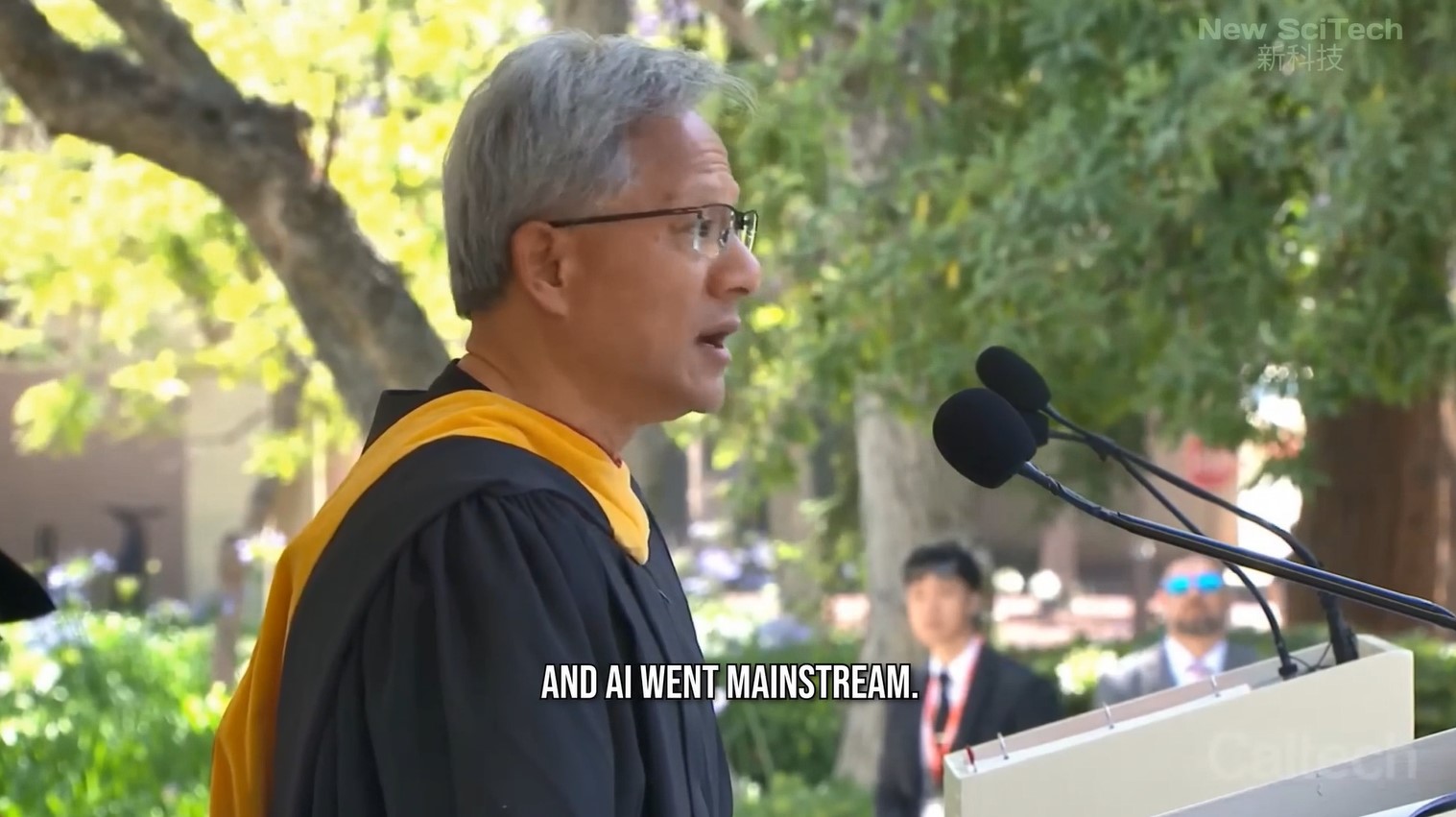
Susan Elliott, President and CEO of the National Committee on American Foreign Policy, thanked everyone for attending both in-person and virtually. She emphasized the value of personal interactions, especially in the context of the event's topic. She introduced the National Committee on American Foreign Policy as a non-profit, nonpartisan organization focused on informal diplomatic dialogues, also known as track two discussions. The organization hosts dialogues among parties in conflict from different countries, focusing on critical regions like the Republic of Korea and Japan and issues concerning North Korea.

Susan highlighted the committee's efforts in hosting roundtable discussions for members and experts and its emerging leaders program, which includes next-generation scholars with a focus on the Korean Peninsula. She stressed the close bond and collaboration between the National Committee and the Korea Society, especially in hosting public education programs like the one being held.

Marking the 50th anniversary of the National Committee, Susan reaffirmed the organization's commitment to shaping American foreign policy through vital discussions on topics affecting the region and the world. She acknowledged the proximity to the Korea Society and expressed eagerness for future collaborations.

In addition to thanking Tom and other participants, Susan highlighted the importance of the day's discussion regarding America's strong dollar policy and its implications. She expressed interest in understanding the potential impacts of changes in the dollar's value, especially concerning relations with the Republic of Korea and other global partners.

Susan then introduced the speakers, Celia Mosen and Jacqueline Adams, emphasizing their expertise and the significance of their discussion in shedding light on the themes of the book "Paper Soldiers" and the broader context of the U.S. dollar's role in global economics and policy.

Susan's speech offers an insightful overview of the National Committee's objectives and its synergy with the Korea Society in fostering informed discussions on international relations, emphasizing the importance of the event's theme in understanding the intricacies of American foreign policy and economic strategy.

The dialogue also touched upon the challenges faced by the US economy, emphasizing the interconnectedness of domestic policies and global economic structures. The event facilitated a robust discussion on the resilience of the dollar amidst geopolitical shifts and financial uncertainties, offering a platform for attendees to engage with the economic narratives shaping our world.

The insightful conversation underscored the importance of understanding the dollar's weaponization and its broader implications. It highlighted the need for collaborative efforts to navigate the evolving global landscape and to consider the future of economic strategies in shaping a balanced global order.

The event predominantly discusses the global influence of the U.S. dollar, its impact on international relations, economic sanctions, and the strategic financial policies of the United States. While the main focus is on the U.S. dollar's role in the world order and its relation to U.S. economic policy, there are a few mentions of China in the context of global financial dynamics:

  1. Yuan as a Potential Alternative to the Dollar: The conversation touched upon the notion of the Chinese yuan potentially becoming an alternative to the U.S. dollar as the world's reserve currency. It was noted that despite China's economic size and efforts to internationalize the yuan, the currency lacks the transparency and openness that investors find in the U.S. dollar, which is crucial for a global reserve currency.

  2. Global Financial Fragmentation: There's a mention of the world dividing into two camps, with one led by China and the other by the U.S., indicating a fragmentation in global financial alliances and the potential implications for the U.S. dollar's dominance.

  3. China's Economic Policies: The discussion briefly touched on China's control over its currency and the challenges that pose for the yuan to be seen as a viable alternative to the dollar in the global financial system.

These mentions provide a context for China's role in the global financial system and its relationship with the U.S. dollar's dominance but do not delve deeply into Chinese-specific topics or policies. The overarching theme remains focused on the U.S. dollar's influence and the strategic economic considerations of the United States on the world stage.

The co-organizers emphasized:For further insights into "Paper Soldiers" and the weaponization of the dollar, attendees were encouraged to explore additional resources and engage with the ongoing dialogue on this critical subject, reinforcing the event's role in fostering informed discussions on pivotal economic and policy issues.

About [Organization Name]: Dedicated to promoting mutual understanding and cooperation between Korea and the United States, [Organization Name] offers comprehensive programs in arts, culture, education, business, and policy, contributing to the discourse on international relations and economic strategies.


Israel must allow ‘quantum leap’ in aid delivery UN chief urges, calling for change in military tactics

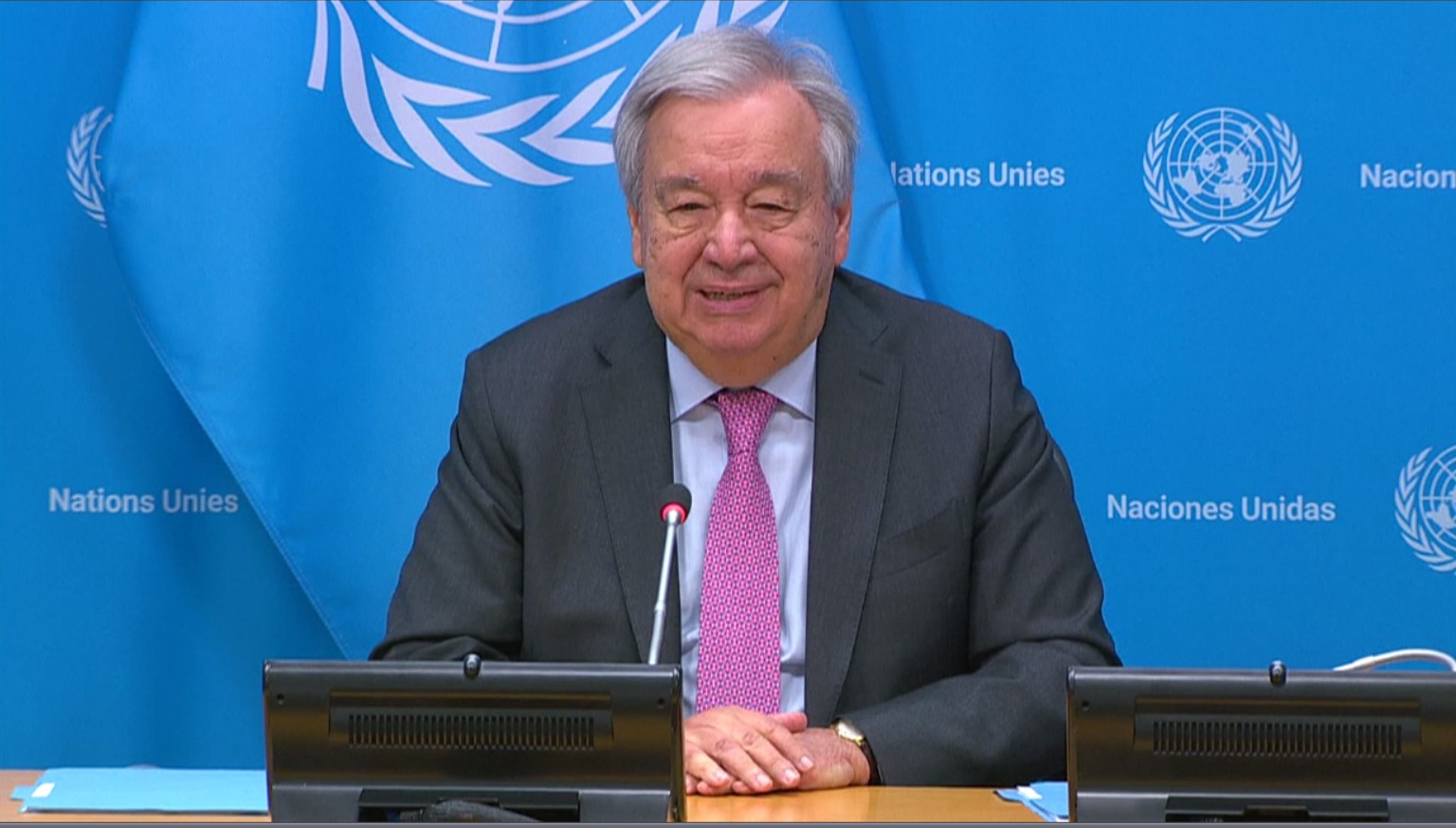
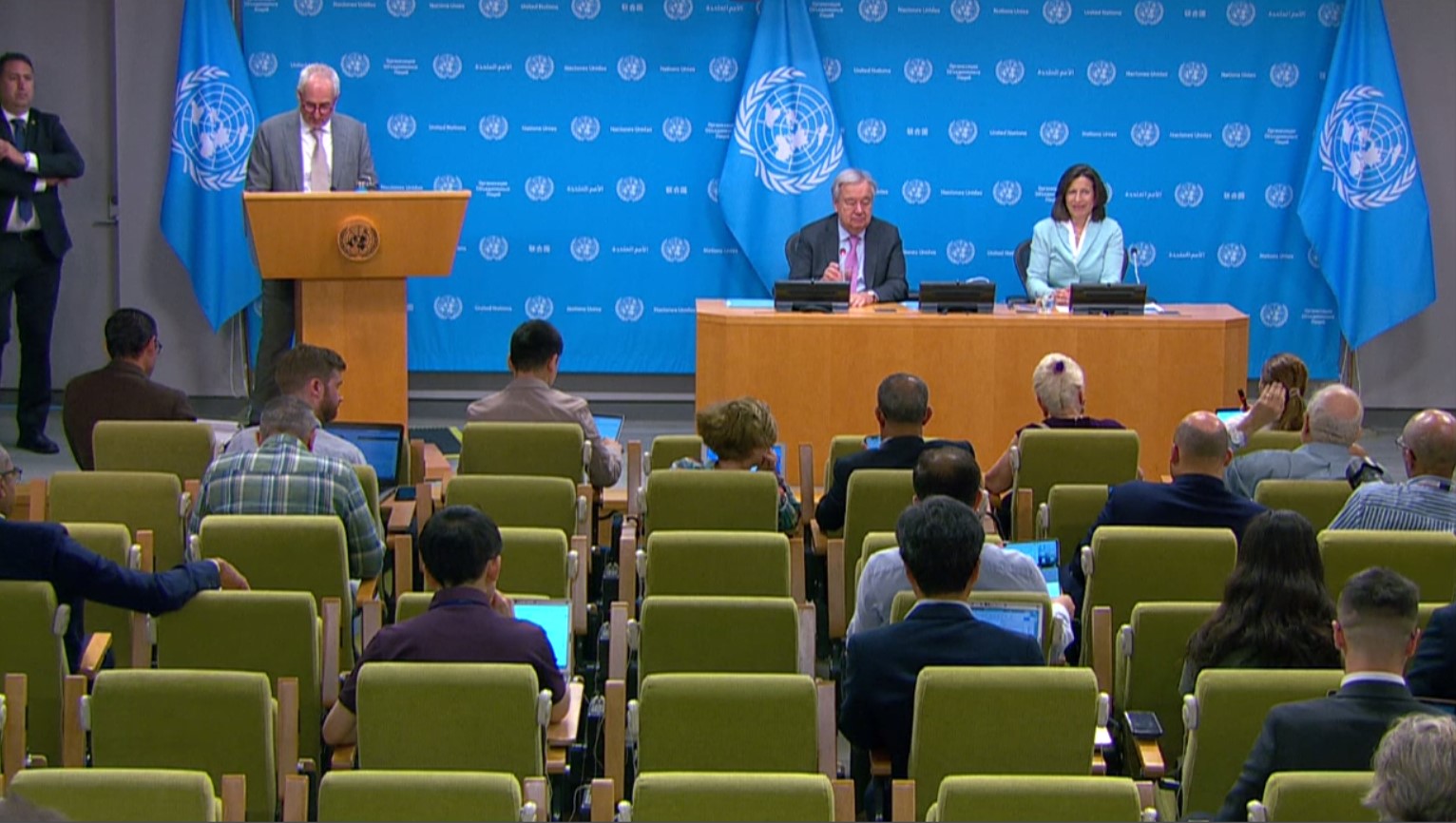
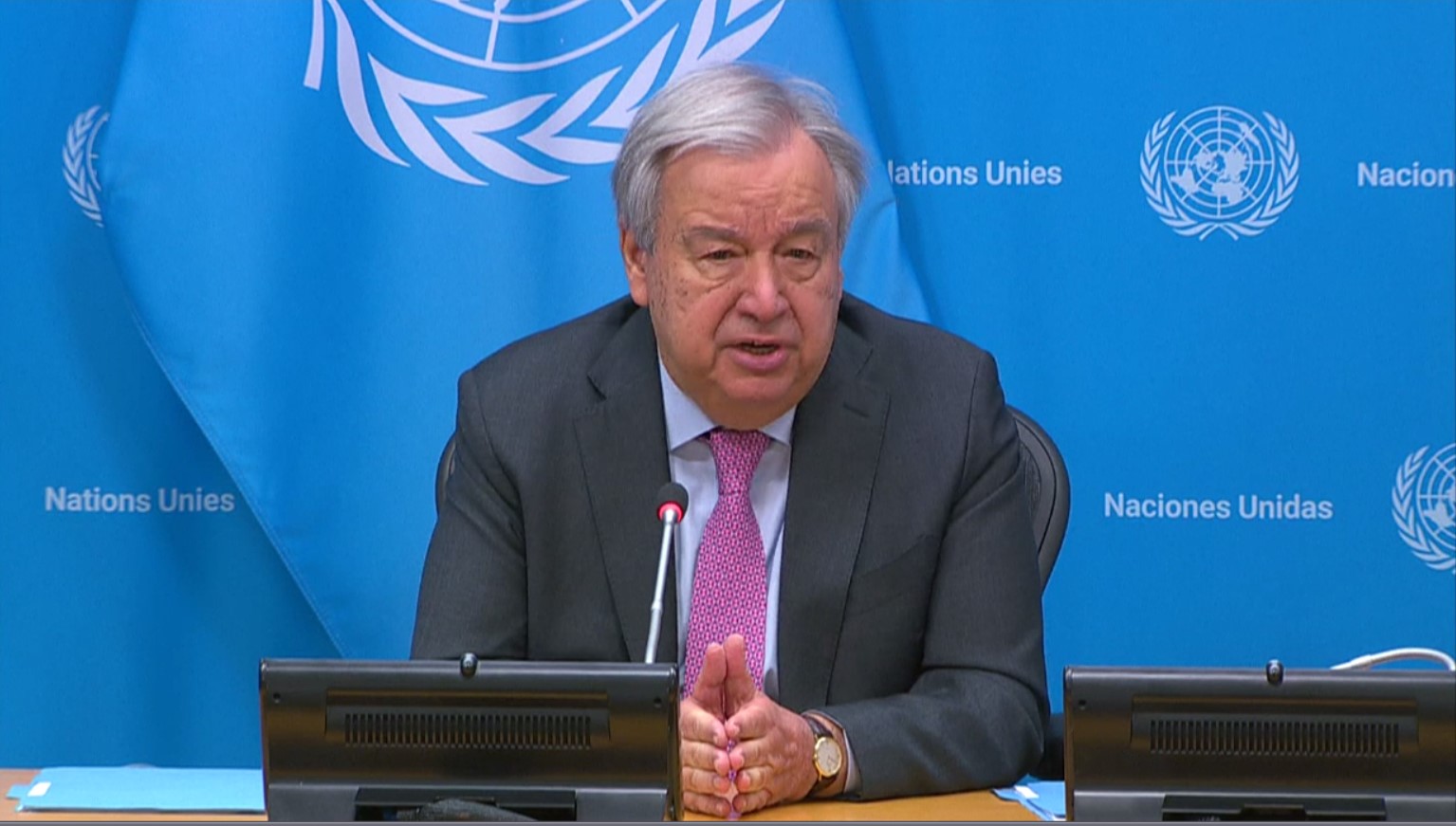
UN Secretary-General António Guterres briefs the media outside the Security Council on the situation in Gaza.UN Photo/Eskinder Debebe UN Secretary-General António Guterres briefs the media outside the Security Council on the situation in Gaza.

Israel must make meaningful changes in the way it is fighting in Gaza to avoid civilian casualties while also undergoing “a true paradigm shift” in lifesaving aid delivery, the UN chief said on Friday. 

Marking six months of war since the “ab

horrent” Hamas-led terror attacks of 7 October, António Guterres told journalists at UN Headquarters in New York that nothing could justify the horror unleashed by Palestinian militants that day. 

“I once again utterly condemn the use of sexual violence, torture injuring and kidnapping of civilians, the firing of rockets towards civilian targets and the use of human shields”, he said, calling again for the unconditional release of all hostages still being held in the Gaza Strip. 

Having met many of the family members of those held captive “I carry their anguish, uncertainty and deep pain with me every day”, added Mr. Guterres. 

‘Relentless death’ 

But the past six months of Israel’s military campaign has also brought “relentless death and destruction to Palestinians”, with over 32,000 reported killed, the vast majority women and children. 

“Lives are shattered. Respect for international law is in tatters”, he said. 

The resulting humanitarian disaster is unprecedented, with more than a million “facing catastrophic hunger.” 

Children are dying due to lack of food and water: “This is incomprehensible and entirely avoidable”, the UN chief declared, repeating that nothing can justify such collective punishment. 

Weaponized AI 

Mr. Guterres said he was deeply troubled by reports that the Israeli military has been using AI to help identify targets during its relentless bombing of densely populated areas of Gaza. 

No part of life and death decisions which impact entire families should be delegated to the cold calculation of algorithms”, he said. 

AI should only be used as a force for good, not to wage war “on an industrial level, blurring accountability.” 

UNRWA staff in Amman, Jordan, attend a ceremony to remember colleagues who have lost their lives in Gaza. UNRWA/Shafiq Fahed UNRWA staff in Amman, Jordan, attend a ceremony to remember colleagues who have lost their lives in Gaza.

Humanitarian deaths 

Branding the war “the deadliest of conflicts”, he highlighted that 196 humanitarians including over 175 UN staffers have been killed, the vast majority serving with Palestine relief agency UNRWA. 

“An information war has added to the trauma – obscuring facts and shifting blame”, said the UN chief, compounded by Israel denying journalists entry into Gaza, consequently allowing disinformation to spread. 

Tactics must change 

And following the appalling killing of the seven staffers with World Central Kitchen, the main problem is not who made the mistakes but “the military strategy and procedures in place that allow for those mistakes to multiply time and time again”, the Secretary-General said. 

Fixing those failures requires independent investigations and meaningful and measurable changes on the ground.” 

He said the UN had been told by the Israeli Government that it was now planning to allow a “meaningful increase” in the flow of aid to Gaza. The UN chief said he sincerely hoped the increase in aid would materialize quickly. 

‘Failure would be unforgivable’ 

“Dramatic humanitarian conditions require a quantum leap in the delivery of life-saving aid – a true paradigm shift.” 

He noted last week’s Security Council resolution calling for hostages releases, civilian protection and unimpeded aid delivery.  

“All those demands must be implemented. Failure would unforgivable”, he said. 

Six months on, the world stands on the brink of mass starvation in Gaza, a regional conflagration and a “total loss of faith in global standards and norms.”

A boy runs through the destroyed streets of Gaza.© UNRWA/Ashraf Amra A boy runs through the destroyed streets of Gaza.

Unprecedented violations: UN rights office 

The violations committed since 7 October in Israel and Gaza, as well as the destruction and suffering of civilians in the enclave are unprecedented, the UN human rights office, OHCHR, said on Friday, warning that the risk of further atrocity crimes is high. 

OHCHR upheld the need to ensure aid delivery and the protection of humanitarian workers, noting that attacks against them may amount to war crimes. 

The Israeli airstrikes that killed the World Central Kitchen personnel underline the horrific conditions under which humanitarians are operating in Gaza, said Spokesperson Jeremy Laurence told journalists in Geneva. 

Israel has also killed law enforcement officials and others involved in securing humanitarian aid delivery, directly contributing to the breakdown of civil order and putting humanitarian workers and those in need of aid in further danger,” he added. 

Following the attacks, World Central Kitchen and other NGOs suspended aid delivery and distributions in Gaza, “increasing the already real risk of more deaths from famine and disease at larger scale.” 

War crimes warning 

Mr. Laurence recalled that international law requires all warring parties to respect and protect humanitarian personnel and ensure their safety, security, and freedom of movement. 

As the occupying power, Israel has the additional obligation to ensure, to the fullest extent possible, that the basic needs of Gaza’s population are met. This means the authorities must either ensure that people can access food and medical care or facilitate the work of humanitarians delivering this assistance.  

“Attacking people or objects involved in humanitarian assistance may amount to a war crime,” he said. 

He pointed out that UN Human Rights High Commissioner Volker Türk has repeatedly stated that impunity must end. 


Celebrity media platforms provide premium news reporting services in the six official languages of the United Nations.

 
The mission of the Celebrity Media Foundation is to support the United Nations in maintaining world peace, conducting international affairs, and sponsoring international public welfare undertakings in accordance with the UN Charter. The Celebrity Media Foundation operates with the voluntary support of enthusiastic volunteers and philanthropists. Our consensus is that it is necessary to promote and support celebrities, charitable organizations, and individuals who are committed to improving the global social condition to participate in international public welfare activities.


Within its capabilities, the Celebrity Media Foundation provides financial support for the United Nations' international affairs and public welfare undertakings, including charitable donations, and supports advocacy, education, and celebrities and philanthropists in improving global climate change, children's education, environmental protection, and other important areas.

The Celebrity Media Foundation is committed to the good progress of global public welfare undertakings and promotes internationally influential charitable organizations and celebrities to provide high-standard charitable support for international affairs and charitable public welfare activities; it cooperates with non-profit organizations and philanthropists around the world to promote the development of international public welfare undertakings.

播放器加载中....

The network platform affiliated with the Celebrity Media Foundation, abbreviated as Celebrity Media, establishes a Celebrity Media Alliance with the media in the six official languages of the United Nations at the UN News Centre, engaging in the collection, editing, and publishing of news from various countries around the world with a focus on UN news.

As a tax-exempt non-profit media organization operating network television, the Celebrity Media Foundation looks forward to the sponsorship and support of knowledgeable individuals, charitable organizations, and individuals.


Thank you for your loving donation to celebrity media

To adapt to the development needs of the AI intelligent era, Celebrity Media uses AI robots to provide services in the six official languages of the United Nations, offering paid services such as news release, video playback, and online interviews for UN-related agencies, non-governmental organizations, and users in need, to support the arduous work of photographers, video editors, graphic editors, and volunteers dispatched by the Celebrity Media Foundation.


Contact the Celebrity Media Foundation Network AI Technology Department:

Mr. Vincent This email address is being protected from spambots. You need JavaScript enabled to view it. Phone: 646-319-6718

Mr. Enze Bai This email address is being protected from spambots. You need JavaScript enabled to view it. Phone: 917-443-582