
YoutubeCelebrity.TV

Celebrity Media Alliance

Six UN Languages News.

منصة وسائل الإعلام المشاهير تبث الأخبار يوم الاثنين باللغة العربية

名人媒体平台星期二使用中文播报新闻

The celebrity media platform broadcasts news on Wednesday in English

La plateforme médiatique des célébrités diffuse les nouvelles le jeudi en français

Медийная платформа знаменитостей вещает новости в пятницу на русском языке

La plataforma de medios de celebridades transmite noticias el sábado en español

Strong UN Better World! 联合国强大 世界更美好!

María Fernanda Espinosa Garcés 女士在国际和平研究所就任第73届联合国大会主席前的发言
تصريحات السيدة ماريا فرناندا إسبينوسا غارسيس في معهد السلام الدولي قبل توليها منصب رئيسة الدورة الثالثة والسبعين للجمعية العامة للأمم المتحدة
Ms. María Fernanda Espinosa Garcés’ remarks before taking office as 73rd UNGA President At IPI
Déclaration de Mme María Fernanda Espinosa Garcés avant sa prise de fonctions en tant que Présidente de la 73e session de l’Assemblée générale des Nations Unies à l’IPI
Выступление г-жи Марии Фернанды Эспиносы Гарсес в IPI перед вступлением в должность Председателя 73-й сессии Генеральной Ассамблеи ООН
Declaraciones de la Sra. María Fernanda Espinosa Garcés antes de asumir el cargo de Presidenta del 73.º período de sesiones de la Asamblea General de las Naciones Unidas en el IPI


News Summary of the Election for the Tenth Secretary-General of the UN

English Media

LIVE: World leaders adopt game-changing UN Pact for the Future

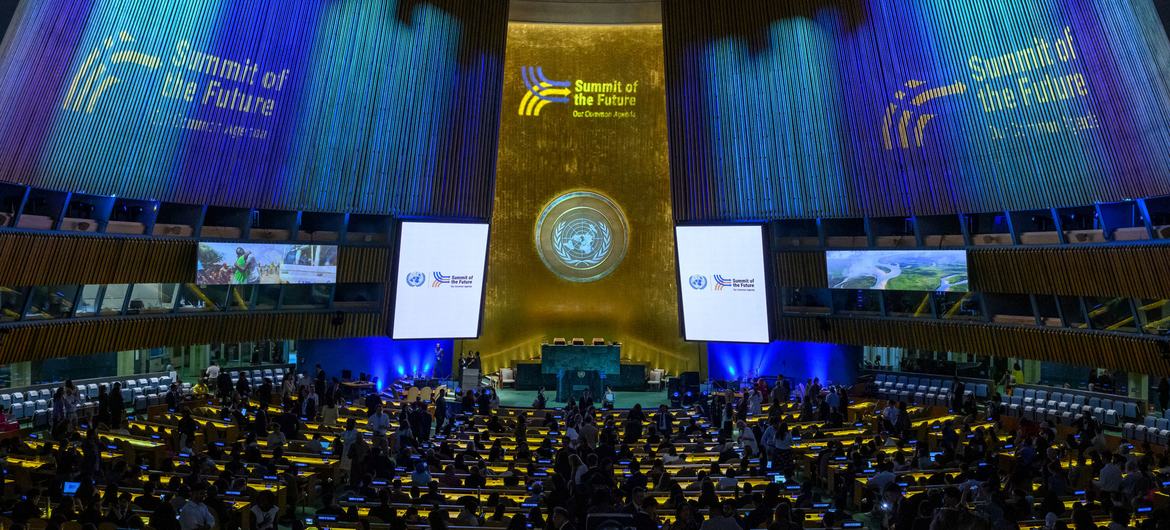
The Summit of the Future Action Days.UN Photo/Loey Felipe  The Summit of the Future Action Days.

World leaders are at UN Headquarters in New York this Sunday where world leaders have just adopted the Pact for the Future by consensus - with a small group of just seven countries holding out, having failed to pass a last-minute amendment. The centrepiece of the Summit of the Future is a once-in-a-generation opportunity to reimagine the multilateral system and steer humanity on a new course to meet existing commitments and solve long-term challenges. 

United Nations adopts ground-breaking Pact for the Future to transform global governance

New York, 22 September 2024 – World leaders today adopted a Pact for the Future that includes a Global Digital Compact and a Declaration on Future Generations. This Pact is the culmination of an inclusive, years-long process to adapt international cooperation to the realities of today and the challenges of tomorrow. The most wide-ranging international agreement in many years, covering entirely new areas as well as issues on which agreement has not been possible in decades, the Pact aims above all to ensure that international institutions can deliver in the face of a world that has changed dramatically since they were created. As the Secretary-General has said, “we cannot create a future fit for our grandchildren with a system built by our grandparents.”

Overall, the agreement of the Pact is a strong statement of countries’ commitment to the United Nations, the international system and international law.  Leaders set out a clear vision of an international system that can deliver on its promises, is more representative of today’s world and draws on the energy and expertise of governments, civil society and other key partners.

“The Pact for the Future, the Global Digital Compact, and the Declaration on Future Generations open the door to new opportunities and untapped possibilities,” said the Secretary-General during his remarks at the opening of the Summit of the Future. The President of the General Assembly noted that the Pact would “lay the foundations for a sustainable, just, and peaceful global order – for all peoples and nations.”

The Pact covers a broad range of issues including peace and security, sustainable development, climate change, digital cooperation, human rights, gender, youth and future generations, and the transformation of global governance. Key deliverables in the Pact include:

In the area of peace and security

  • The most progressive and concrete commitment to Security Council reform since the 1960s, with plans to improve the effectiveness and representativeness of the Council, including by redressing the historical under-representation of Africa as a priority.
  • The first multilateral recommitment to nuclear disarmament in more than a decade, with a clear commitment to the goal of totally eliminating nuclear weapons.
  • Agreement to strengthen international frameworks that govern outer space, including a clear commitment to prevent an arms race in outer space and the need to ensure all countries can benefit from the safe and sustainable exploration of outer space.
  • Steps to avoid the weaponization and misuse of new technologies, such as lethal autonomous weapons, and affirmation that the laws of war should apply to many of these new technologies.

On sustainable development, climate and financing for development

  • The entire Pact is designed to turbo-charge implementation of the Sustainable Development Goals.
  • The most detailed agreement ever at the United Nations on the need for reform of the international financial architecture so that it better represents and serves developing countries, including:
    • Giving developing countries a greater say in how decisions are taken at international financial institutions;
    • Mobilizing more financing from multilateral development banks to help developing countries meet their development needs;
    • Reviewing the sovereign debt architecture to ensure that developing countries can borrow sustainably to invest in their future, with the IMF, UN, G20 and other key players working together;
    • Strengthening the global financial safety net to protect the poorest in the event of financial and economic shocks, through concrete actions by the IMF and Member States;
    • and accelerating measures to address the challenge of climate change, including through delivering more finance to help countries adapt to climate change and invest in renewable energy.
  • Improving how we measure human progress, going beyond GDP to capturing human and planetary wellbeing and sustainability.
  • A commitment to consider ways to introduce a global minimum level of taxation on high-net-worth individuals.
  • On climate change, confirmation of the need to keep global temperature rise to 1.5 °C above pre-industrial levels and to transition away from fossil fuels in energy systems to achieve net zero emissions by 2050.

On digital cooperation

  • The Global Digital Compact, annexed to the Pact, is the first comprehensive global framework for digital cooperation and AI governance.
  • At the heart of the Compact is a commitment to design, use and govern technology for the benefit of all. This includes commitments by world leaders to:
    • Connect all people, schools and hospitals to the Internet;
    • Anchor digital cooperation in human rights and international law;
    • Make the online space safe for all, especially children, through actions by governments, tech companies and social media;
    • Govern Artificial Intelligence, with a roadmap that includes an International Scientific Panel and a Global Policy Dialogue on AI;
    • Make data more open and accessible, with agreements on open-source data, models, and standards;
    • This is also the first global commitment to data governance, placing it on the UN agenda and requiring countries to take concrete actions by 2030.

Youth and future generations

  • The first ever Declaration on Future Generations, with concrete steps to take account of future generations in our decision-making, including a possible envoy for future generations.
  • A commitment to more meaningful opportunities for young people to participate in the decisions that shape their lives, especially at the global level.

Human rights and gender

  • A strengthening of our work on human rights, gender equality and the empowerment of women.
  • A clear call on the need to protect human rights defenders.
  • Strong signals on the importance of engagement of other stakeholders in global governance, including local and regional governments, civil society, private sector and others.

There are provisions across the Pact and its annexes for follow-up action, to ensure that the commitments made are implemented.

Summit Process

The Summit process and the Pact have been deeply enriched by the contributions of millions of voices and thousands of stakeholders from around the world.

The Summit brought together over 4000 individuals from Heads of State and Government, observers, IGOs, UN System, civil society and non-governmental organizations. In a broader push to increase the engagement of diverse actors, the formal Summit was preceded by the Action Days from 20-21 September, which attracted more than 7,000 individuals representing all segments of society. The Action Days featured strong commitments to action by all stakeholders, as well as pledges of USD 1.05 billion to advance digital inclusion.
What to expect at the United Nations general debate

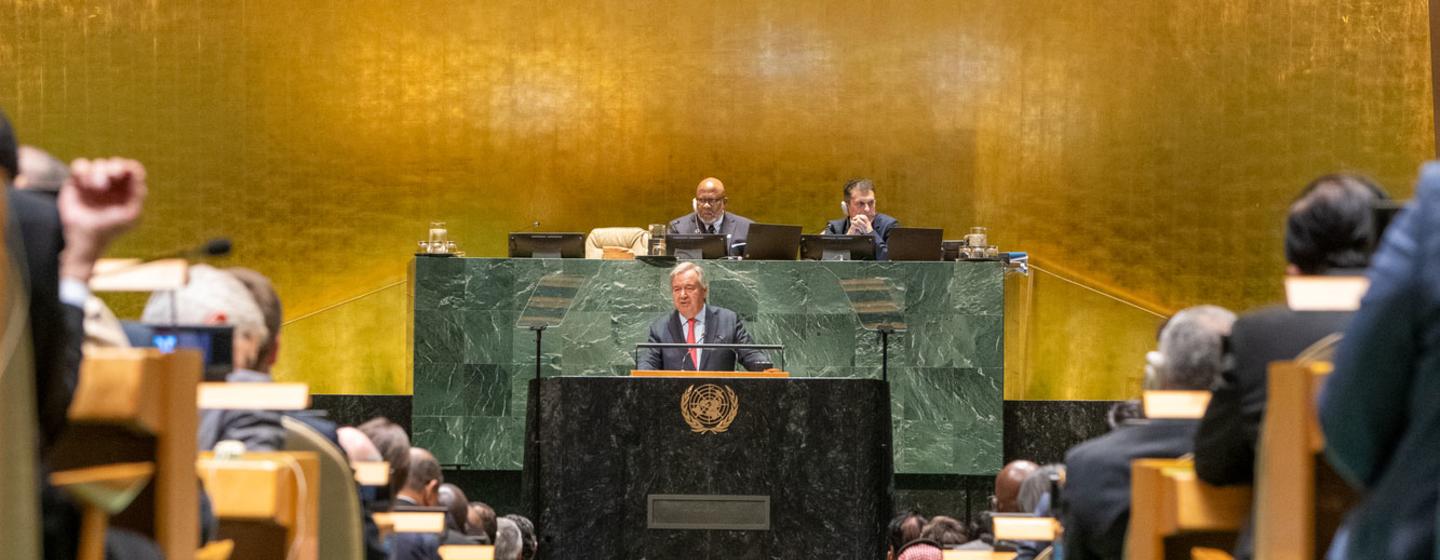
UN Secretary-General António Guterres (at podium) addresses the opening of 78th session of the General Assembly annual debate. (file)UN Photo/Cia Pak UN Secretary-General António Guterres (at podium) addresses the opening of 78th session of the General Assembly annual debate. (file)
By Daniel Dickinson

It’s the busiest and probably most high-profile week at UN Headquarters in New York, where leaders from across the world come together to discuss global issues or highlight their country-specific priorities. 

The 79th session of General Assembly gets underway in mid-September and the centrepiece for many is the annual general debate. But what exactly is it?

Here’s what you need to know about the debate which begins on Tuesday, 24 September:

What is the general debate?

The general debate is the annual meeting in September of Heads of State and Government of the 193 UN Member States. It takes place at the beginning of the General Assembly session, often known as UNGA.

It is usually the first debate of the session and, with the exception of the concurrent high-level meetings, the only one in which Heads of State and Government regularly participate.

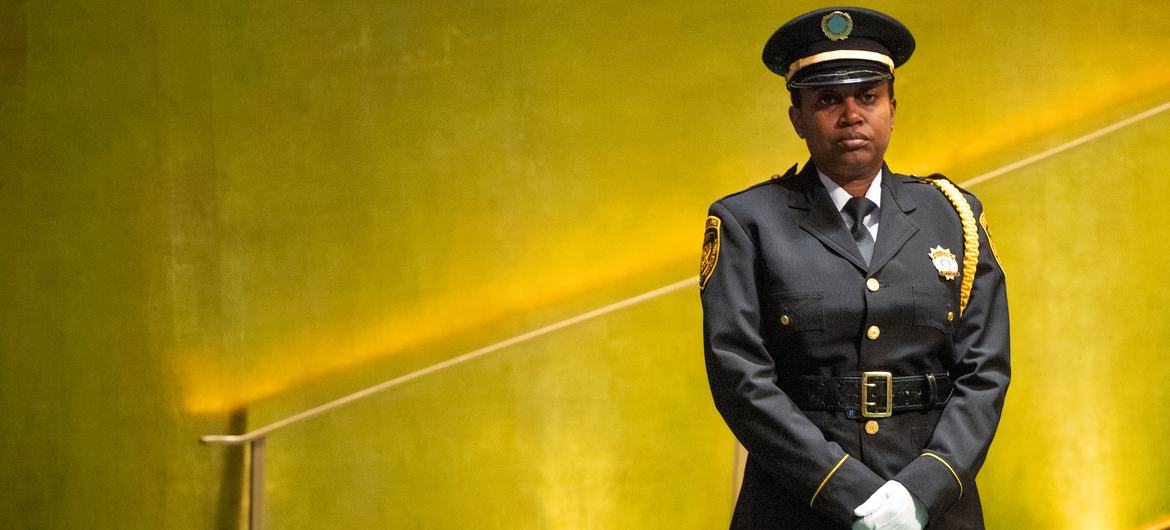
A UN security officer stands at the bottom of the podium stairs in the General Assembly Hall.UN Photo/Cia Pak A UN security officer stands at the bottom of the podium stairs in the General Assembly Hall.
Is it really a debate?

Not really. The general debate offers the representatives of all Member States (and some other entities) the opportunity to deliver a speech in the hallowed surroundings of the General Assembly Hall.

There is no discussion or debate immediately after any speech. However, Member States do have the right of reply, and this is made in writing by a Head of State. The letter is addressed to the Secretary-General, who will circulate it to all Member States. During the general debate, statements in exercise of the right of reply are made at the end of each day.

The theme for this September session, the 79th, is Leaving no one behind: Acting together for the advancement of peace, sustainable development and human dignity for present and future generations. Decided in broad consultation by the President of the General Assembly, many Heads of State may reference it in their speeches but are not obliged to do so.

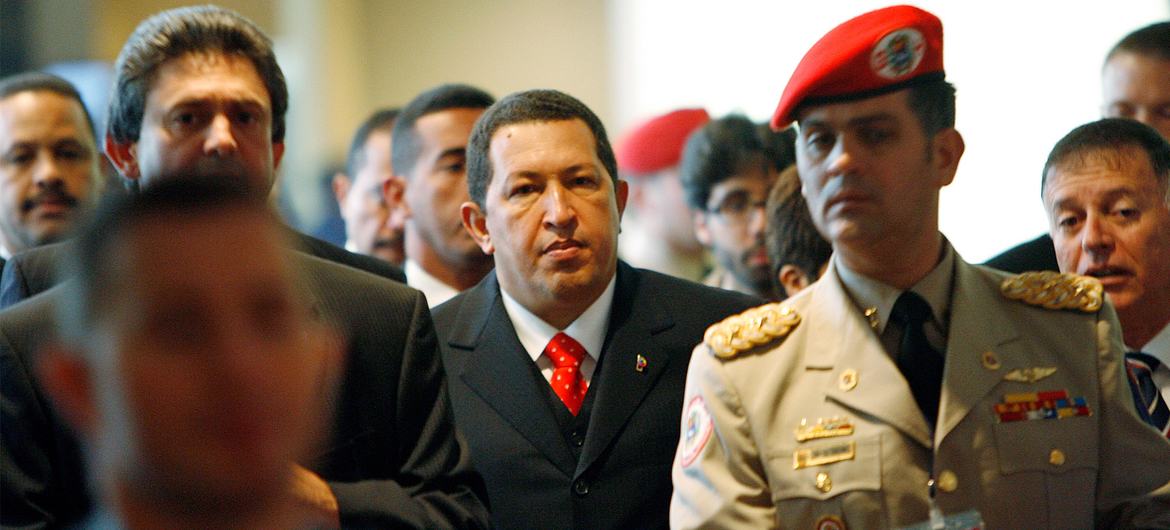
Hugo Chávez (centre), the former Venezuelan President, arrives at UN Headquarters in New York in September 2006. (file)UN Photo/Mark Garten Hugo Chávez (centre), the former Venezuelan President, arrives at UN Headquarters in New York in September 2006. (file)
Who speaks when?

In current practice, after the opening of the meeting, the UN Secretary-General makes a statement, followed by the President of the General Assembly.

Traditionally, and at least since the 10th session of the General Assembly in September 1955, it has been Brazil that opens the debate. According to the UN Protocol and Liaison Services, initially in the early days of the debate no one State wanted to be the first to speak, and Brazil stepped in on several occasions.

The United States, as the UN’s host country, is next on the podium.

The speaking order of the other 191 Member States is based on criteria such as geographic balance as well as the level of representation and their preference – for instance, a Head of State may not be present in New York at the beginning of the debate.

Other than the Member States, the only others invited to participate are the non-member observer States of Holy See and the State of Palestine as well as the European Union, which has observer status at the UN.

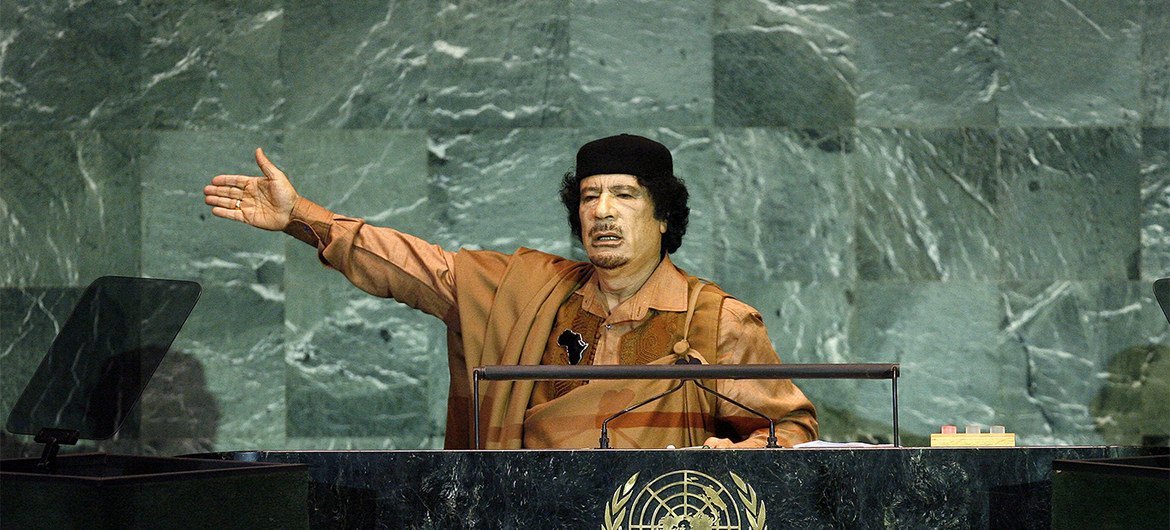
Former Libyan leader Muammar Gaddafi addresses the General Assembly in September 2009. (file)UN Photo/Marco Castro Former Libyan leader Muammar Gaddafi addresses the General Assembly in September 2009. (file)
Flashing light, flashing tempers

A voluntary 15-minute time limit for statements is informally suggested during the general debate, and speakers are discreetly alerted by a red-flashing light when their time is up, although they are never interrupted or stopped.

The key word here is voluntary, and many, if not most, Heads of State speak for longer.

Former Cuban leader Fidel Castro still has the record dating back to 1960 for the longest ever speech famously clocking in at 269 minutes, or just under four and a half hours, after promising “we shall do our best to be brief.”

There have been other long and very long speeches, but ones perhaps more notable for content rather than length.

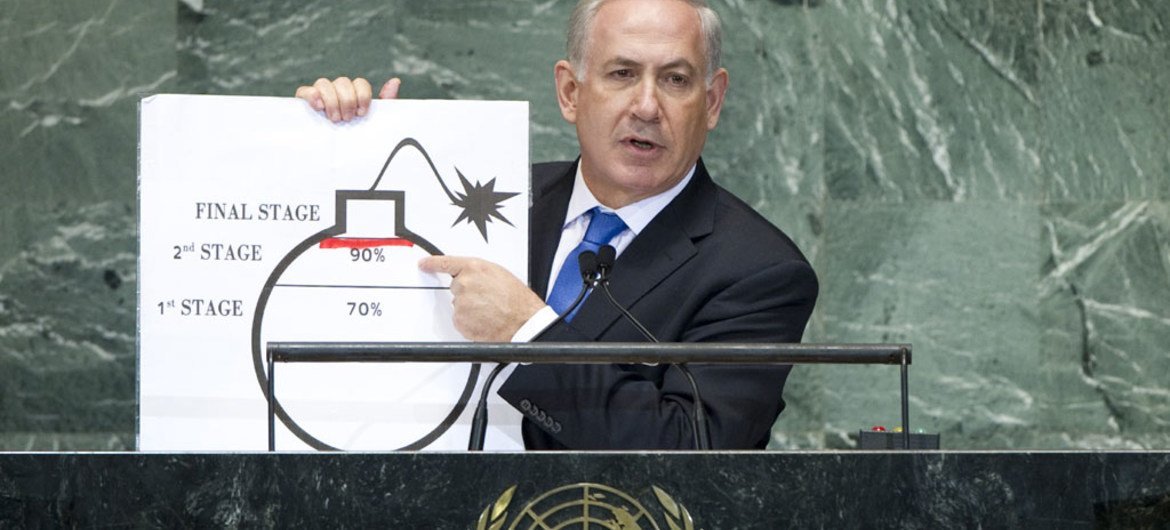
Prime Minister Benjamin Netanyahu of Israel addresses the General Assembly in September 2012. (file)UN Photo/J. Carrier Prime Minister Benjamin Netanyahu of Israel addresses the General Assembly in September 2012. (file)
In 2006, amid rising tensions between the US and Venezuela, the latter’s President Hugo Chávez called then-US President George W. Bush “the devil” from the podium.

In 2009, the late Libyan leader Muammar Gaddafi delivered a scathing 100-minute-long speech highly critical of the UN Security Council and the veto power of the five permanent members

Israeli Prime Minister Benjamin Netanyahu held up a cartoon representation of a bomb in 2012 to warn the world that Iran was just months away from being able to build a nuclear weapon.

And former US president Donald Trump in 2017 threatened to “totally destroy North Korea”, disparagingly referring to its leader Kim Jong Un as “Rocket Man”.

The gavel, the walk-out

The first general debate took place in 1946 and over the intervening almost 80 years, plenty of tradition, pomp and circumstance and a few myths have become associated with the event.

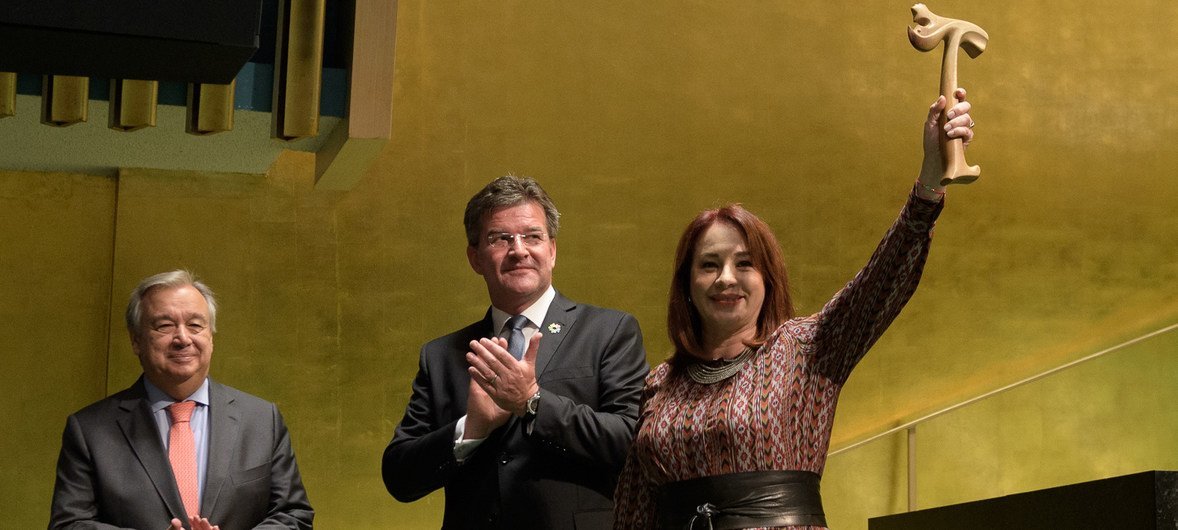
The gavel, which was gifted to the UN in 1952 by Iceland is used to mark the beginning of the morning and afternoon sessions of the general debate and, when necessary, also to retain order.

It was used to try and silence the then leader of the Soviet Union Nikita Khrushchev who, so legend has it, took off his shoe and banged it on the rostrum to forcefully make his point.

Sometimes diplomatic decorum is upended when whole delegations decide to leave the General Assembly Hall to protest against the views and actions of another Member State, although in recent years, it has become common enough not to shock.

Israel regularly protests Iran’s speech and vice-versa.

María Fernanda Espinosa Garcés (right), President of the 73rd General Assembly session, holds the gavel after the handover from Miroslav Lajčák (centre), President of the 72nd session, with Secretary-General António Guterres in 2018. (file)UN Photo/Manuel Elías María Fernanda Espinosa Garcés (right), President of the 73rd General Assembly session, holds the gavel after the handover from Miroslav Lajčák (centre), President of the 72nd session, with Secretary-General António Guterres in 2018. (file)
How to follow the general debate

While the debate is not open to the public, all proceedings are available live and on demand at UN Web TV.

All general debate speeches are available in the UN’s Dag Hammarskjöld Library.

Many of the 78 previous general debates, or highlights from them, are available at the UN Audiovisual Library.

UN General Assembly demands Israel end ‘unlawful presence’ in Occupied Palestinian Territory

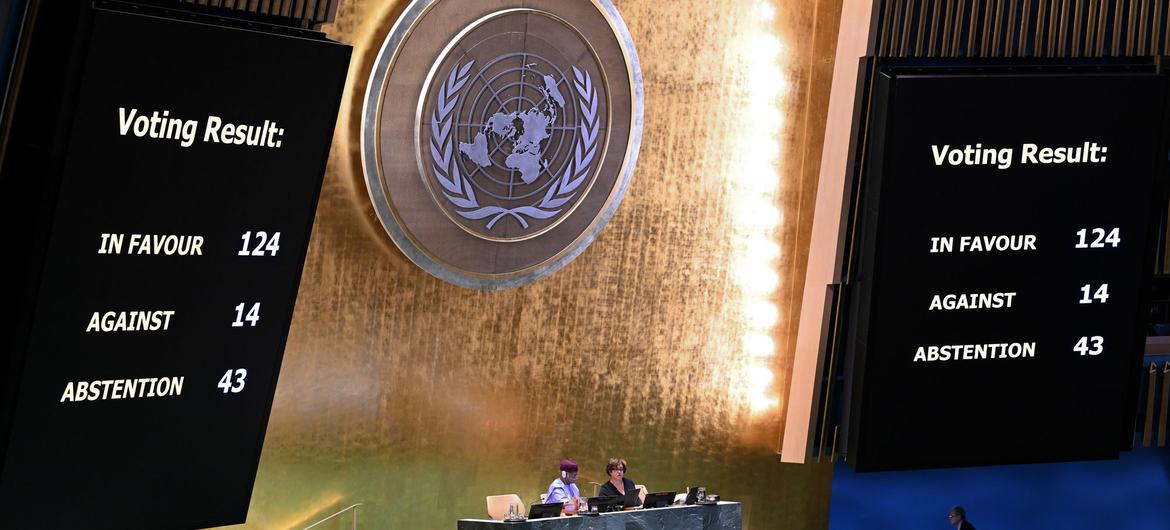
Result of the General Assembly vote on a draft resolution on the ICJ advisory opinion on the legal consequences arising from Israel’s policies and practices in the Occupied Palestinian TerritoryUN Photo/Evan Schneider Result of the General Assembly vote on a draft resolution on the ICJ advisory opinion on the legal consequences arising from Israel’s policies and practices in the Occupied Palestinian Territory
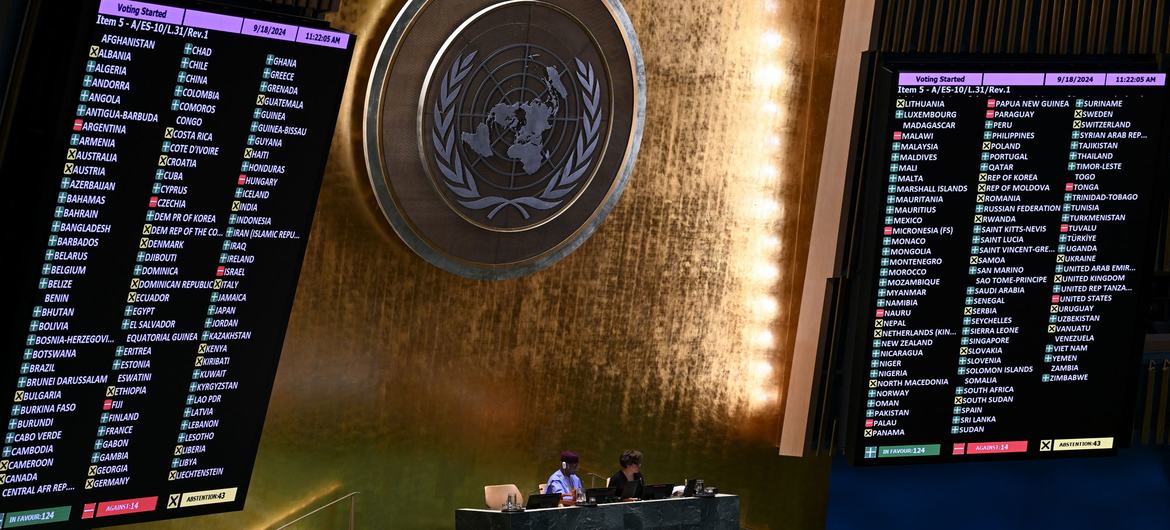
The United Nations General Assembly on Wednesday voted overwhelmingly to adopt a resolution that demands that Israel “brings to an end without delay its unlawful presence” in the Occupied Palestinian Territory.

With a recorded vote of 124 nations in favour, 14 against, and 43 abstentions, the resolution calls for Israel to comply with international law and withdraw its military forces, immediately cease all new settlement activity, evacuate all settlers from occupied land, and dismantle parts of the separation wall it constructed inside the occupied West Bank.

The General Assembly further demanded that Israel return land and other “immovable property”, as well as all assets seized since the occupation began in 1967, and all cultural property and assets taken from Palestinians and Palestinian institutions.

The resolution also demands Israel allow all Palestinians displaced during the occupation to return to their place of origin and make reparation for the damage caused by its occupation.

The resolution stems from the advisory opinion issued by the International Court of Justice (ICJ) in July, in which the Court declared that Israel’s continued presence in the Territory “is unlawful”, and that “all States are under an obligation not to recognize” the decades-long occupation.

Threat to peace and security

The Assembly “strongly deplored the continued and total disregard and breaches” by the Government of Israel of its obligations under the UN Charter, international law and UN resolutions, stressing that such breaches “seriously threaten” regional and international peace and security.

It also recognized that Israel “must be held to account for any violations” of international law in the Occupied Palestinian Territory, including of international humanitarian and human rights laws.

The text says Israel “must bear the legal consequences of all its internationally wrongful acts, including by making reparation for the injury, including any damage, caused by such acts.”

The General Assembly highlighted the need for the establishment of an international mechanism for reparations to address damage, loss, or injury caused by Israel’s actions.

It also called for creating an international register of damage caused, to document evidence and related claims.

International conference

The resolution also includes a decision to convene an international conference during the Assembly’s current session to implement UN resolutions pertaining to the question of Palestine and the two-State solution for the achievement of a just, lasting and comprehensive peace in the Middle East.

Additionally, the Assembly requested the UN Secretary-General to present proposals for a mechanism to follow up on Israel’s violations of article 3 of the International Convention on the Elimination of All Forms of Racial Discrimination, as identified by the ICJ.

Article 3 refers to racial segregation and apartheid and the undertaking by International Convention’s States Parties to prevent, prohibit and eradicate all practices of this nature in territories under their jurisdiction.

General Assembly votes on a draft resolution on the ICJ advisory opinion.UN Photo/Evan Schneider General Assembly votes on a draft resolution on the ICJ advisory opinion.
Call on States

In its resolution, the General Assembly called upon all UN Member States to comply with their obligations under international law and take concrete steps to address Israel’s ongoing presence in the Occupied Palestinian Territory.

The Assembly urged States to refrain from recognizing Israel’s presence in the Territory as lawful and to ensure that they do not provide aid or assistance in maintaining the situation created by the occupation. This includes taking measures to prevent their nationals, companies, and entities under their jurisdiction from engaging in activities that support or sustain Israel’s occupation.

Additionally, the Assembly called on States to cease importing products originating from Israeli settlements and to halt the transfer of arms, munitions, and related equipment to Israel in cases where there are reasonable grounds to suspect they may be used in the Occupied Palestinian Territory.

Moreover, the resolution urged States to implement sanctions, such as travel bans and asset freezes, against individuals and entities involved in maintaining Israel’s unlawful presence in the Territory. This includes addressing issues related to settler violence and ensuring that those engaged in these activities face legal and financial consequences.

Adjournment

Finally, the Assembly temporarily adjourned its tenth emergency special session and authorized the President of the General Assembly to reconvene the session upon request from Member States.

The special session is a continuation of the tenth emergency special session of the General Assembly that last met in May amid the ongoing crisis in Gaza, during which it adopted a resolution, laying out additional rights for the State of Palestine’s participation in Assembly meetings.

That resolution did not grant Palestine the right to vote or put forward its candidature to UN Main Organs such as the Security Council or the Economic and Social Council (ECOSOC).

It also did not confer membership to the State of Palestine, which requires a specific recommendation from the Security Council.

‘Create a future fit for our grandchildren’, Guterres urges, ahead of gamechanger Summit

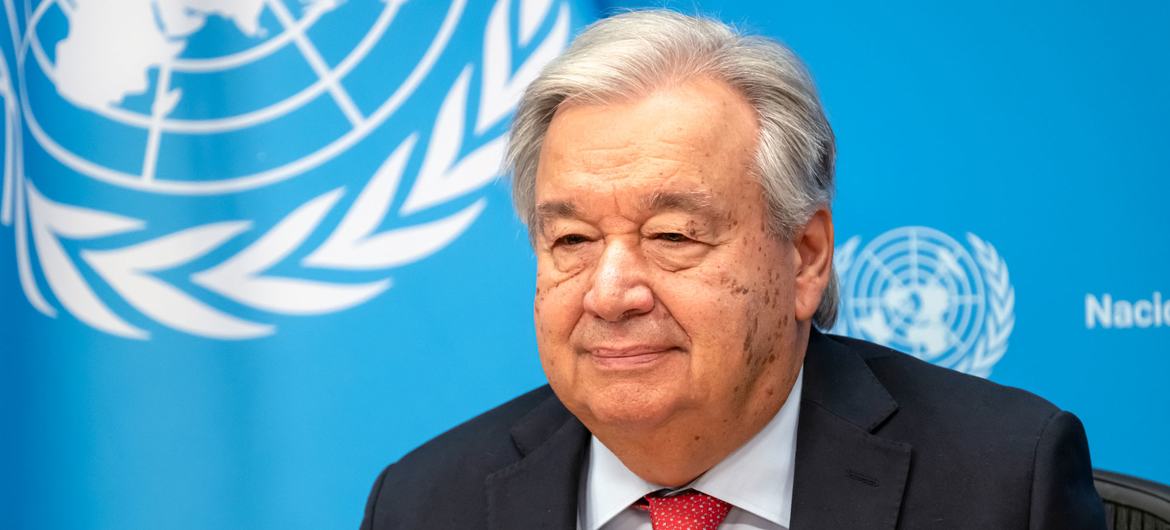
UN Secretary-General Antonio Guterres speaking at a press conference ahead of the General Assembly high-level week.	UN Photo/Mark Garten UN Secretary-General Antonio Guterres speaking at a press conference ahead of the General Assembly high-level week.
Countries must use a once-in-a-generation UN summit to address current and emerging global challenges and reform outdated international institutions, Secretary-General António Guterres said on Wednesday in New York. 

Mr. Guterres was speaking as negotiations for the  Summit of the Future, which opens at UN Headquarters on Sunday, enter the final stretch.

I have one overriding message today: an appeal to Member States for a spirit of compromise. Show the world what we can do, when we work together,” he said.

‘An essential first step’

The two-day Summit of the Future is “an essential first step towards making global institutions more legitimate, effective, and fit for the world of today and tomorrow,” Mr. Guterres told journalists.

“We can’t create a future fit for our grandchildren with systems built for our grandparents,” he said, stressing that the Summit “cannot fail”. 

He said work already done in the lead-up reveals “potential breakthroughs on a number of important fronts”.

This includes “the strongest language on Security Council reform in a generation – and the most concrete step towards Council enlargement since 1963”, the first-ever governance measures for Artificial Intelligence (AI) and other technologies, and advancements in reforming the international financial architecture. 

Other items cover financing for the Sustainable Development Goals (SDGs) and commitment to advance an SDG Stimulus plan to boost support to developing countries.   

It would be tragic if all of these would be lost,” he warned. 

Challenges, crises and conflict 

Mr. Guterres said the Summit is “so critical” because “international challenges are moving faster than our ability to solve them.” 

He pointed to “out-of-control geo-political divisions and runaway conflicts – not least in Ukraine, Gaza, Sudan and beyond,” in addition to “runaway” climate change, inequalities and debt, and the development of AI and other technologies that lack guidance or guardrails.  

“Crises are interacting and feeding off each other – for example, as digital technologies spread climate disinformation that deepens distrust and fuels polarization,” he said. 

Soundcloud

Reform multilateral institutions 

Meanwhile, multilateral institutions “born in a bygone era for a bygone world” simply cannot keep up. 

Mr. Guterres said so many of the challenges the world is facing today were not on the radar 80 years ago when these institutions were created.   

“Our founders understood that times would change,” he said.  “They understood that the values that underpin our global institutions are timeless – but the institutions themselves cannot be frozen in time.” 

An ever-changing world 

He said the peacebuilders back then could not have predicted the changes that have occurred over the past eight decades.

During this time, the world has witnessed independence movements, the economic and geopolitical rise of many developing countries, catastrophic climate consequences, and space exploration, as well as the development of the Internet, smartphones and social media, which are all boosted by AI. 

“Like our founders, we cannot know precisely what the future holds,” he acknowledged.  

“But we don’t need a crystal ball to see that 21st century challenges require problem-solving mechanisms that are more effective, networked and inclusive; that serious power imbalances in global institutions must be adjusted and updated; and that our institutions must draw on the expertise and representation of all of humanity.”

Although change will not happen overnight, “it can start today,” he insisted. 

Finish the job 

Member States attending the Summit are expected to adopt a Pact for the Future, with a Global Digital Compact and Declaration on Future Generations annexed to it.  

Mr. Guterres expressed hope that they will “do everything possible” to get these documents “over the finish line”.  

World leaders to attend

More than 130 Heads of State and Government are scheduled to attend the Summit of the Future, which is taking place from 22-23 September - just ahead of the annual debate in the UN General Assembly. 

The Summit will be preceded by two “action days” where non-governmental organizations (NGOs), academics and private sector representatives will engage on the main themes.   

Reporters asked the Secretary-General how the Summit and its outcome documents will differ from previous UN gatherings, such as the 2016 SDG Summit, which also ended with the adoption of international declarations and pacts.

Mr. Guterres responded that while the SDG Summit and other events were  “about the what”, the Summit of the Future "is about the how”, again underlining the essential need to reform decades-old institutions.

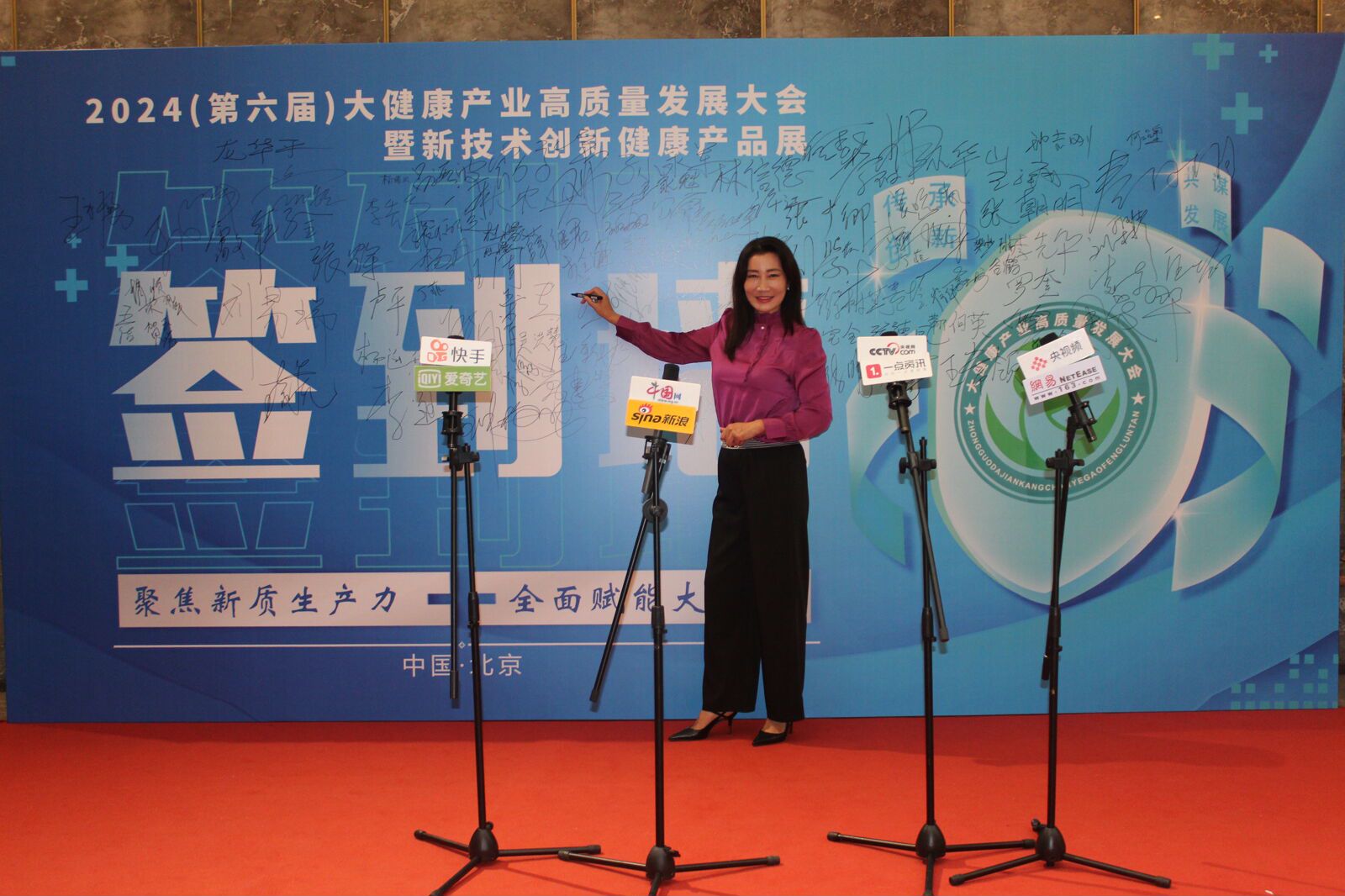
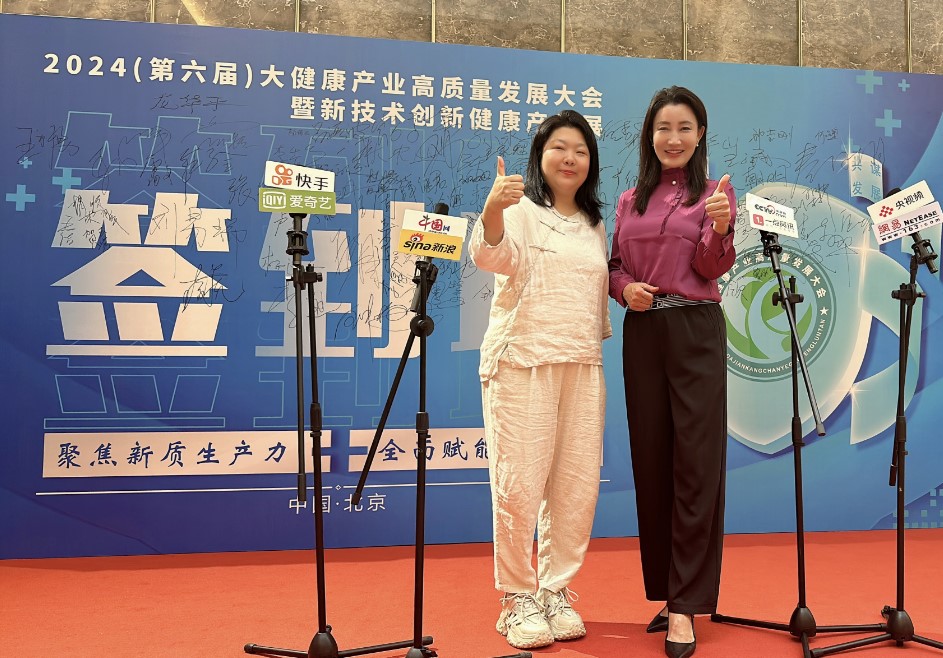
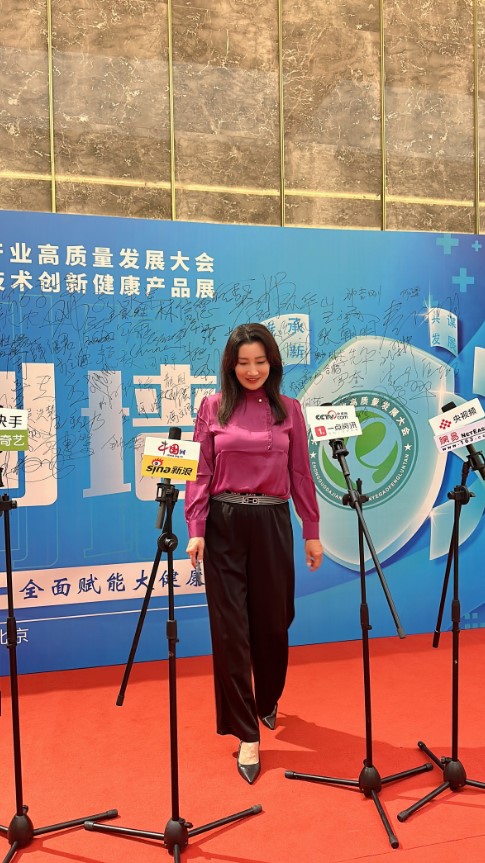
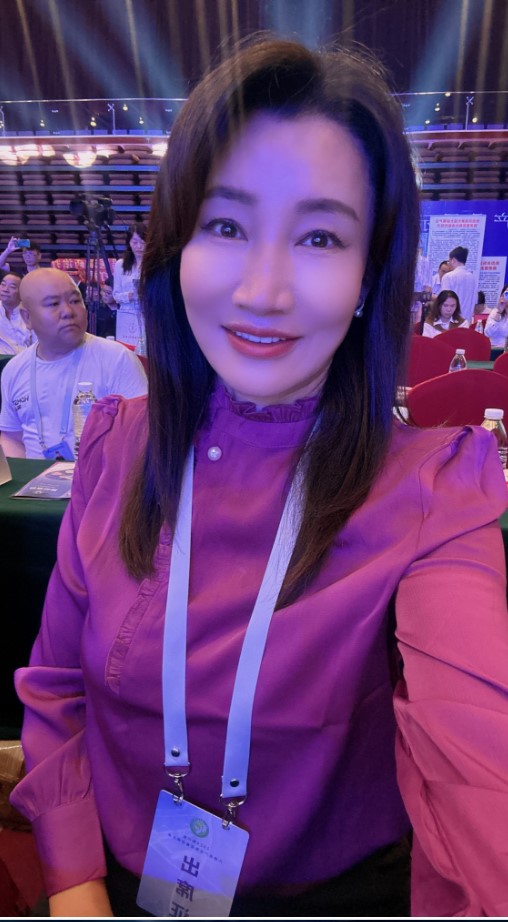
The 6th China High-Quality Development Conference in the Health Industry: Fostering Innovation and Leading the Future, Chairwoman Li Feng Honored with the Innovation Award

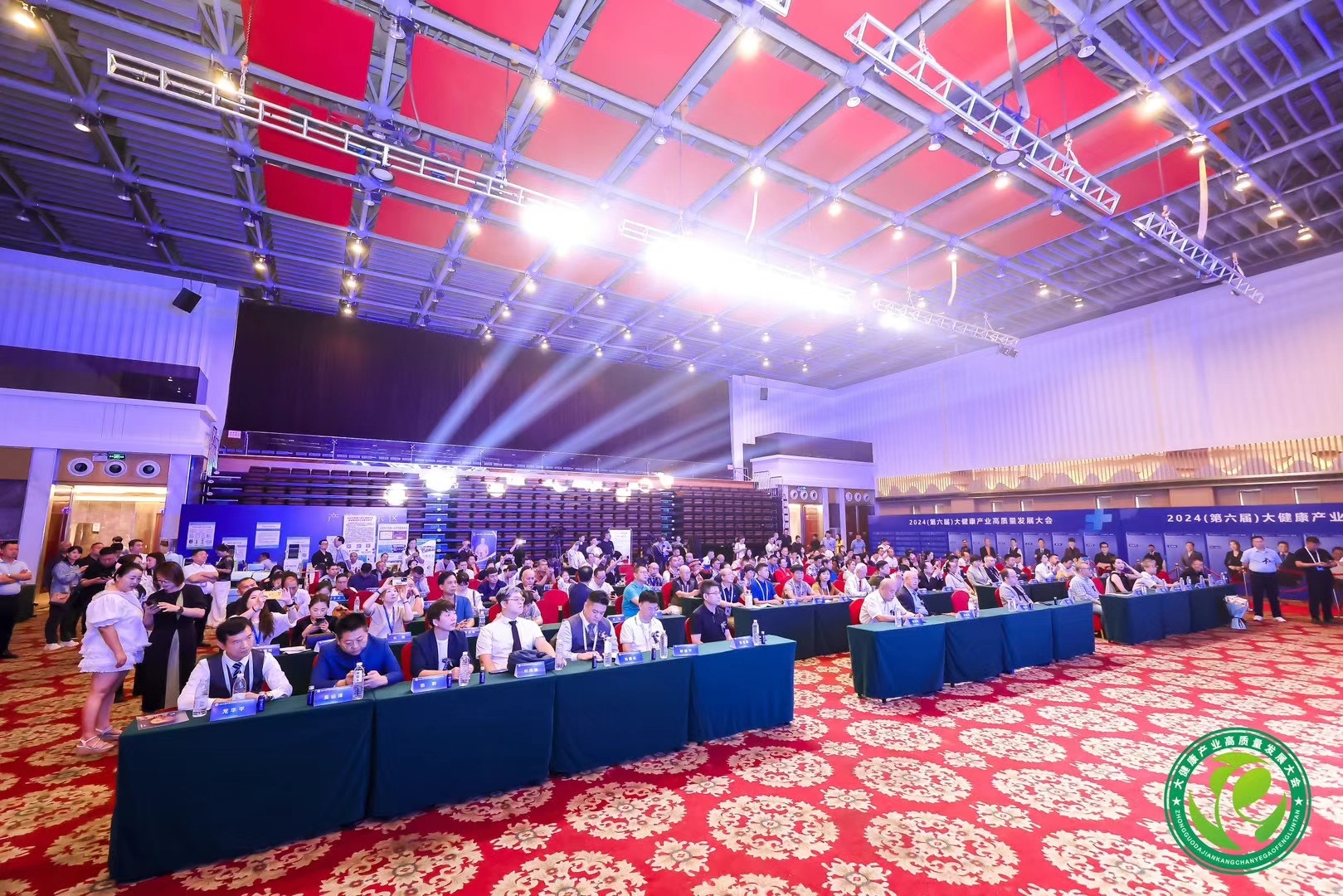
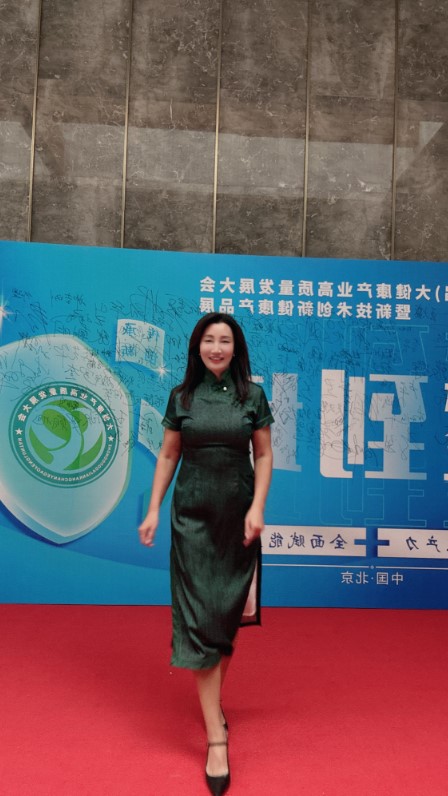
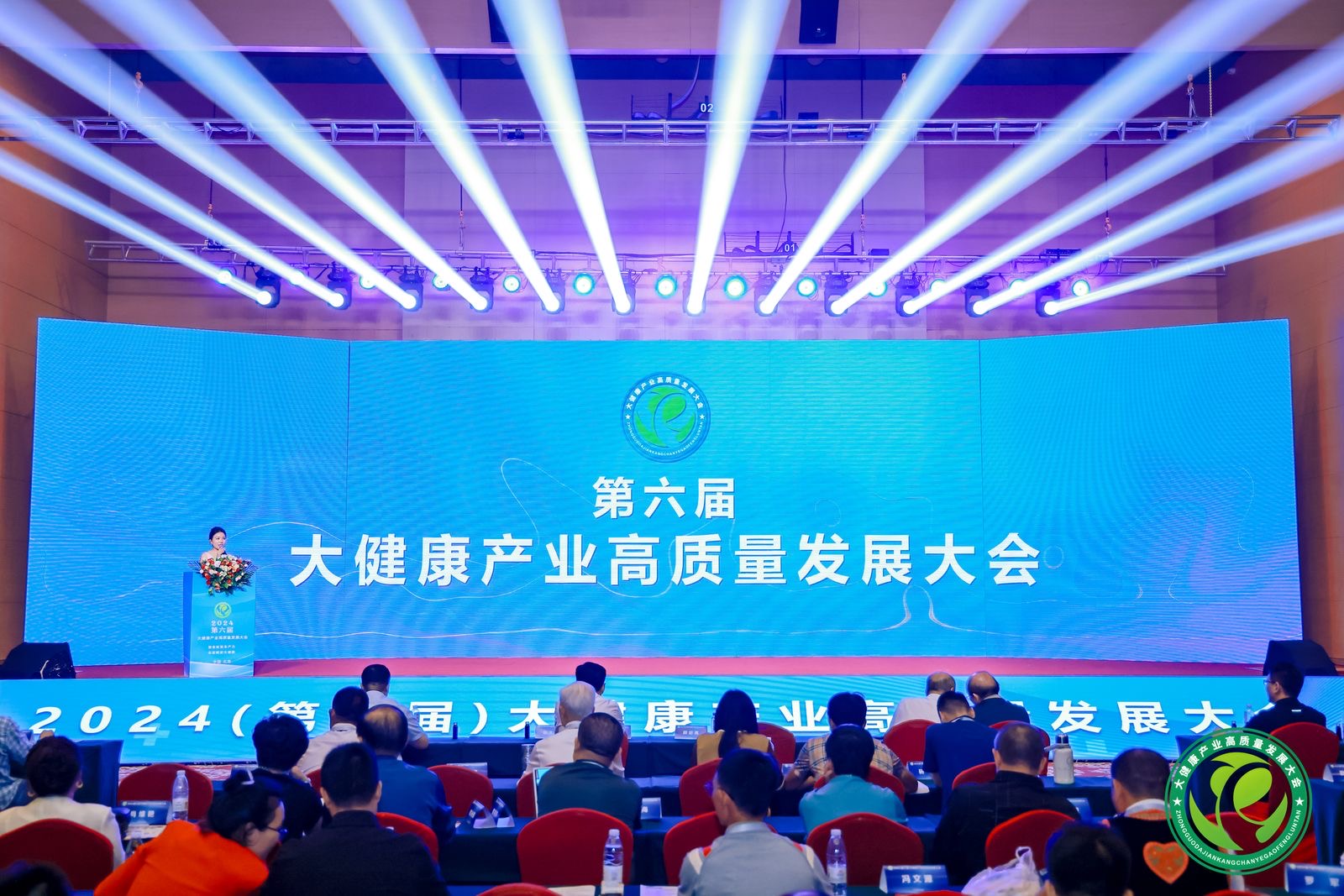
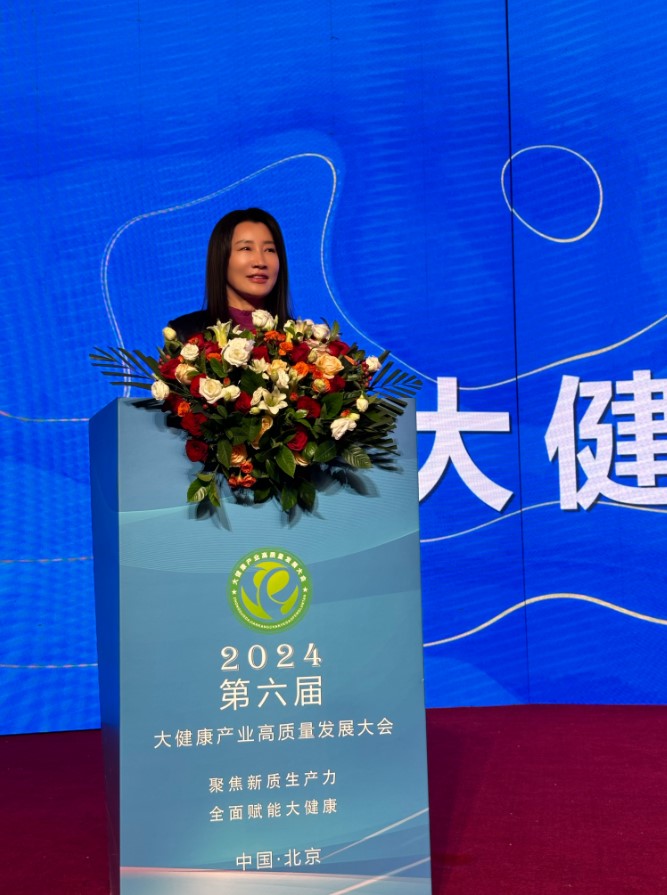
Celebrity Media Special Report:In the golden autumn, Beijing once again became the focal point of the global health industry. On September 8, 2024, the 6th China High-Quality Development Conference in the Health Industry opened grandly at the Beijing Starlight Film and Television Park. The event not only brought together numerous industry leaders and innovative enterprises but also served as a platform to inspire entrepreneurship and promote industrial upgrades.

播放器加载中....


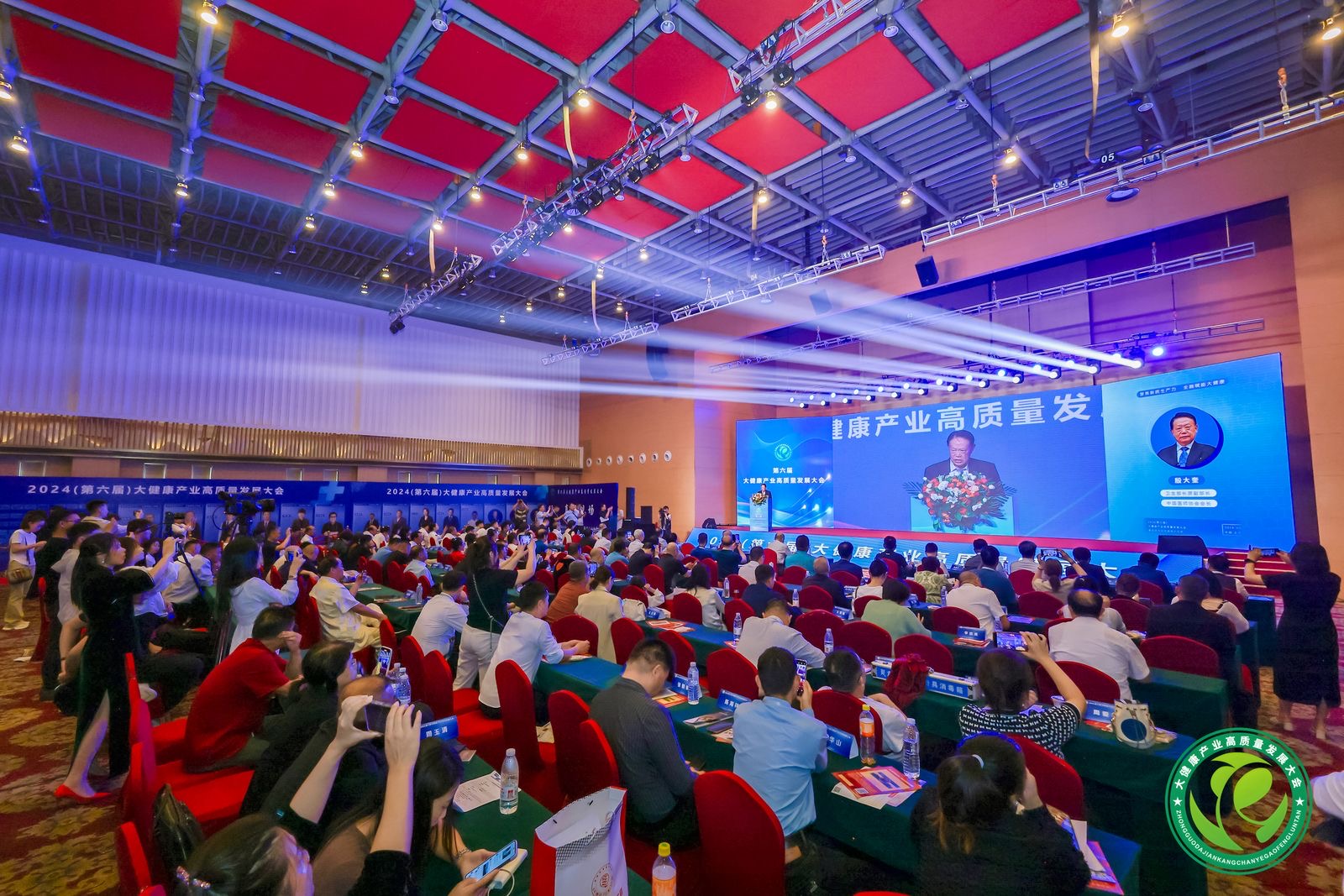
ointly hosted by the China International Association for the Promotion of Science and Technology's Traditional Chinese Medicine (TCM) Inheritance and Innovation Branch, Yiyang Network, and the "Hua Xia Ying Cai" TV program, the conference centered around the theme "Focusing on New Productive Forces, Empowering Health in All Aspects." More than 500 industry representatives from around the world attended, exploring future directions for the health industry. Against the backdrop of rapidly evolving global health needs, innovation became the key focus of the event.

Former Vice Minister of Health Yin Dakui delivered the keynote speech, emphasizing that the health industry is a golden track for the future, and entrepreneurs should seize this opportunity, using innovation to illuminate the industry's path forward. Representatives from the organizing units also expressed high hopes for the future of high-quality development in the health sector, particularly applauding the entrepreneurial passion of young business leaders.

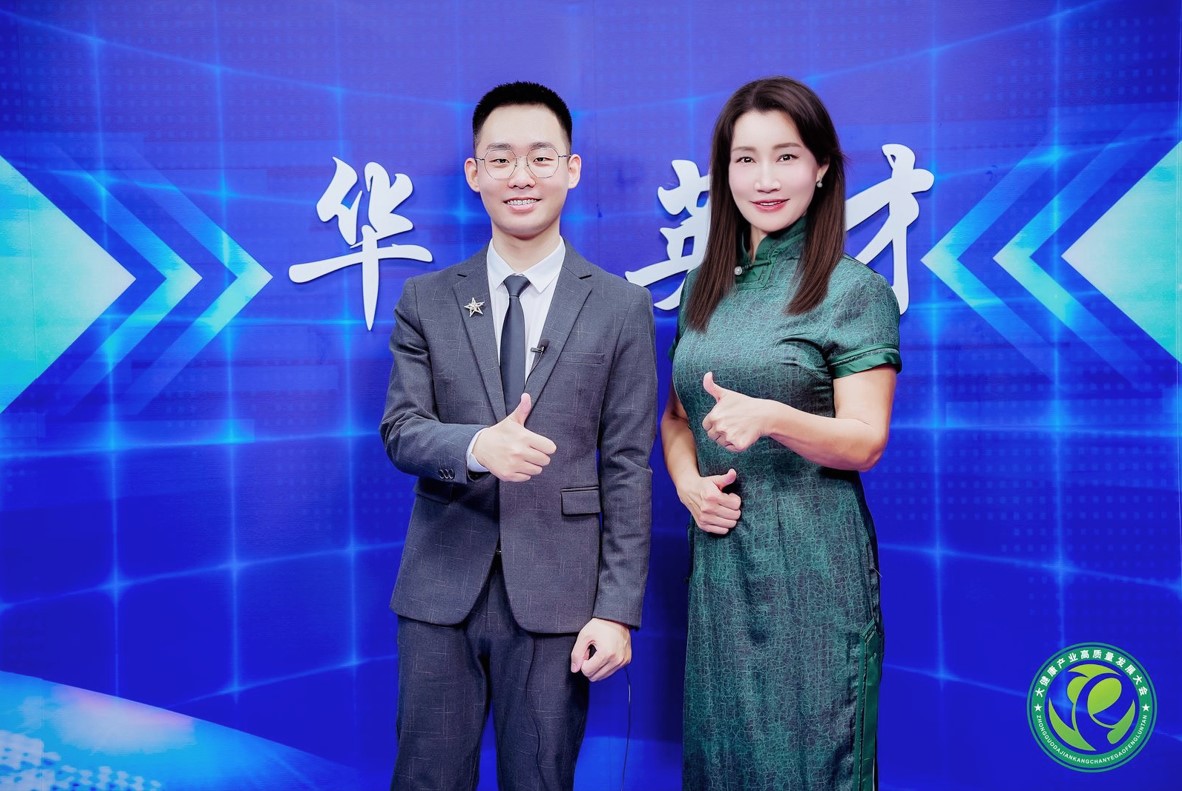
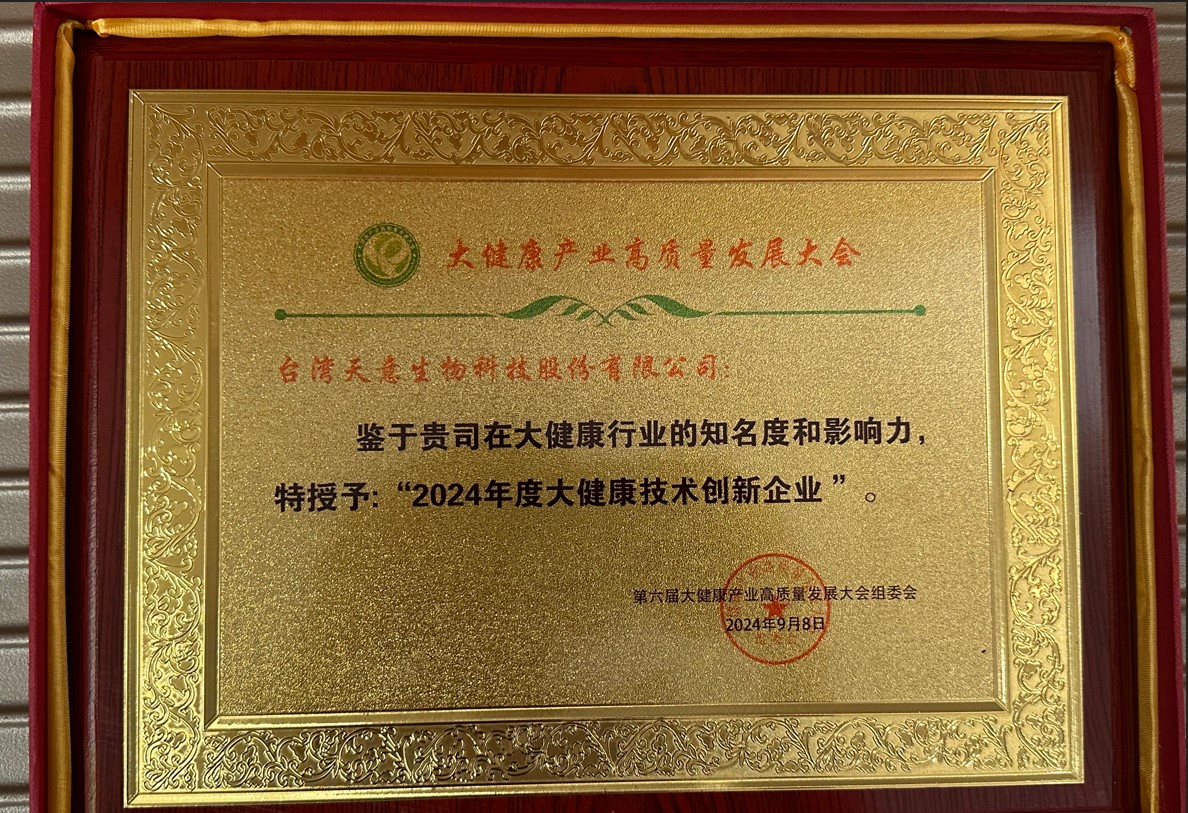
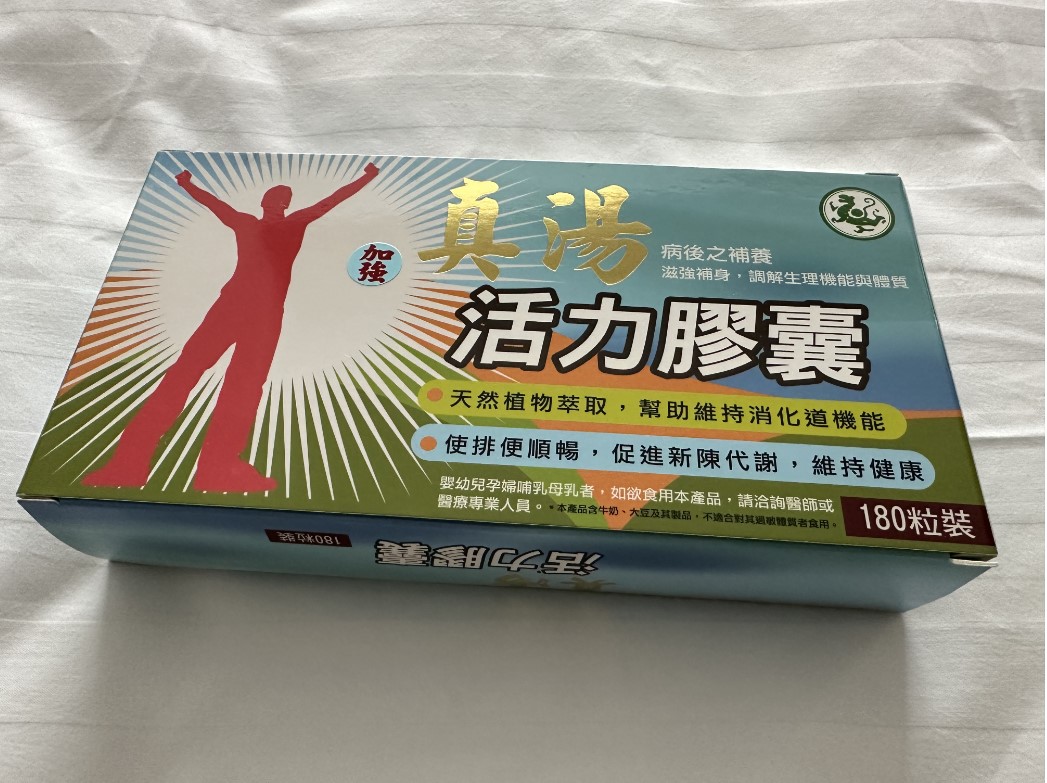
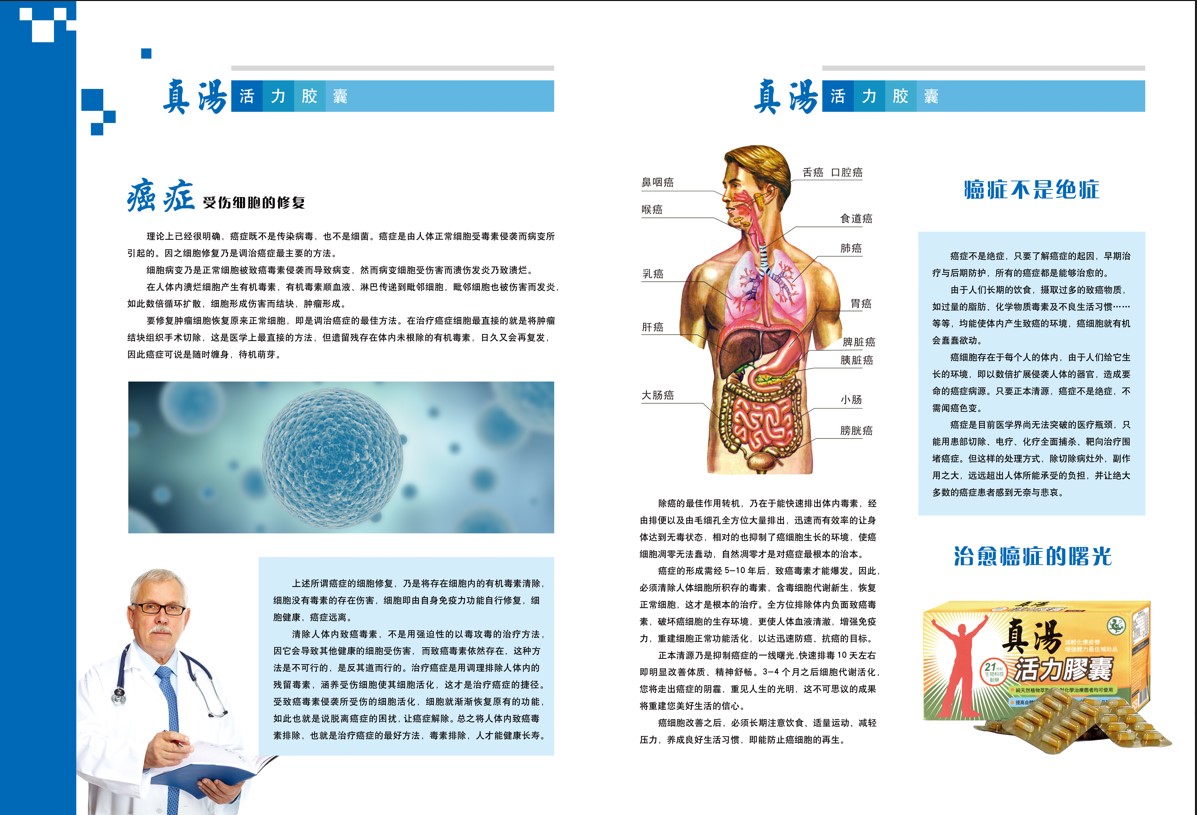
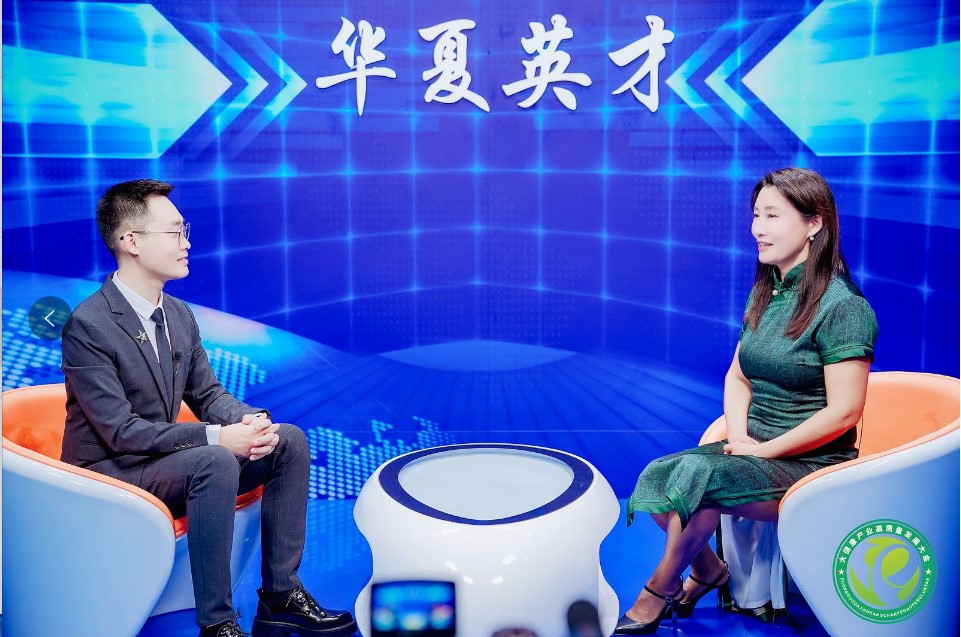
Among the honored guests was Li Feng, Chairwoman of Taiwan Tianyi Biotechnology Co., Ltd., who received the 2024 Health Technology Innovation Enterprise Award for her outstanding contributions to the field of TCM innovation. As a senior TCM pharmacist and the fourth-generation heir of a TCM family, Li has not only made remarkable achievements in cancer treatment using TCM but also infused the wisdom of traditional Chinese culture into modern health technologies, bringing relief to patients worldwide.

Chairwoman Li firmly believes that entrepreneurship is not just about breaking new ground in business but also about helping others and benefiting society. By focusing on TCM and utilizing modern technologies, she has successfully opened new horizons for TCM innovation. Her entrepreneurial journey demonstrates that true innovation comes from deep cultural heritage and the courage to explore. Only by taking that bold first step can one continually bring new breakthroughs to the industry.

The conference also featured the 2024 Health Industry New Technology Innovation and Health Products Exhibition, showcasing a series of innovative health products and brands, further promoting cross-sector collaboration in the health industry. For entrepreneurs, this was an excellent platform to exchange experiences and expand resources, encouraging more aspiring individuals to write their own brilliant chapters in the health sector.

Looking ahead, as the health industry continues to thrive, entrepreneurs will face more opportunities and challenges. As Chairwoman Li Feng said, “Believe in the power of TCM, trust in cultural heritage, and embrace the infinite possibilities of innovation. Our future will undoubtedly be even brighter.”

  Note: All images and video materials were provided by Chairwoman Li Feng.