
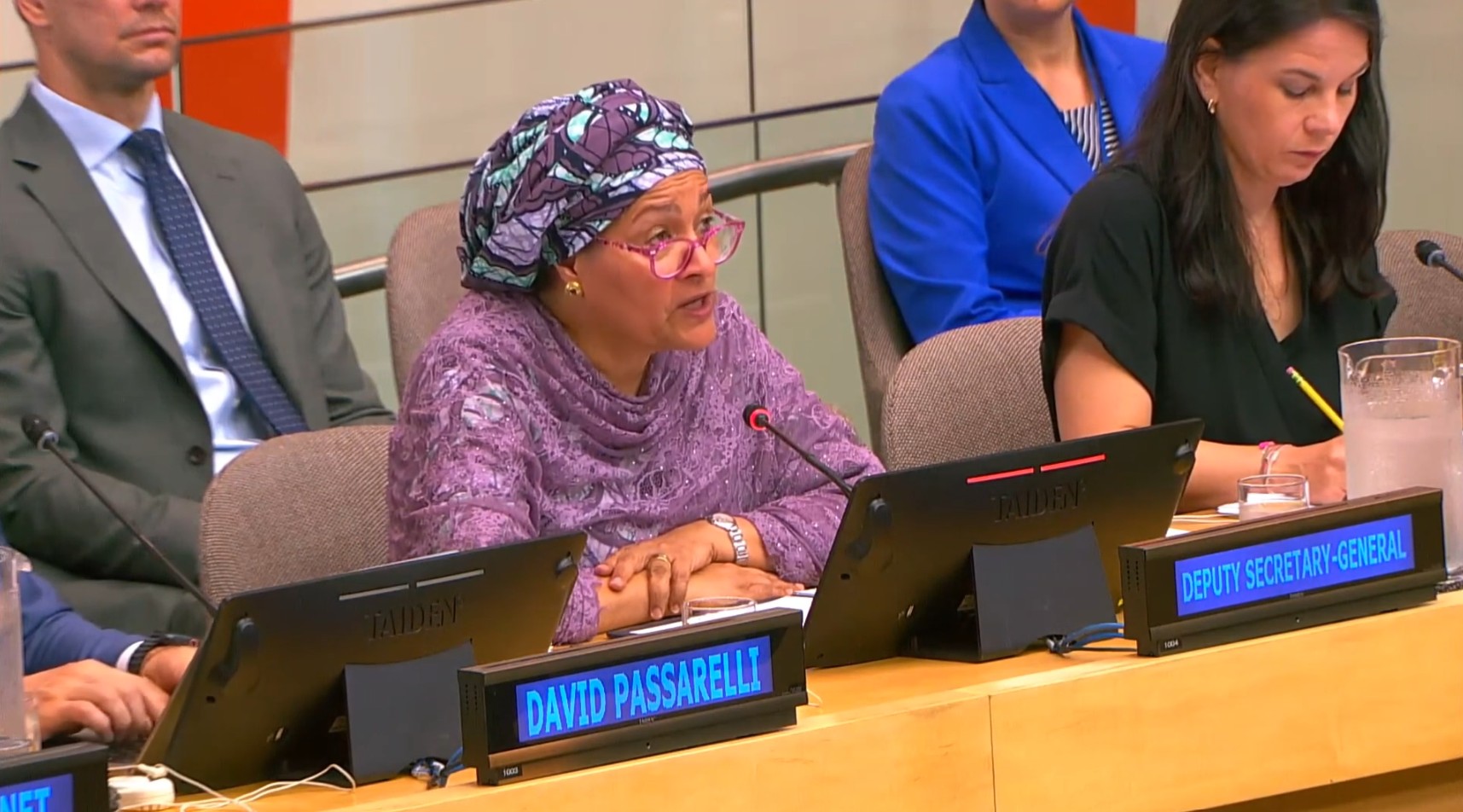

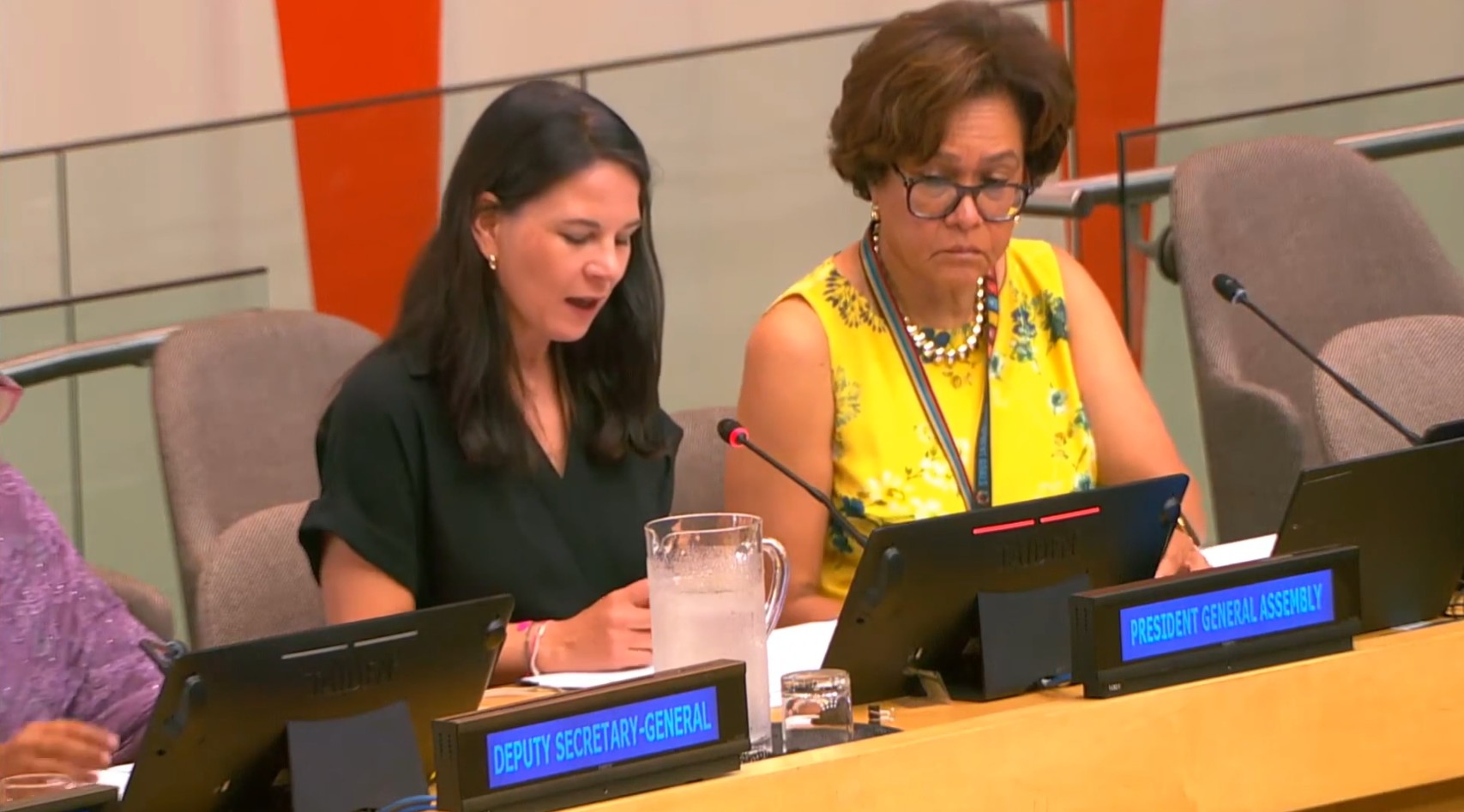
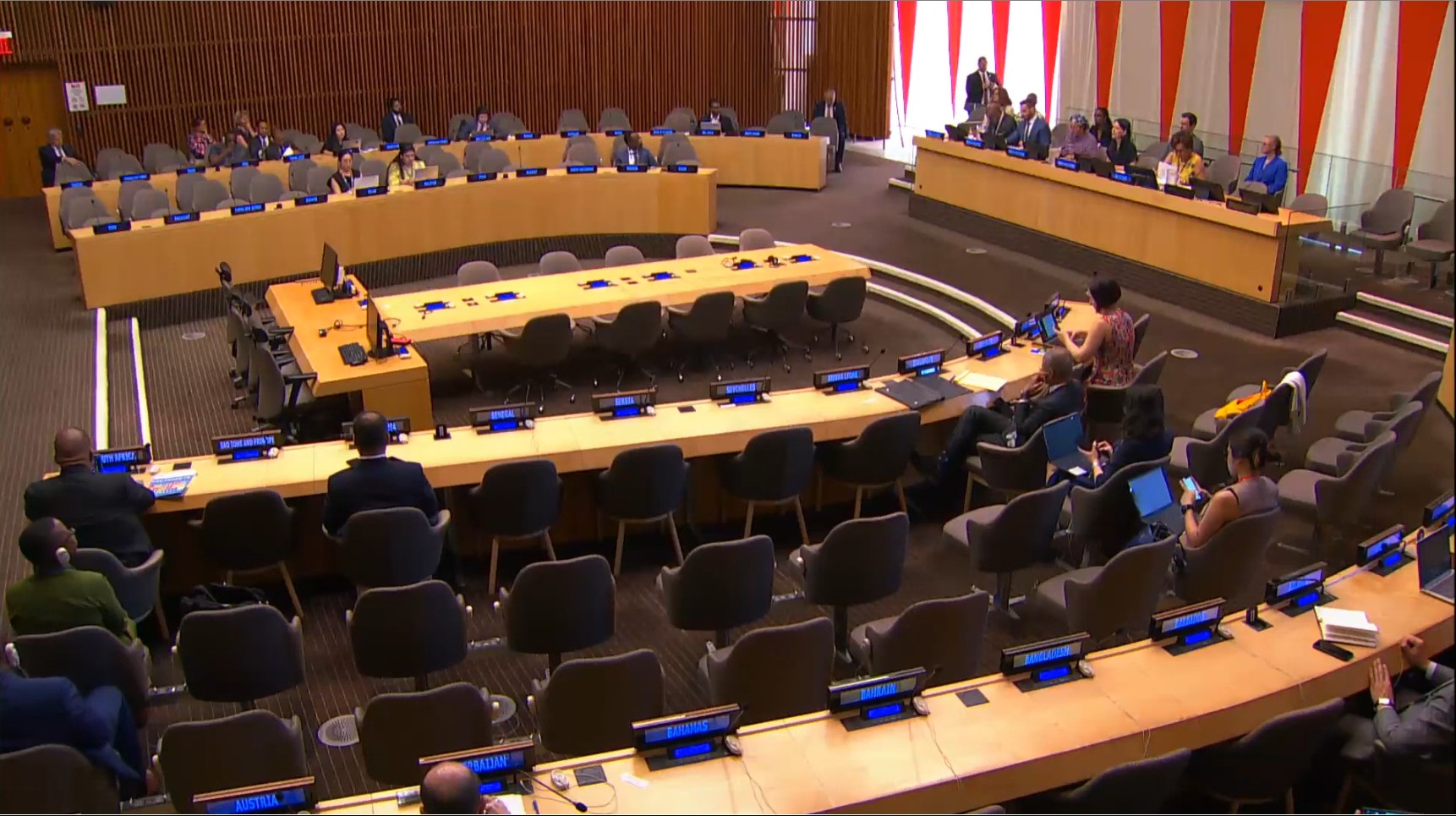
This morning’s debate today, and I now give the floor to the Deputy Secretary-General of the United Nations, Her Excellency Amina Mohammed. Thank you.
Thank you, Madam President, dear Annalena, Excellencies, ladies and gentlemen, and our colleagues from civil society.
My thanks to you, Madam President, for convening this really important meeting. It builds on the one earlier this morning, where we had interaction with our key stakeholders.
Nearly two years ago, in this building, Member States adopted the Pact for the Future. Today, I’d like to share where I think we stand on the commitments made, how far along the road the Pact has traveled, and what it would take to go the distance.
First, let’s consider the road conditions. Countries are navigating one of the most complex geopolitical landscapes in recent history. You’re facing debt pressures, conflict, climate impacts, and declining resources for sustainable development, with each new shock or crisis striking before you have recovered from the last.
In six years, we have faced a pandemic, a war in Europe, and now the crisis in the Strait of Hormuz that is choking energy, food, and fertilizer supplies. In that landscape, the SDGs remain our benchmark, and the Pact for the Future is our political compass. The UN80 Initiative is how we equip the United Nations to deliver better on both.
So, how are we doing? Let me share where the Pact’s commitments stand.
Starting with financing—the means of implementation—multilateral development banks are finding ways to lend more from the capital they already have. That amounts to at least $700 billion in additional lending capacity. The Borrowers Platform is up and running. ECOSOC is hosting a new dialogue on credit ratings. The reform of the IMF surcharges is well underway.
As for how we measure progress itself, the high-level expert group appointed by the Secretary-General delivered its proposal for going beyond GDP within a single year, capturing the economic, social, and environmental dimensions of development together. The intergovernmental process has begun to act on that.
On our institutions, the reviews of ECOSOC and the High-Level Political Forum are keeping these bodies fit for purpose. I thank the co-facilitators, the Permanent Representatives of Barbados and Malta, for their stewardship.
On country-level impact, under the leadership of Resident Coordinators, UN country teams are using the Pact as a practical framework to align national priorities with SDG acceleration efforts in several countries. Cooperation frameworks now reflect Pact commitments on financing, social protection, digital transformation, and institutional reform.
On future generations, country teams are supporting governments in embedding long-term thinking in policymaking, providing assistance with strategic foresight, and assessing national laws to better protect the interests of new and future generations.
On digital transformation, the UN has just concluded its very first Global Dialogue on Artificial Intelligence. Meanwhile, the Global Digital Compact is guiding national efforts to expand digital public infrastructure, close digital divides, and ensure that new technologies work for everyone.
Finally, the machinery for delivering the Pact for the Future in countries is in place and working. This is where the UN80 Initiative comes in. Its purpose is simple: a United Nations better able to support you in turning commitments into results on the ground—results that are visible, credible, and responsive to your national priorities, including those that you set out in your voluntary national reviews.
In practice, that means much stronger Resident Coordinator leadership. Country teams draw on the full policy, technical, and operational depth of the system, providing the expertise that countries need, surge capacity, better use of data, foresight and expertise, and fewer overlapping mandates, processes, and presences that place a burden on your governments.
All of this is about better implementation and better support for you and your national priorities.
Excellencies, governments cannot deliver this agenda alone. The good news is that they are increasingly choosing not to. Across regions, more countries are opening their voluntary national reviews to civil society, businesses, local authorities, academia, and young people, bringing their expertise and experience into the accounting.
The picture that emerges is fuller and much more honest. That is how national ownership takes root, how accountability deepens, and how the 2030 Agenda becomes a whole-of-society effort.
In closing, let me say this: the Pact will move at the speed at which you move it. Your leadership, your policies and investments, and your willingness to share what works will determine whether the commitments made here become the tangible progress that was promised to people two years ago.
So, in today’s roundtables, I would ask you not to hold back. Tell us what is working so others can use it. Tell us where you’re stuck so that we can help clear the way. Tell us what support you need—and be specific. The more specific you are, the better able we are to act.
I very much look forward to hearing your views on the road ahead to 2030 and beyond. I thank you.
I thank the Deputy Secretary-General for setting the scene so precisely—where we are with implementation, but also what we are working on within the UN system and through the UN80 reform.